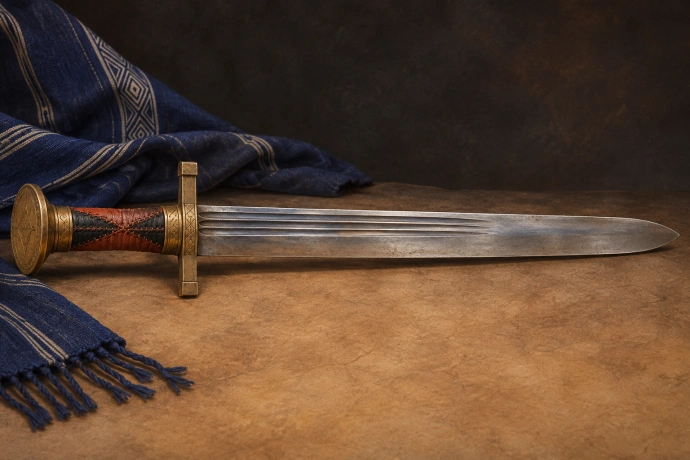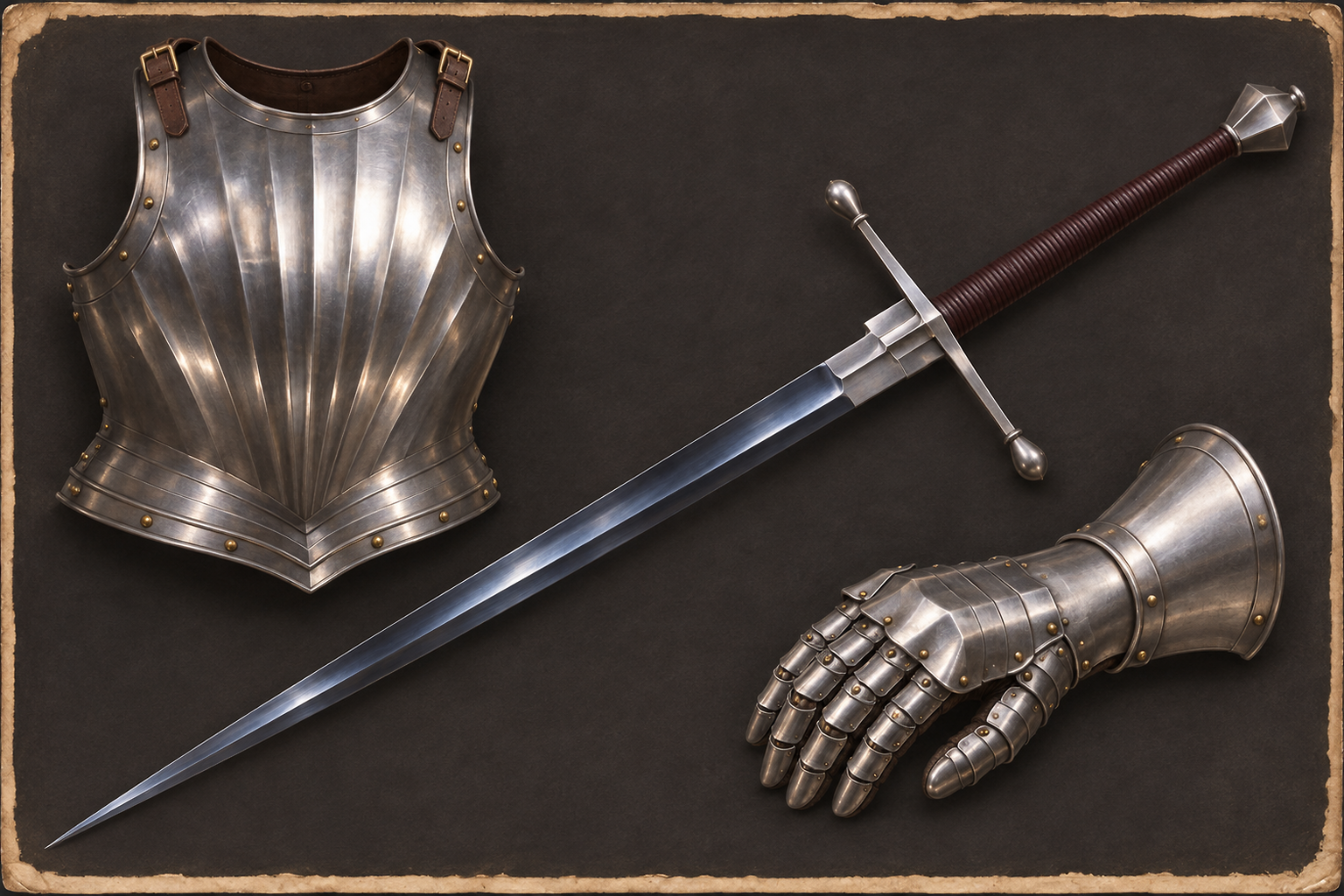
In the final decades of the fifteenth century, European armorers perfected white harness, encasing the knight in head-to-toe plates of polished, heat-treated steel. Traditional broad cutting blades skated off these glancing surfaces without transferring sufficient force to disable the wearer. The response from sword cutlers was an uncompromising architectural shift toward the thrust, reaching one of its most radical expressions in the slender, stiff blade classified by Ewart Oakeshott as the Type XVIIIe.
The White Harness Problem
By the middle of the fifteenth century, plate armor had reached structural maturity. Armorers in workshops across Milan, Augsburg, Nuremberg, and Landshut produced fully articulated suits of heat-treated, medium-carbon steel polished to a mirror sheen. Contemporaries termed this equipage white harness because it gleamed without textile covers, presenting continuous convex surfaces designed to deflect blows harmlessly away from vulnerable organs.
Against this defensive envelope, percussive cuts from conventional broad-bladed arming swords or early medieval longswords achieved little. Even when delivered with two hands, a cutting edge striking a glancing plate dissipates its kinetic energy across an elastic barrier that will not yield. To incapacitate a knight in full plate without relying on a poleaxe or war hammer, an unmounted fighter armed with a sword had to deliver a concentrated thrust into the small joints, gaps, and articulation apertures left open for human movement.
Defining the Type XVIII Family
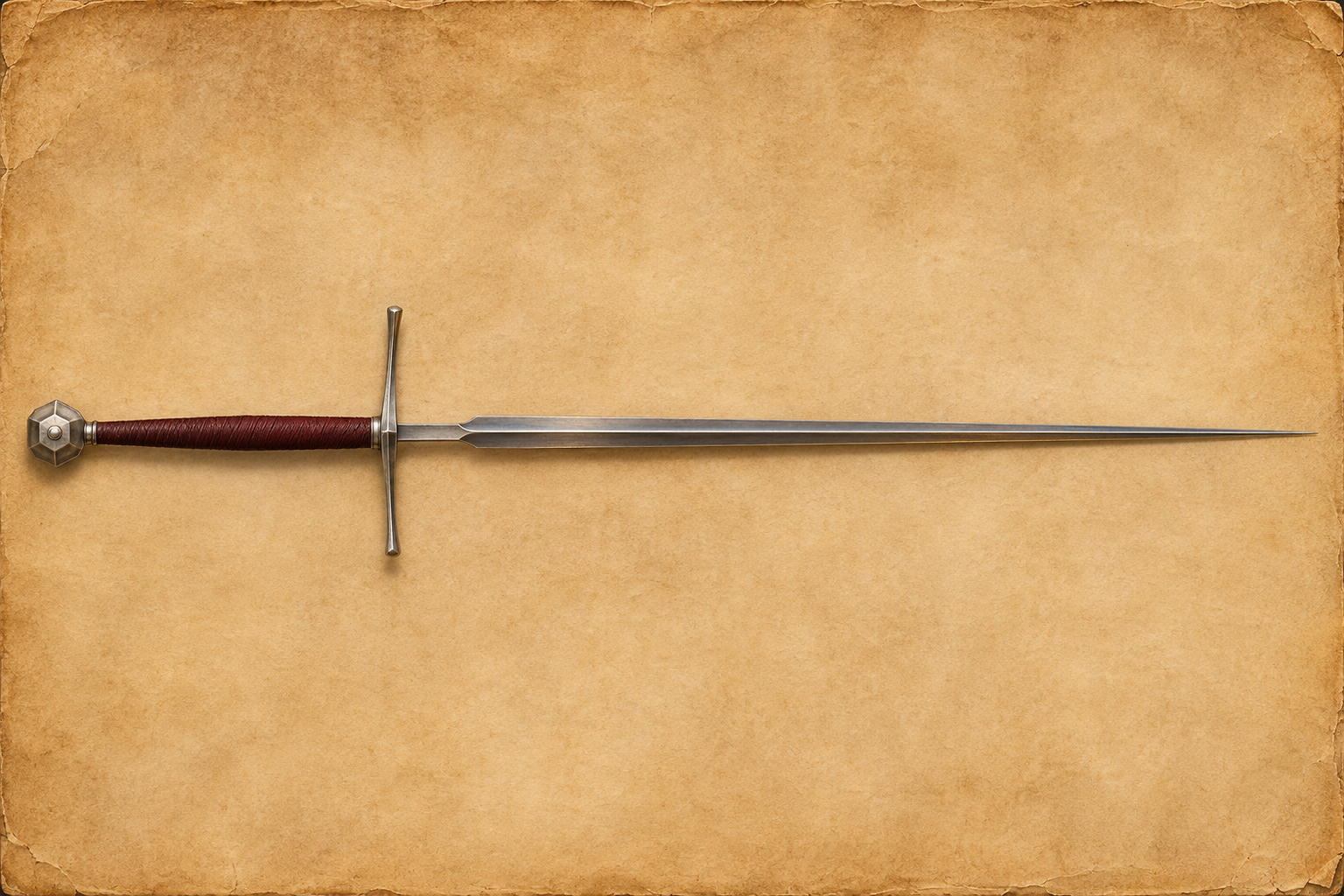
Ewart Oakeshott established his typological system to organize European swords based primarily on blade geometry, dividing them into broad families according to their functional balance between cut and thrust. The overarching Type XVIII family forms a major group of late medieval cut-and-thrust weapons, recognized by its flattened diamond cross section, acute point, and distinct midrib.
Within this larger group, Oakeshott recognized variations that addressed changing tactical conditions. Subtypes range from the broad, flat-cutting blades of XVIIIc to the elongated hand-and-a-half dueling forms of XVIIIb. The Type XVIIIe occupies a unique place in this spectrum: an elongated, strikingly narrow blade mounted on an exceptionally long grip, featuring an unedged base or ricasso that alters both the weapon's center of mass and the fighter's tactical options.
The Hollow-Ground Diamond Section
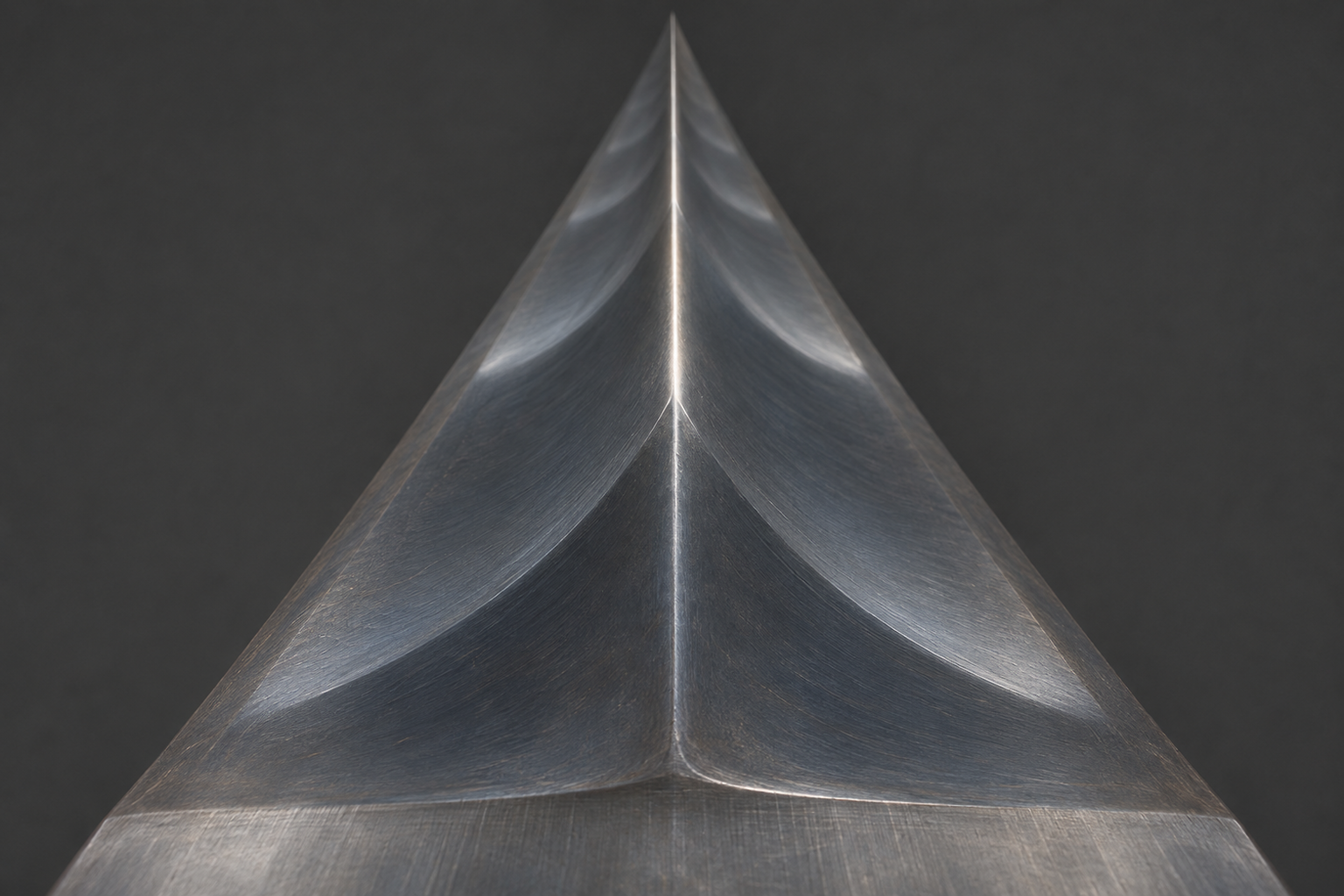
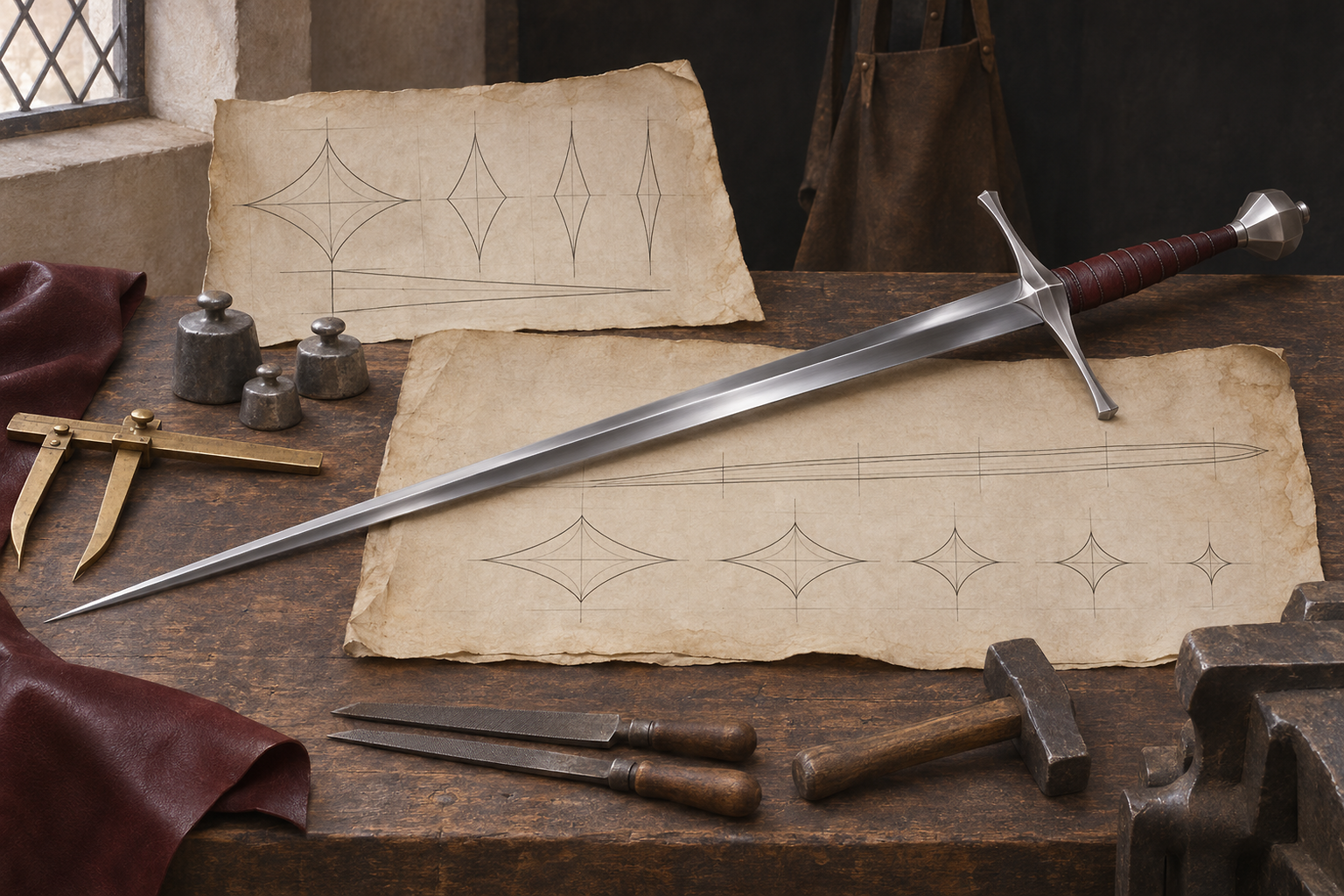
The structural heart of the Type XVIIIe blade is its hollow-ground diamond cross section. Rather than forging flat bevels that taper directly from a central ridge to the cutting edges, the cutler ground concave troughs into each of the four facets. This subtle curving geometry alters the mechanical behavior of the steel under axial compression.
Hollow grinding produces a pronounced central rib while removing excess steel from the blade flats. The weapon sheds dead weight, allowing cutlers to maintain a thick, rigid spine along the longitudinal axis without turning the sword into an unwieldy iron bar. When a fighter drives the point into a rigid target, the spine resists the buckling forces that cause flatter, wider blades to bow harmlessly.
Distal Taper and Axis Stiffness
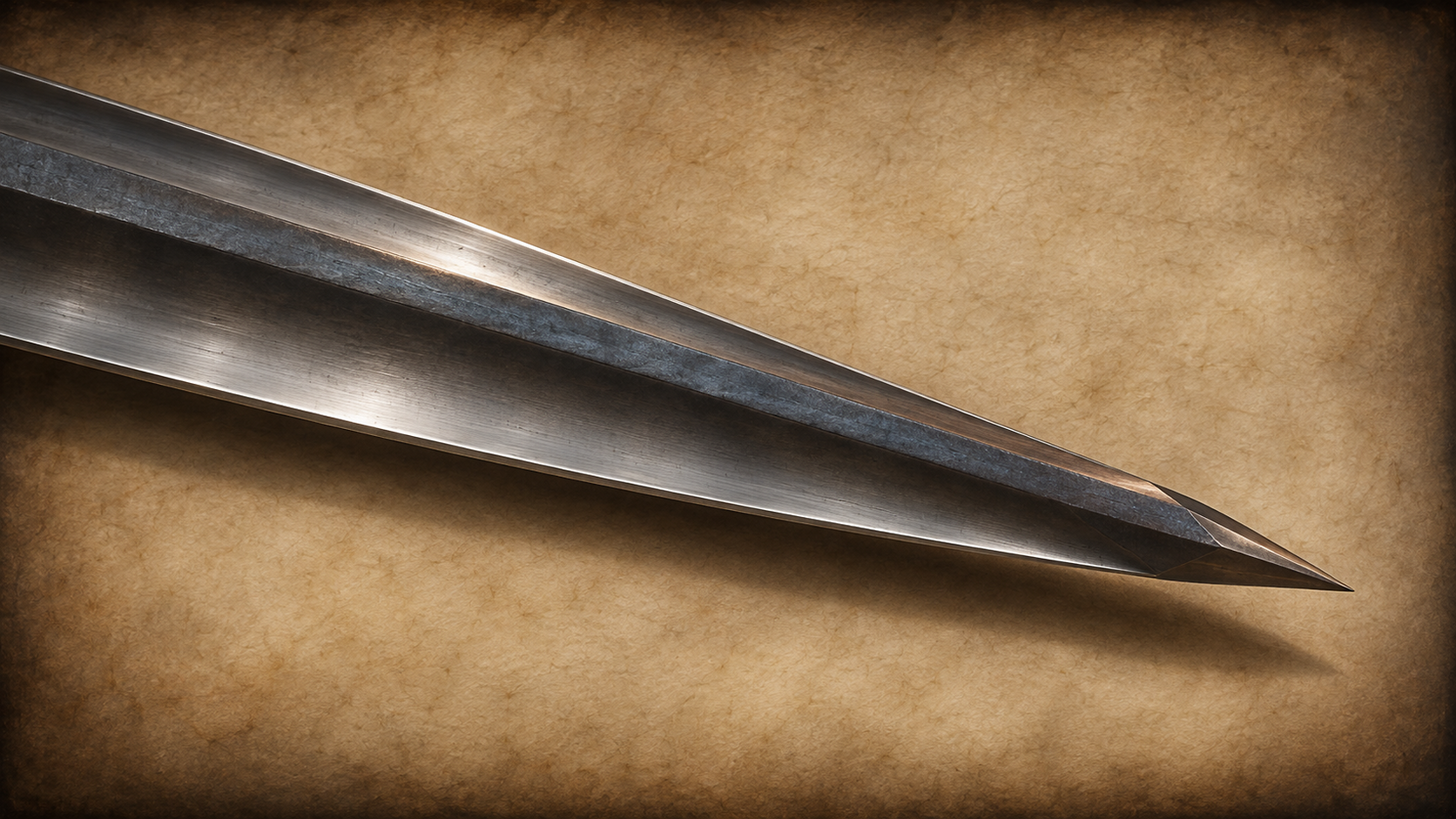
Stiffness in a thrusting sword does not rely solely on cross-sectional shape; it depends equally on how mass decreases from hilt to point. In the Type XVIIIe, distal taper is managed with calculated restraint. While many earlier cutting swords thin aggressively toward the tip to enhance agility, an XVIIIe retains significant thickness through its middle and forward sections.
By preserving spine thickness until just behind the point, the cutler ensures that the blade behaves as a stiff, rigid column. The acute terminal point concentrates all the kinetic energy of a two-handed thrust onto an area measuring merely a few square millimeters. If the point finds a mail link, leather arming point, or visor slot, that kinetic energy punches through rather than bending the sword outward.
The Architecture of the Ricasso
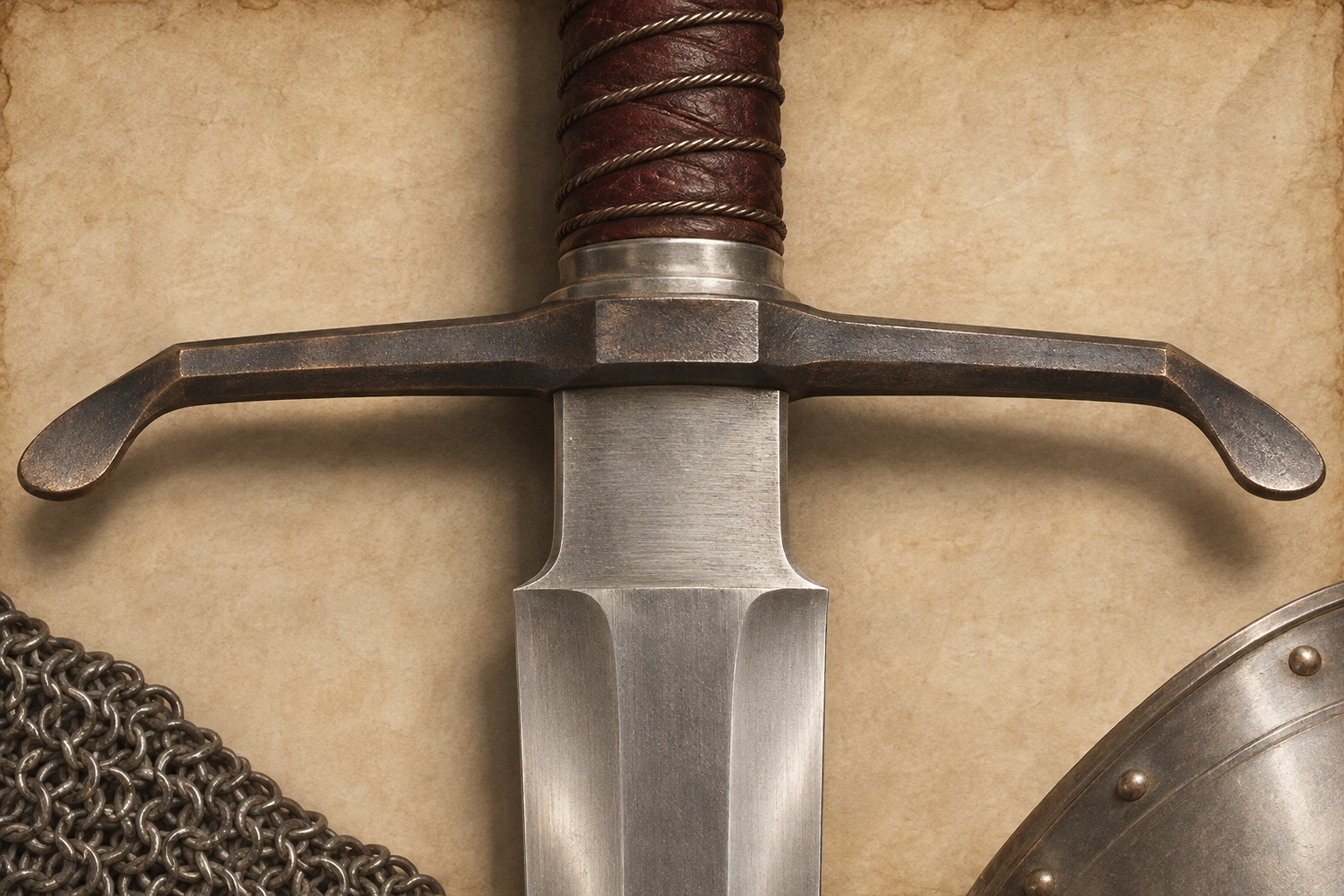
Among the most recognizable features of many surviving Type XVIIIe swords is an elongated, often narrowed ricasso. Positioned immediately above the crossguard, this unedged section extends several inches toward the point. In several notable examples, such as specimens recovered in Denmark and Northern Germany, the ricasso is actually narrower than the blade section directly ahead of it, creating a distinct step or waist.
This basal geometry served practical workshop and martial purposes. Forging the base as a thick, unsharpened block of steel stabilized the blade-tang junction, which bore intense shock whenever the weapon was driven hard into plate or parried with force. It also provided a tactile index for the lead hand, allowing fighters to grip the weapon securely forward of the crossguard during close-quarter grappling.
Two Hands and Long Grips
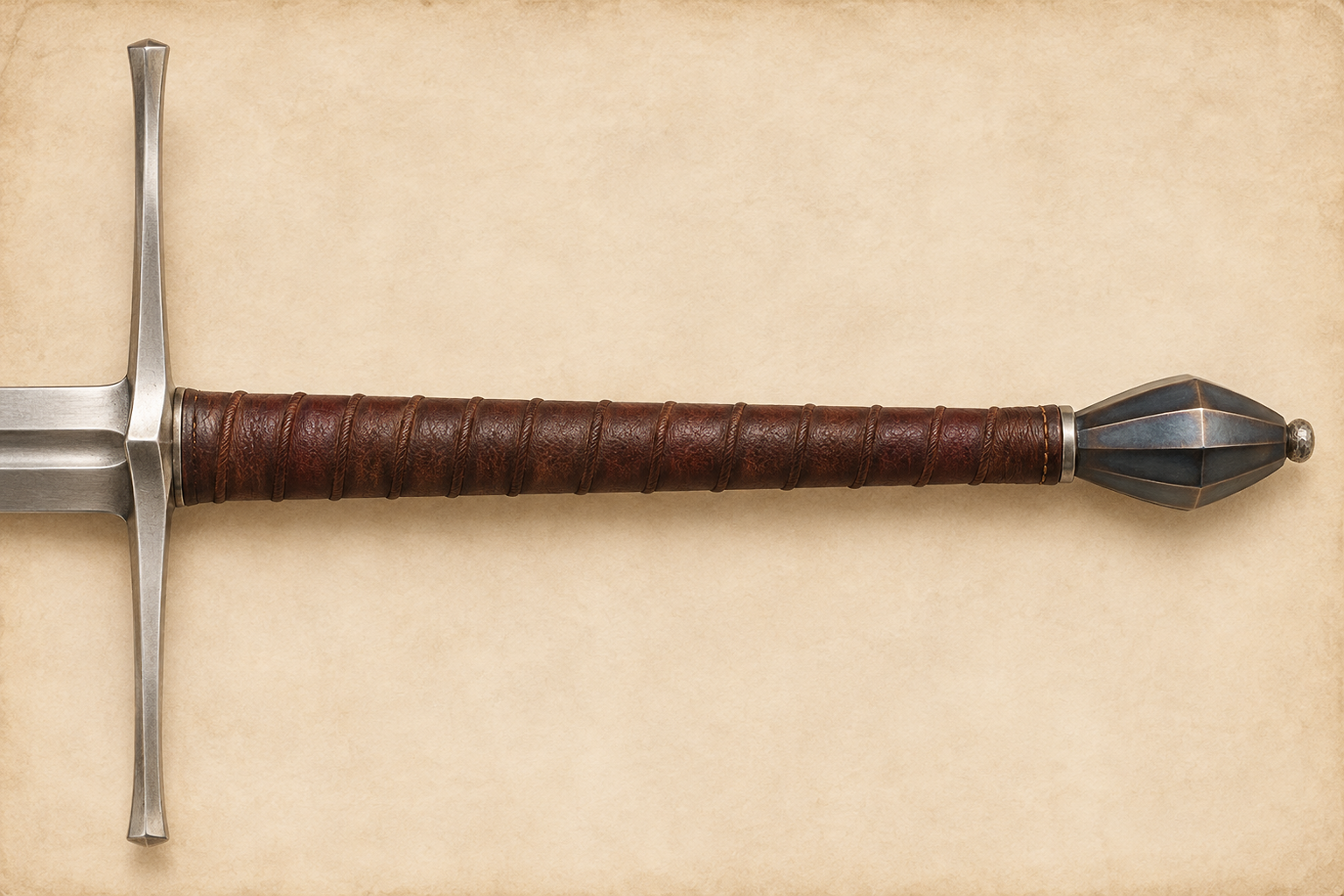
The hilt assembly of a Type XVIIIe is noticeably disproportionate compared to earlier medieval longswords. Grips frequently measure between ten and fourteen inches, offering abundant space for two large, gauntleted hands with several inches of clearance between them. This wide hand separation fundamentally alters how the sword moves in the fighter's hands.
A wide hand placement transforms the hilt into a high-leverage lever. The lead hand acts as a fulcrum near the cross, while the rear hand pushes, pulls, or steers the pommel. This arrangement provides rapid angular acceleration for alignment, allowing the wielder to precisely target small gaps in moving armor, while providing the mechanical leverage necessary to force a stuck point free from bound steel or dense textile undergarments.
Danish Finds and Regional Distribution
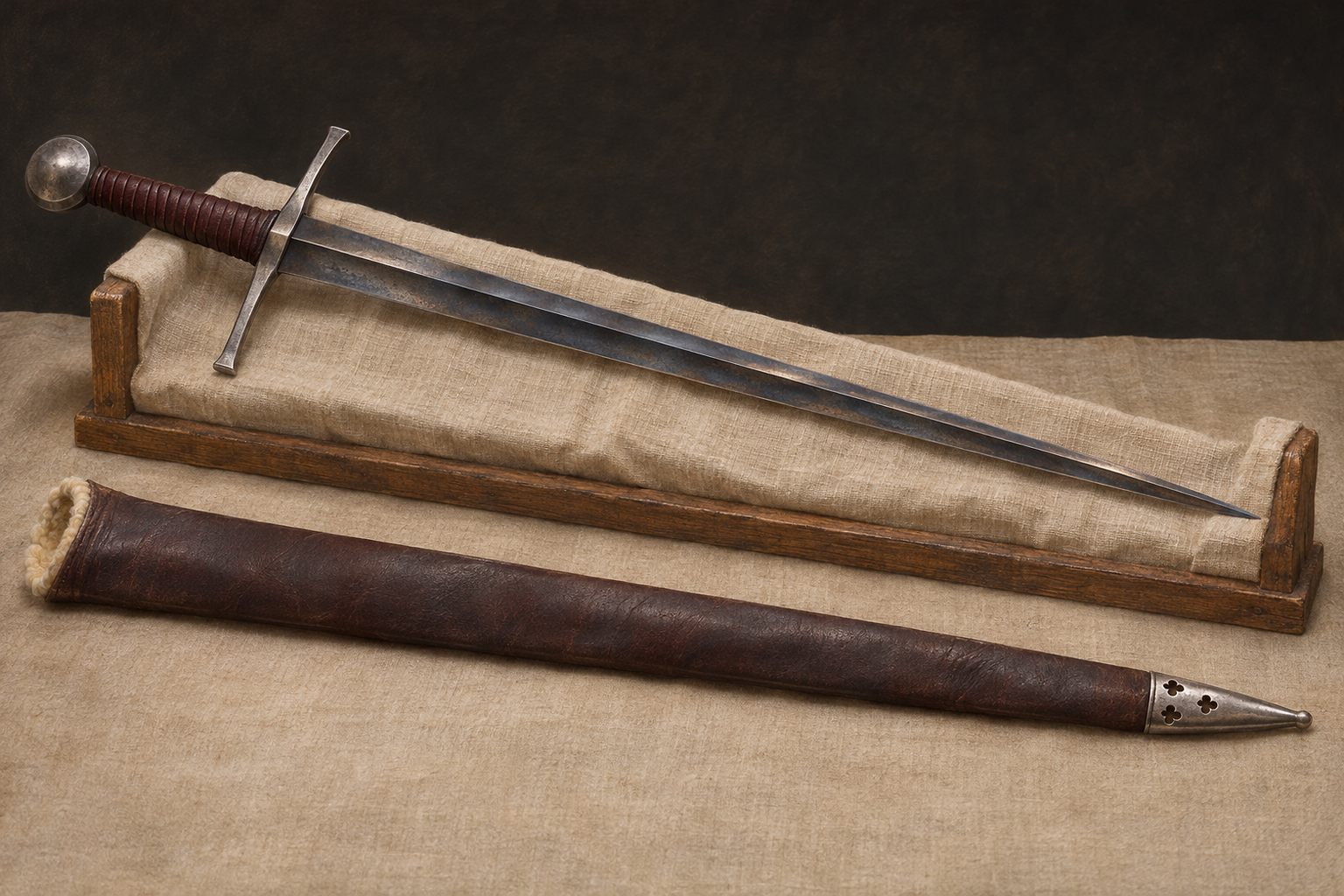
Although long thrusting swords saw widespread use throughout late medieval Europe, surviving examples of Type XVIIIe swords cluster prominently in Northern Europe, particularly in Denmark. A remarkable concentration of these weapons survives in the collections of the National Museum of Denmark in Copenhagen, leading some early twentieth-century antiquarians to label the design the Danish type.
Several of these Danish specimens were dredged from rivers or recovered from peat bogs and church vaults, preserved in conditions that left their steel surfaces and blade profiles intact. German armories and municipal collections, notably in Bavaria and Saxony, also hold examples dating from the late fifteenth century into the opening decades of the sixteenth century, indicating that the form was well integrated into Baltic and Holy Roman Empire military networks.
Tactical Realities of Half-Swording
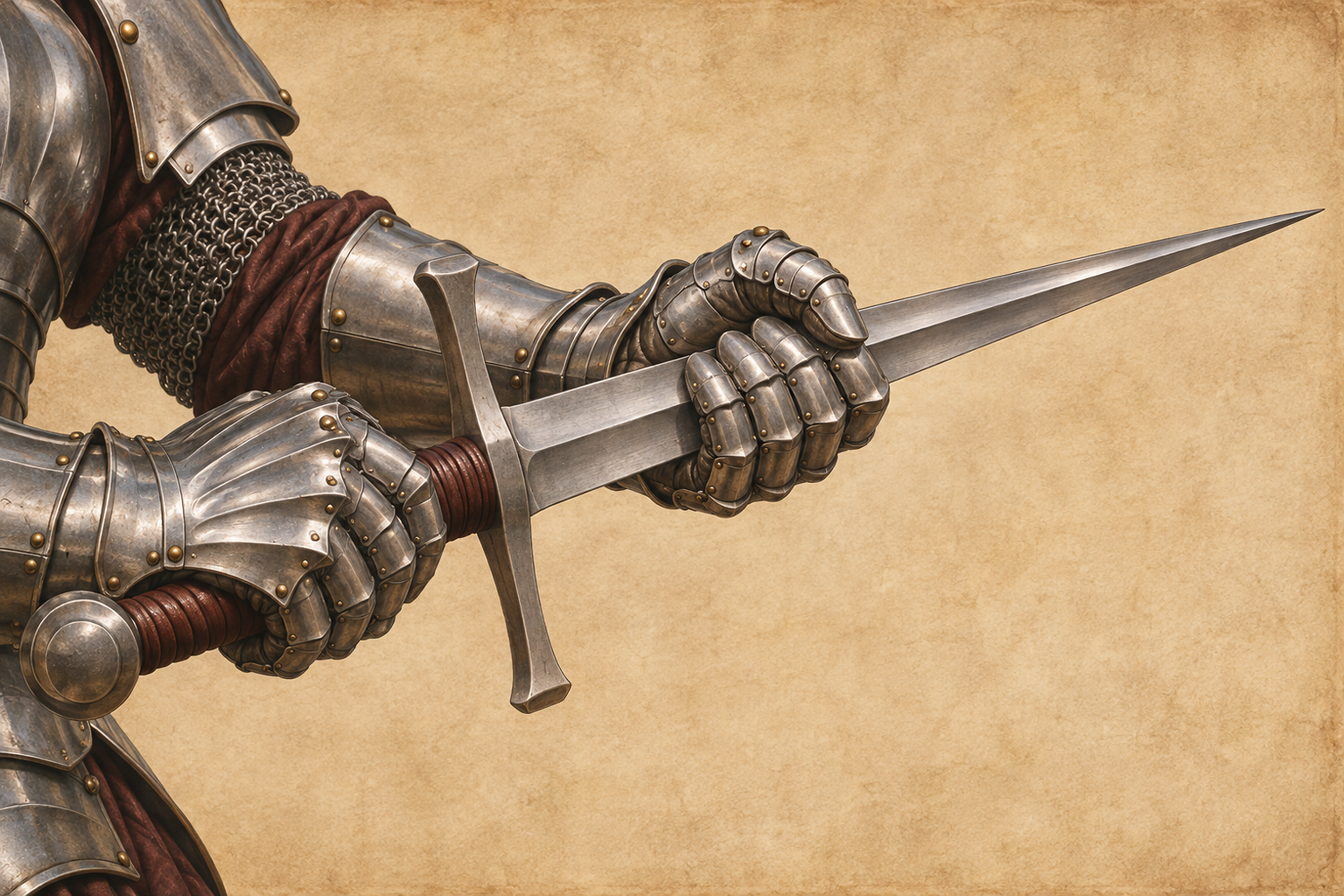
Late medieval combat manuals emphasize half-swording (Halbschwert) as the primary method for fighting an opponent encased in plate. In half-swording, the combatant shifts the lead hand from the hilt directly onto the mid-blade, transforming the longsword into a short, exceptionally rigid spear.
The Type XVIIIe is tailored specifically to this doctrine. Because the blade maintains a stout diamond spine and the ricasso provides an unedged starting point, the wielder can choke up on the weapon with minimal danger of self-injury, especially when wearing mail mittens or leather gauntlets. By shortening the working length of the steel, the fighter gains pinpoint tip control, driving the reinforced point into obscured seams with the full weight of the body behind it.
Anatomy of the Armor Seams
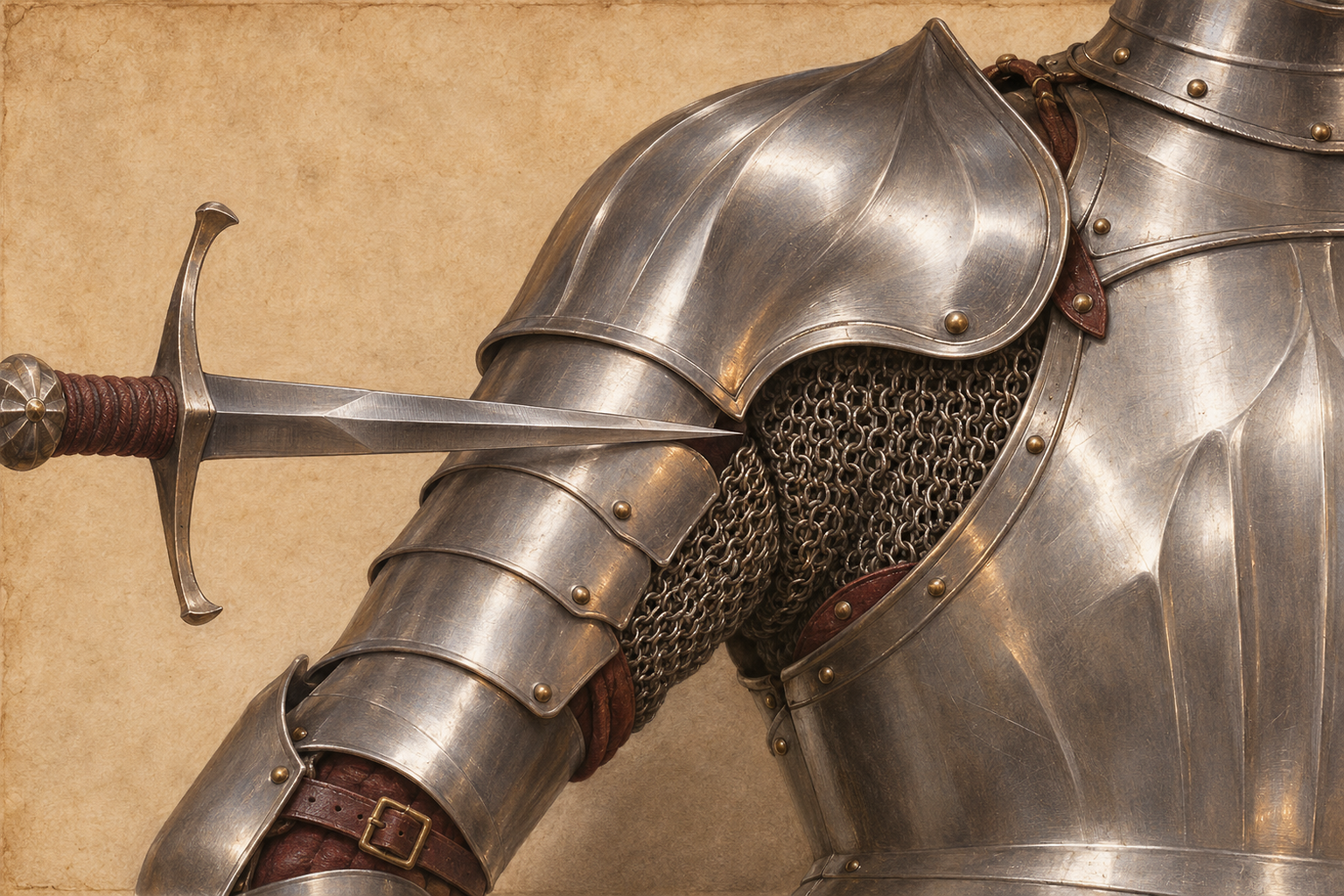
To understand the specific geometry of the Type XVIIIe point, one must examine the micro-targets offered by a late fifteenth-century harness. While the breastplate, visor, and greaves were virtually impenetrable to hand weapons, several critical junctures could not be covered by rigid plate without freezing the human skeleton.
Cutlers shaped the reinforced tip to exploit these gaps, concentrating two-handed thrusting force into clearances between articulated plates where mail or textile linings offered the only defense.
Key targets that the rigid point was designed to penetrate include:
- The ocularia, or narrow sighting slits of the sallet or close helmet, often measuring less than an inch across.
- The armpit apertures, protected by internal gussets of riveted mail rather than solid plate to preserve shoulder mobility.
- The inner elbow and palm areas, shielded by articulated couters or supple leather to permit an effective weapon grip.
- The groin and inner thighs, protected by mail skirts or faulds but open from beneath to accommodate the saddle.
Metallurgy of Late Medieval Stiffness
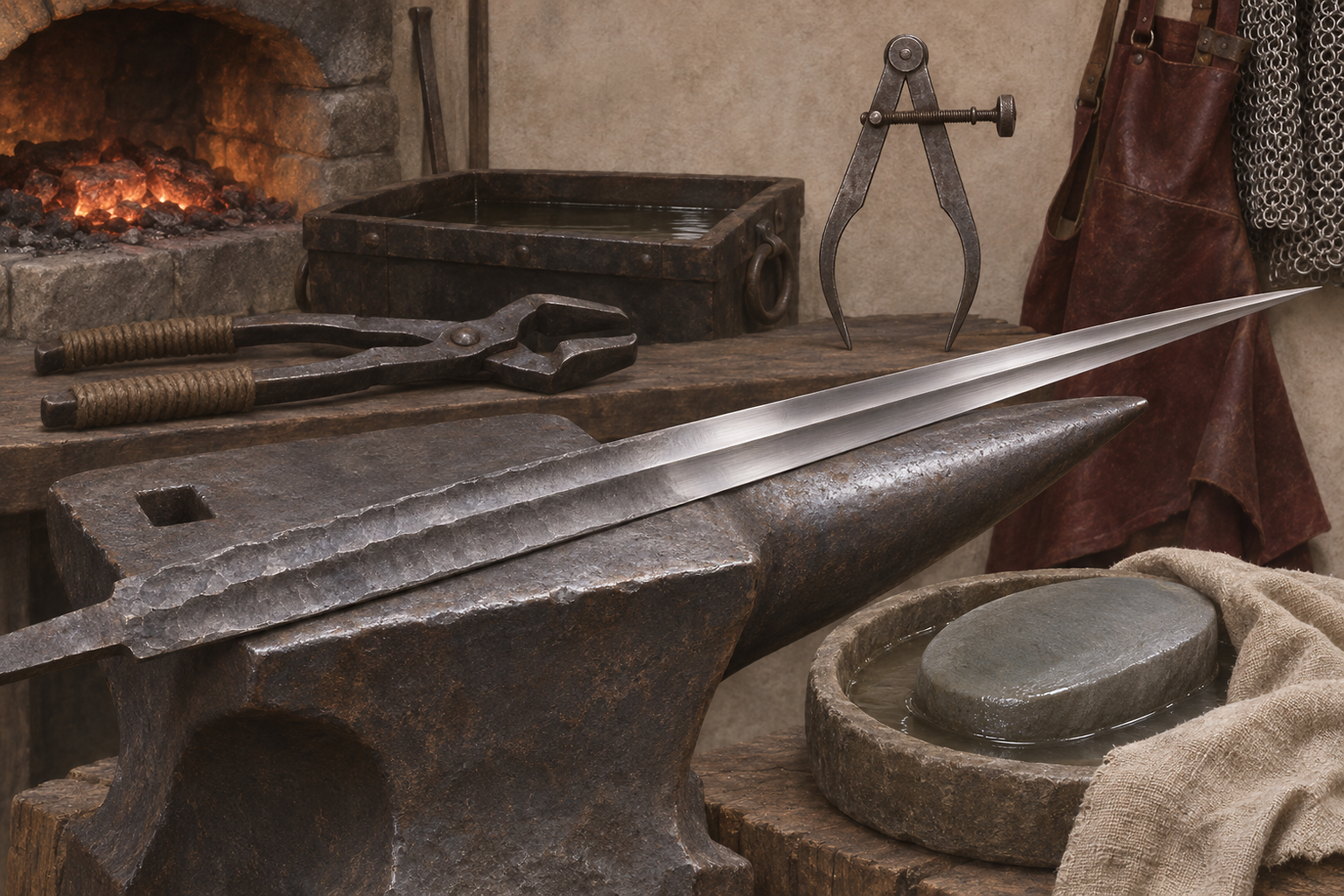
Producing a Type XVIIIe blade required sophisticated thermal processing and metallurgical control. Unlike early medieval blades that relied on iron cores flanked by pattern-welded steel edges, late medieval bladesmiths worked with bloomery steel or early finery steel, striving for consistent carbon distribution through repeated folding and refining.
Achieving the stiffness required for penetrating armor without making the steel brittle was a delicate balance. If quenched to excessive hardness, a hollow-ground point would snap when striking the curved edge of a breastplate; if left too soft, the blade would take a permanent bend on impact. Extant European blades from this period demonstrate differential heat treatment or tempered spring qualities, producing a tough central spine that absorbs shock while maintaining an acute, hardened tip.
The Transition Toward Early Modern Rapiers
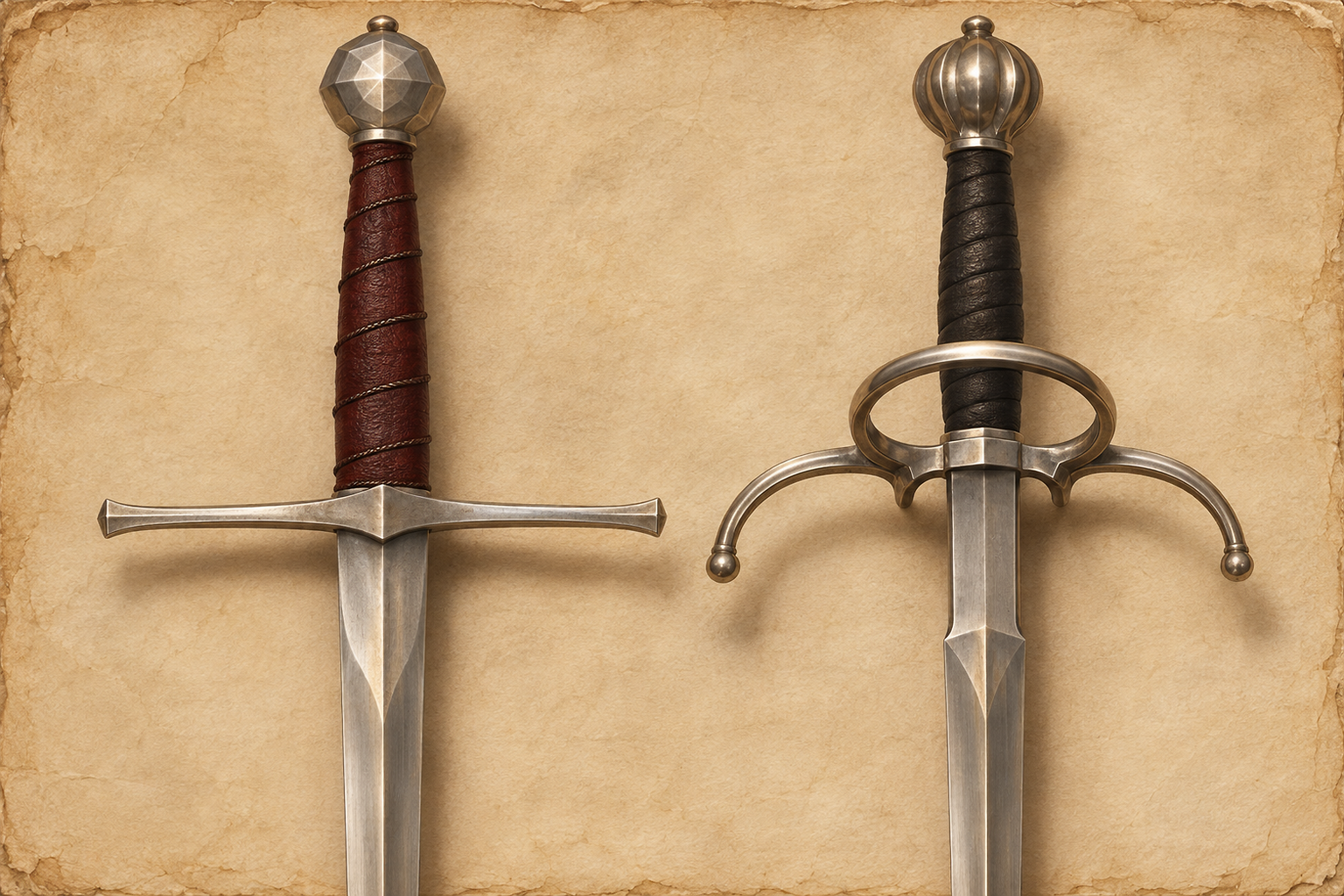
The functional architecture of the Type XVIIIe foreshadows the rapid evolution of civilian and military sidearms in the sixteenth century. As the tactical environment shifted toward pikes and early firearms on open battlefields, and civilian dueling rose in social importance, swordsmiths continued to narrow the blade and lengthen the thrusting axis.
The protective rings and extended ricassos found on some late Type XVIIIe swords mirrored wider experiments in hilt design that accompanied the development of early side-swords and rapiers. By placing the index finger or lead hand over the crossguard—shielded by new side rings and arms of the hilt—fencing systems across Europe increasingly privileged point alignment and linear thrusts, sharing the stiff, hollow-ground geometries found on late-chivalric blades.
Survival and Modern Interpretation
In modern sword scholarship and Historical European Martial Arts, the Type XVIIIe is frequently misunderstood. Enthusiasts occasionally assume that its slender, hollow-ground profile made it flimsy or purely ceremonial. In reality, handling original museum artifacts reveals an athletic weapon with deceptive heft, immense rigidity, and a forward center of percussion that allows for authoritative binds and parries.
Modern cutlers reconstructing the Type XVIIIe face technical hurdles, as grinding accurate hollow facets on a thin, long blade requires exceptional skill on modern abrasives, just as it did on water-powered stone wheels in the late Middle Ages. When reconstructed faithfully, the Type XVIIIe demonstrates how European weapon designers answered the challenge of plate armor, producing an extreme thrust-oriented variant within the longsword tradition.
Further reading
Follow the sources to examine the object and its historical context.
Oakeshott, Ewart. The Sword in the Age of Chivalry. Boydell Press, 1964.External reference · Opens in a new tab Oakeshott, Ewart. Records of the Medieval Sword. Boydell Press, 1991.External reference · Opens in a new tab National Museum of Denmark (Nationalmuseet), Copenhagen. Late Medieval Edged Weapons Collection.External reference · Opens in a new tab