During the mid-sixteenth century, military administrators across the southern provinces of the Ming Dynasty faced an elusive tactical dilemma along the coastline. Mobile raiders, known collectively as the wokou, operated in fluid raiding parties that easily outmaneuvered regional garrison troops equipped with rigid polearms. To counter fast, two-handed sword strokes in broken terrain, General Qi Jiguang integrated the military two-section flail into his tactical manuals, most notably the Jixiao Xinshu. Known variously as the lianjia bang or shaozi gun, the weapon adapted the mechanical advantage of an agricultural threshing flail into a flexible concussive arm capable of striking around parries and driving back aggressive vanguard fighters.
The Coastal Crisis and the Wokou Threat
In the 1540s and 1550s, the coastlines of Zhejiang, Fujian, and Guangdong suffered intense disruption from maritime raiders. While categorized broadly by imperial records as Japanese pirates, these wokou bands were ethnically mixed networks of Japanese warriors, Chinese sea merchants, and Portuguese adventurers. They avoided pitched battles against walled cities whenever possible, striking coastal villages, granaries, and landing points with speed and tactical coordination.
The standard hereditary garrison troops of the Ming state, organized under the centuries-old weisuo system, repeatedly failed to contain these incursions. Ming infantry units routinely broke formation when confronted by disciplined vanguards wielding long, razor-sharp Japanese swords (wodao). The standard Ming spears, often poorly made from brittle timber, were frequently severed or brushed aside. Confronting these mobile raiding parties demanded an immediate overhaul of low-level infantry tactics, troop recruitment, and squad weaponry.
Agricultural Ancestry of the Jointed Flail
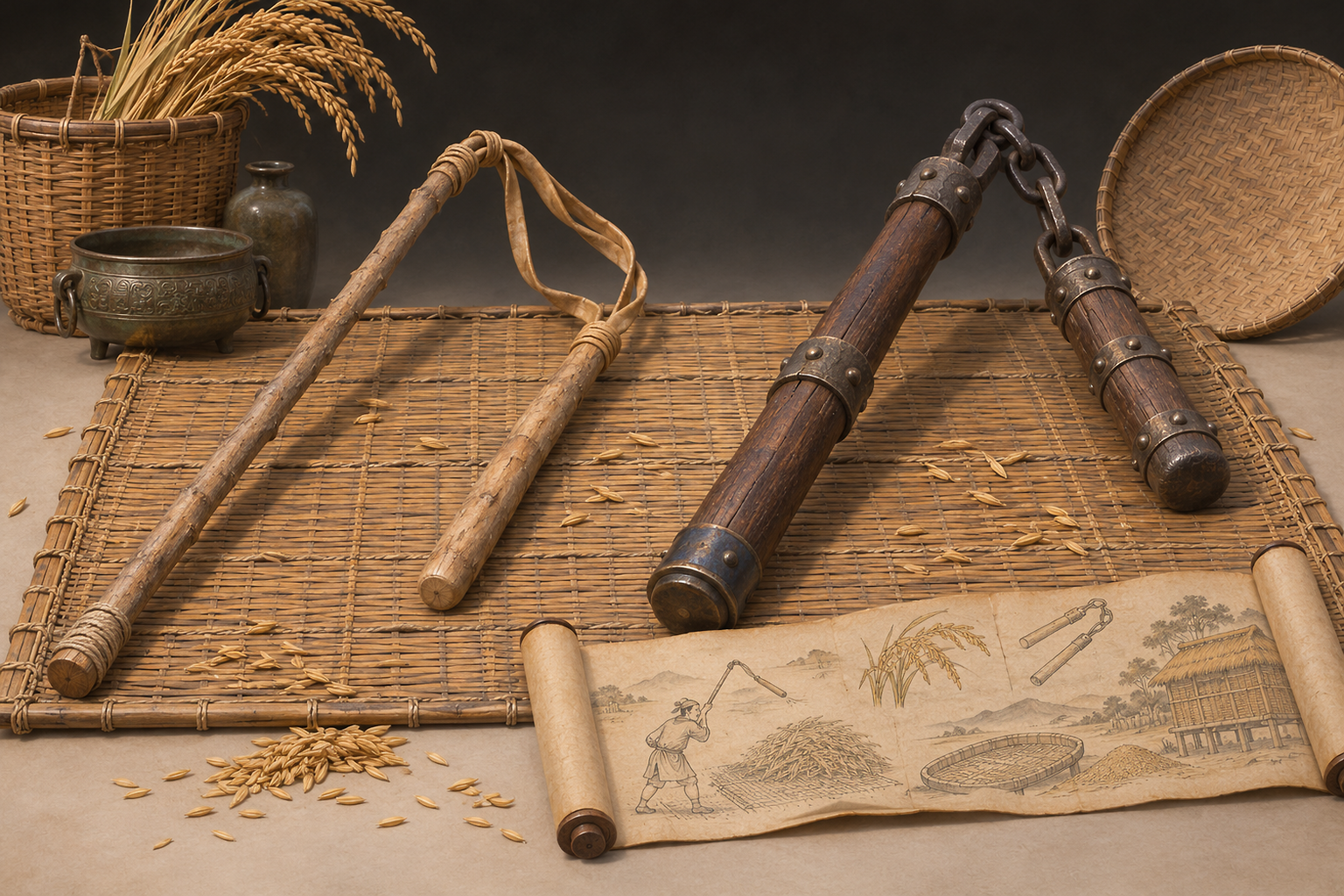
The military flail did not emerge from a royal armory or a specialized weapons laboratory. Like its European counterparts, the Chinese lianjia originated on the threshing floor. For centuries, farmers across East Asia separated grain from cereal hulls using two pieces of wood linked by a short leather thong or rope loop. Sweeping the longer staff brought the short terminal cylinder crashing down with tremendous angular acceleration.
Military engineers recognized this mechanical efficiency long before the Ming dynasty. Song dynasty manuals such as the Wujing Zongyao illustrated massive, two-handed flails deployed from fortress walls to smash ladders and break through the helmets of sappers below. When Qi Jiguang turned his attention to reorganizing field infantries in southern China, he looked to this existing tradition of agricultural implements, refining the tool into a lighter, highly responsive field weapon known as the shaozi gun.
Qi Jiguang and the Doctrine of the Jixiao Xinshu
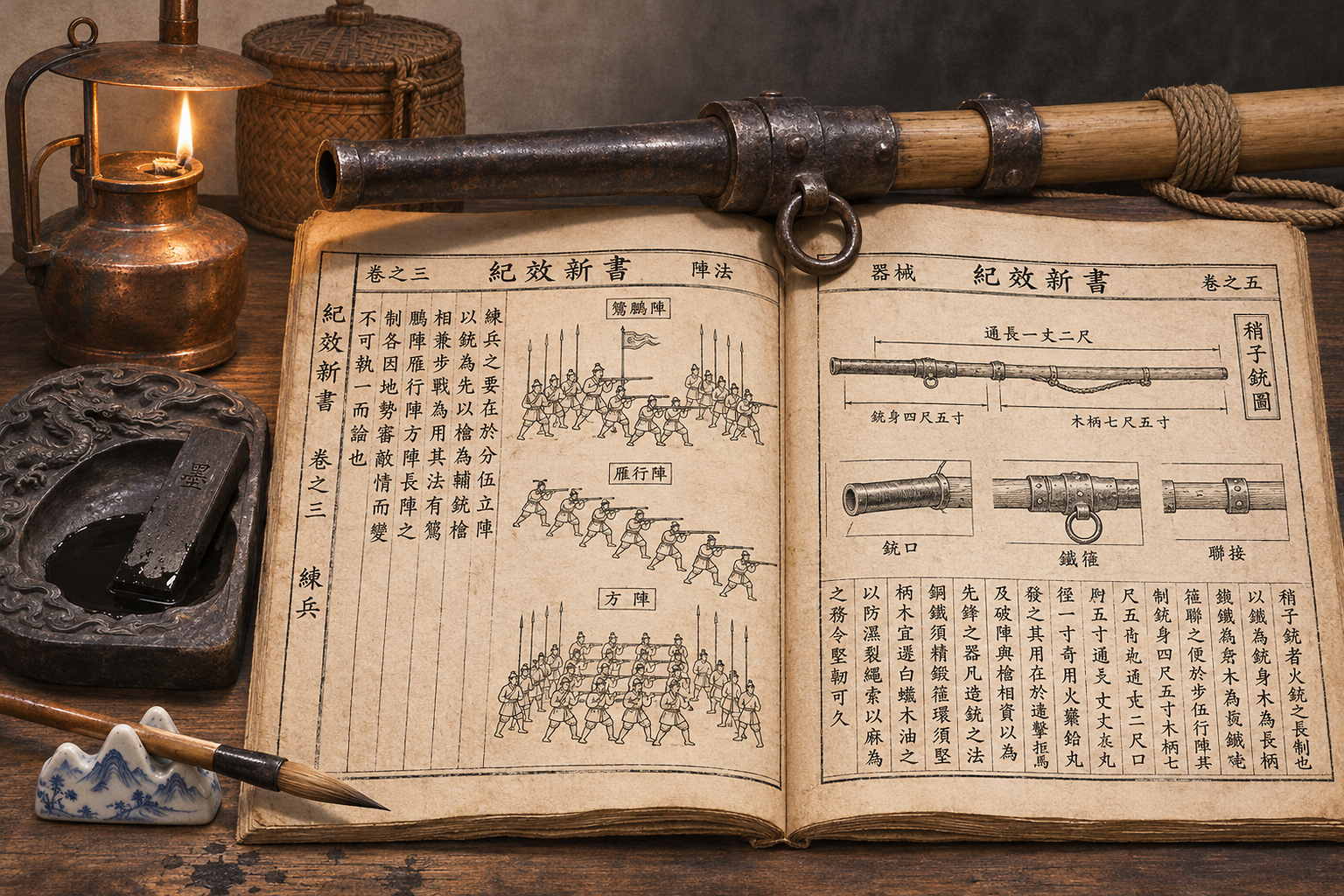
Appointed to command coastal defenses in Zhejiang in 1555, Qi Jiguang realized that victory depended on discipline and practical armaments rather than individual martial virtuosity. In his landmark military manual, the Jixiao Xinshu (New Treatise on Military Efficiency), Qi codified the recruitment, physical conditioning, and tactical drills of peasant soldiers drawn from the mining and farming communities of Yiwu.
Qi Jiguang viewed individual weapon styles critically. In his writings, he warned against theatrical weapon routines practiced by civilian martial artists, which looked impressive in courtyards but collapsed in formation combat. The two-section flail, in Qi's estimation, possessed an honest, direct utility: it was cheap to produce, familiar to rural recruits who had used threshers since youth, and devastatingly reliable when swung behind the protection of defensive polearms.
Anatomy and Proportions of the Shaozi Gun
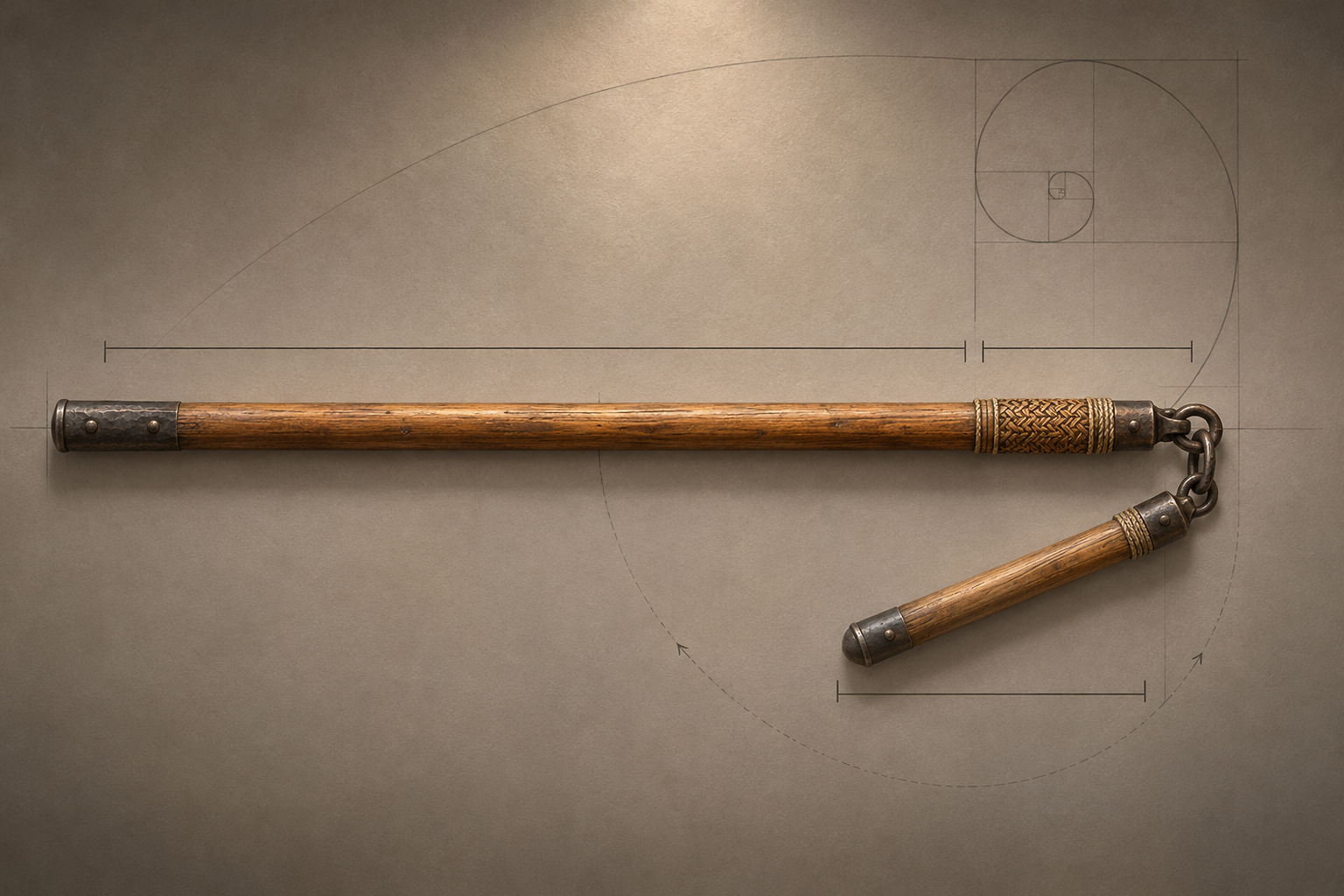
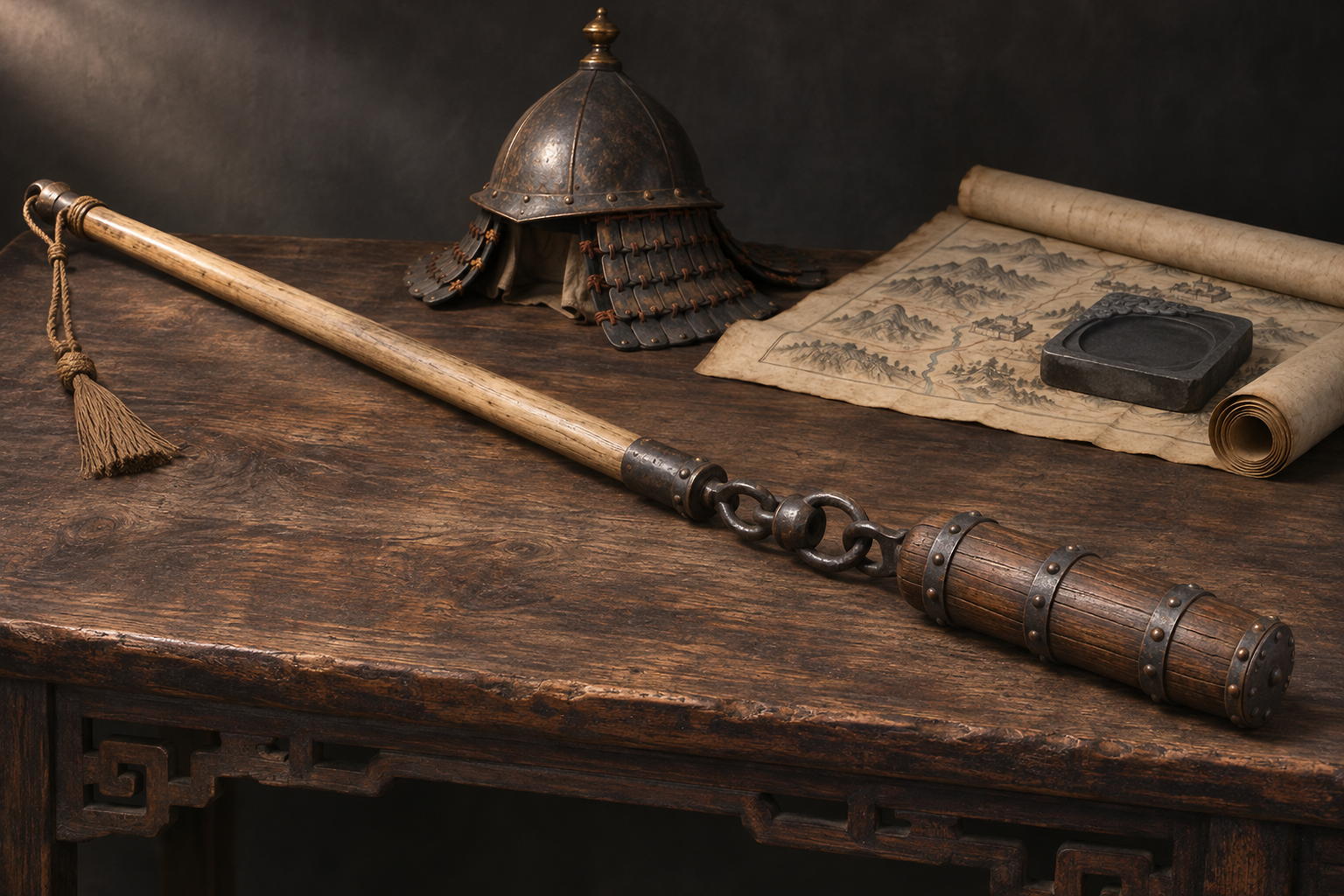
The military two-section flail described in late Ming texts was distinct from symmetrical martial arts flails. Instead of two equal halves, the weapon featured a marked asymmetry. The handle, or main staff (da gun), measured roughly five to six feet in length, providing the operator with the stand-off distance necessary to confront blade-bearing opponents. The striking head (zi gun, or child staff) was significantly shorter, typically between eighteen and twenty-four inches.
This proportional disparity allowed the user to generate high angular velocity at the tip while maintaining a stable two-handed grip on the main staff. The pivot point concentrated kinetic energy into the shorter head during the swing. Because the head traveled along an independent rotational axis once the main shaft halted or changed direction, the weapon delivered an unpredictable, whipping impact that was difficult for an opponent to judge or redirect.
Haft Materials and Regional Wood Selection
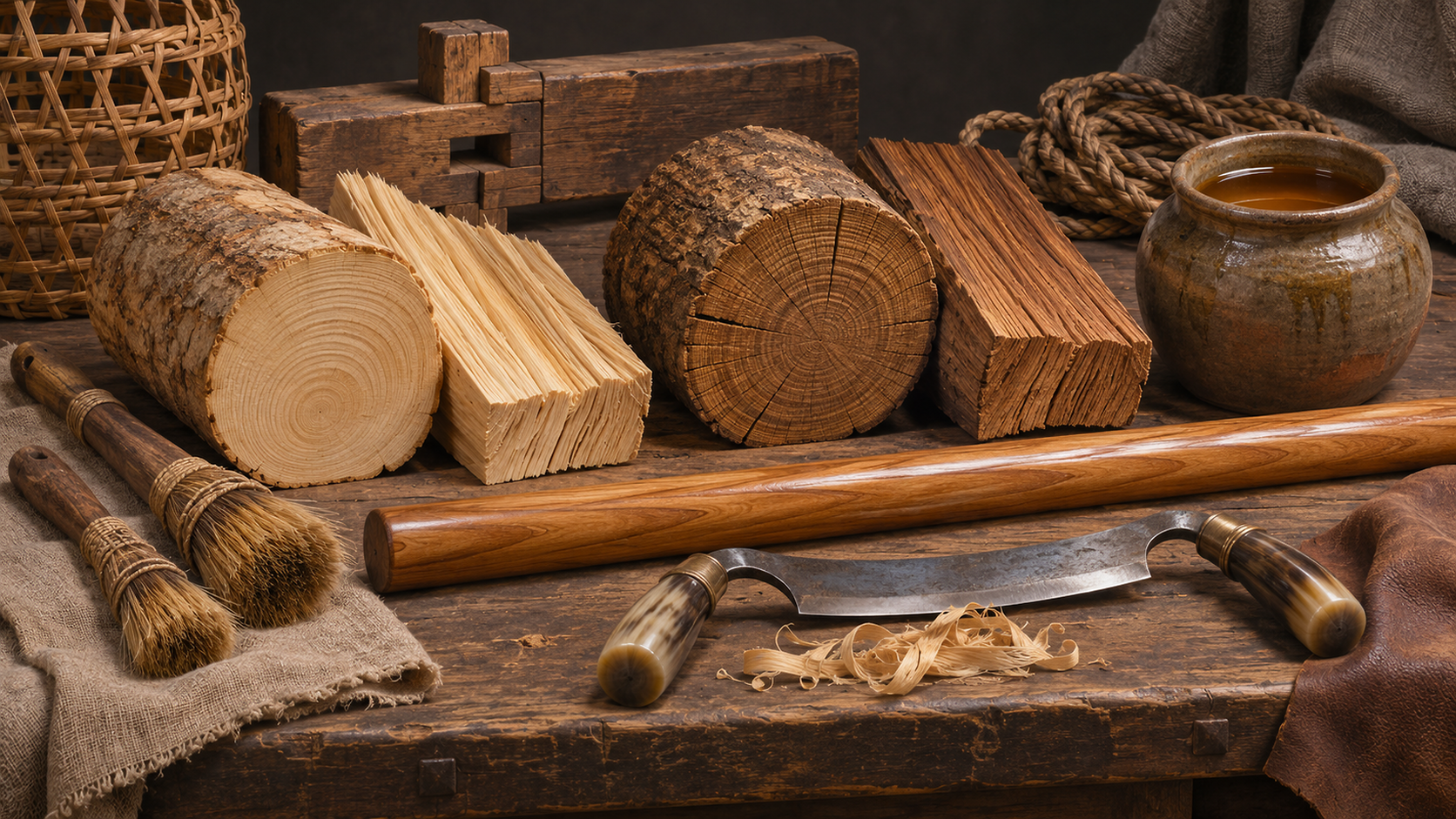
The performance of a jointed staff depended entirely on the mechanical properties of its timber. A brittle wood would shatter on impact, while an overly flexible wood would bend excessively, dampening the transfer of force. In southern China, military artisans favored hardwoods that balanced tensile strength with shock absorption.
White wax wood (baila) and several varieties of regional oak were selected for their interlocking grain structure. White wax wood was particularly valued because it absorbs percussive vibration without shearing along the grain, protecting the soldier's hands from debilitating numbness during repeated strikes. The wood was seasoned slowly in shaded racks to prevent cracking and treated with tung oil or lacquer to resist humidity and rot in coastal campaigns.
The Articulated Joint: Rings, Collars, and Cordage
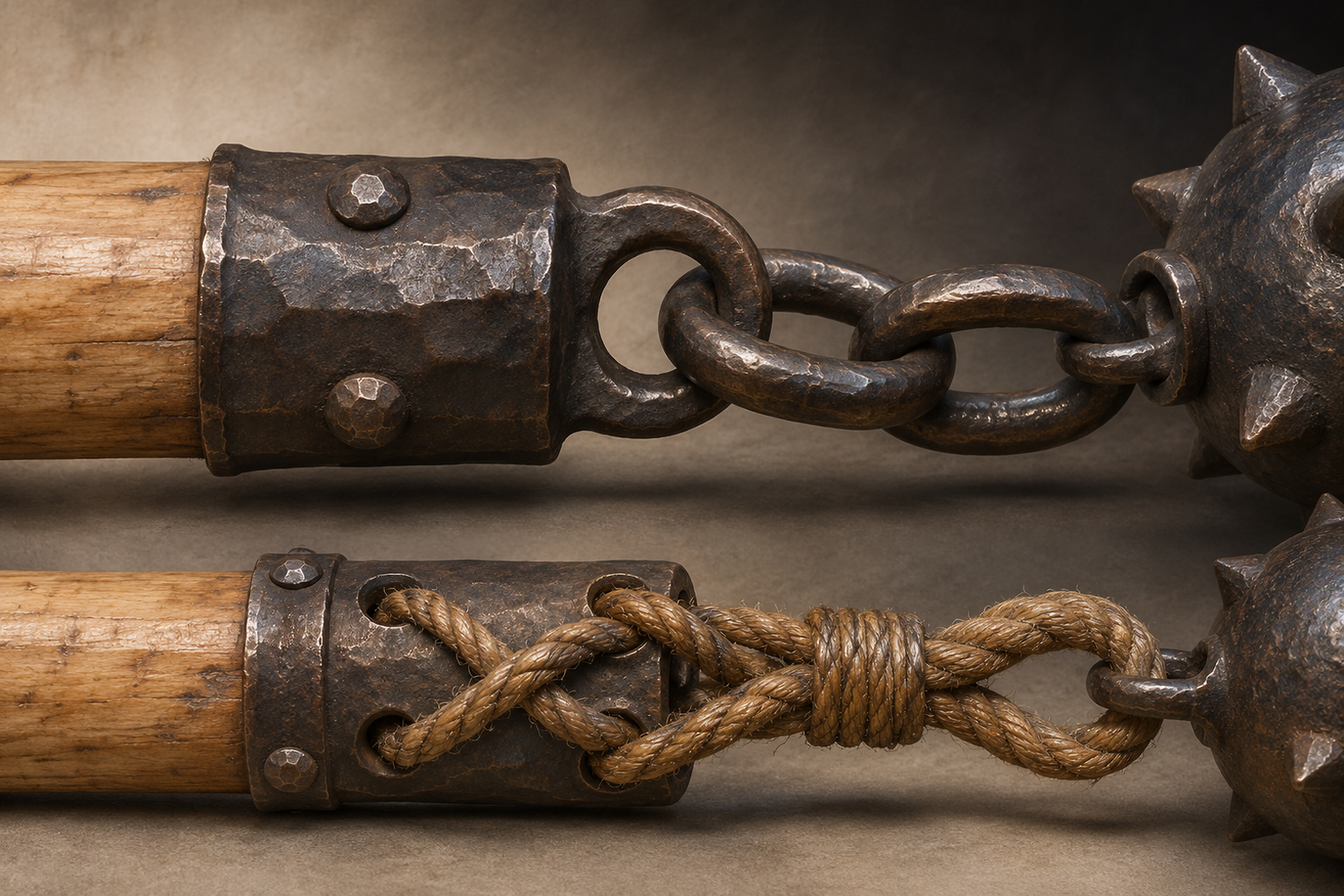
The critical mechanical failure point of any jointed weapon is the link between the shafts. If the link snaps, the striker becomes an errant projectile; if it binds, the weapon behaves as an awkward, off-balance club. Ming military manuals illustrate robust wrought-iron hardware designed to withstand repeated shock loads.
The connection typically employed iron end caps or bands secured over the ends of both wooden segments, fastened through the shaft with transverse iron rivets. From these caps projected forged iron eyelets, linked together by two or three thick wrought-iron rings. Alternatively, field units sometimes utilized rawhide thongs or tightly braided hemp cords soaked in oil. While organic links required periodic inspection and replacement, they did not rattle in night movement and provided smooth rotation without metal-on-metal wear.
The Striking Head: Iron Reinforcement and Concussive Physics
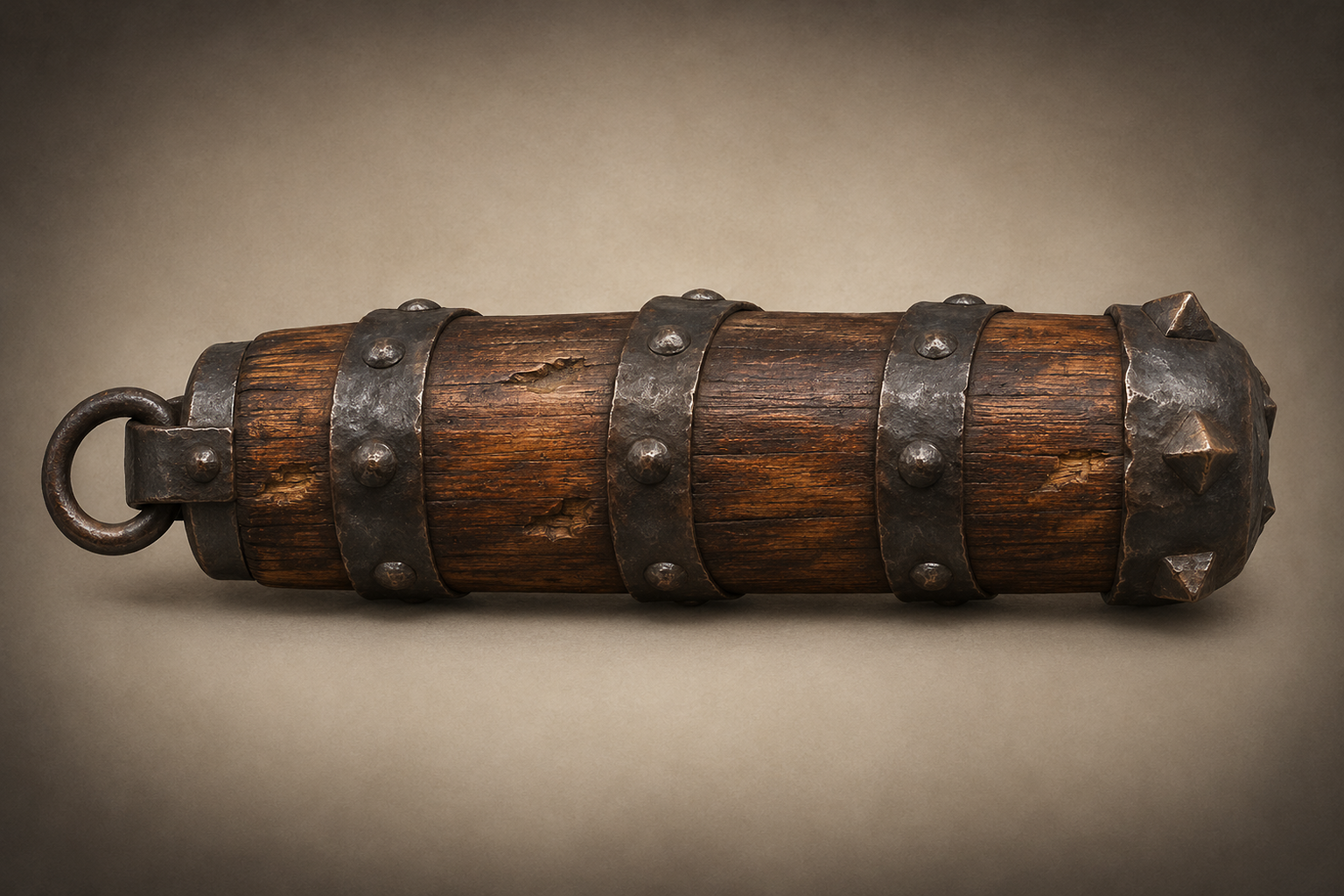
Unlike European military flails, which frequently featured cast or forged iron balls bristling with spikes, the Ming shaozi gun relied primarily on dense wood reinforced with metal fittings. The striking head was cylindrical, mirroring its agricultural predecessor, but fitted with structural iron bands along its length to prevent split grain upon impact.
Some variants documented in later Ming compendia, such as the Wubei Zhi, incorporated iron sheets wrapped entirely around the striking head, occasionally dotted with low pyramid studs. These projections concentrated the concussive load onto narrow points of contact. Against an adversary wearing lacquered leather, brigandine, or padded cotton, the striking head did not need to penetrate deeply to inflict trauma; the blunt shock readily concussed limbs, shattered clavicles, and fractured skulls through defensive gear.
Integration in the Mandarin Duck Formation
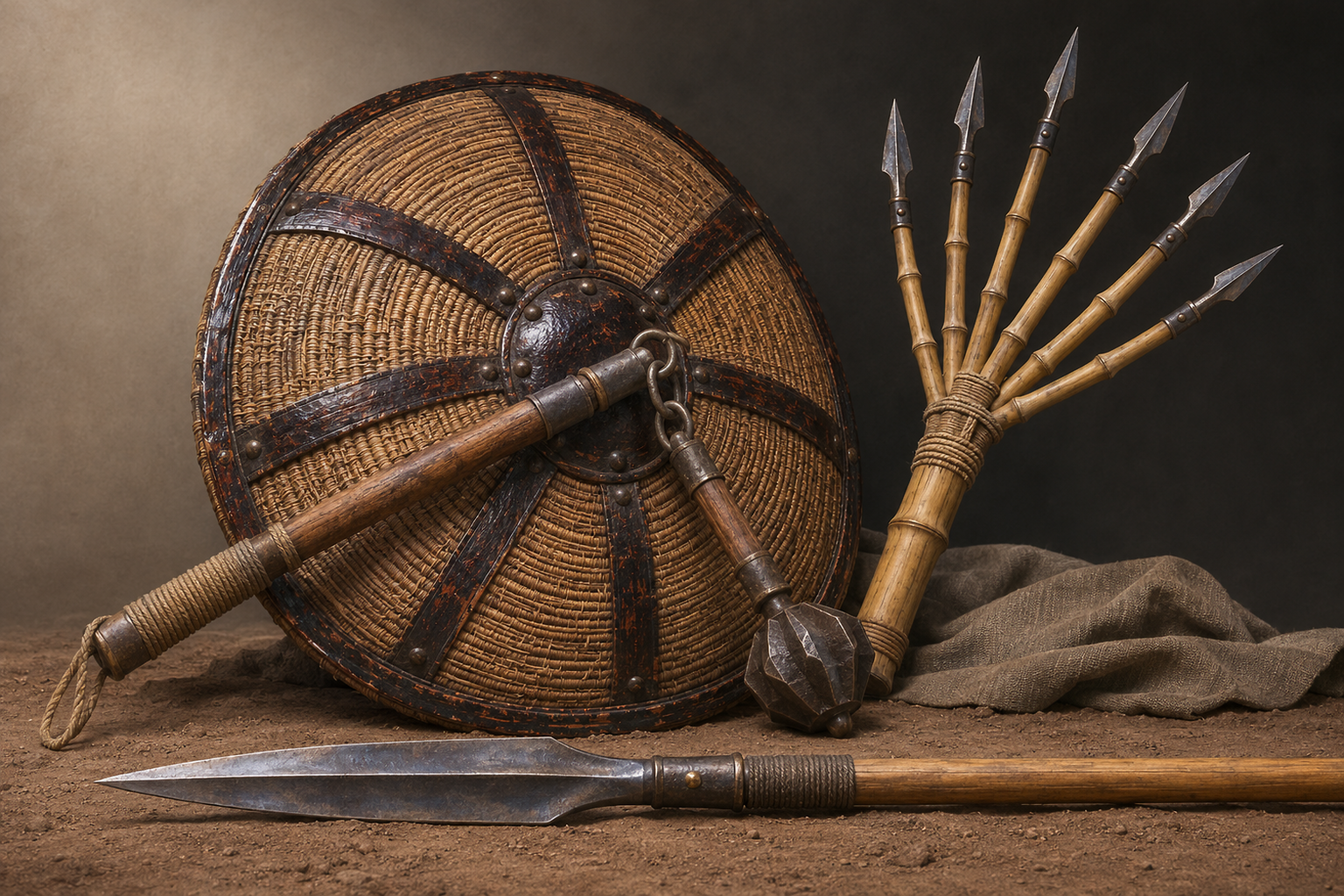
The two-section flail did not fight in isolation. Its primary historical significance lies in its tactical integration within Qi Jiguang's famous Mandarin Duck formation (yuanyang zhen). This twelve-man tactical cell operated as a tightly coordinated combined-arms team designed specifically to neutralize mobile raiding bands.
At the front of the formation stood two shield-bearers: one equipped with a large curved rattan shield (tengpai) and javelins, the other with a rectangular wooden tower shield. Immediately behind them stood two men carrying the langxian, or wolf brush—a multi-branched bamboo pole armed with iron tips and coated with poison to foul incoming sword blades. Directly behind the protective barrier of the shields and brushes stood four primary pikemen, supported on the flanks and rear by men wielding two-section flails, short swords, and fire-arrows.
The operational sequence within the squad followed a strict cooperative pattern:
- Shield-bearers absorbed the initial charge and checked the momentum of the raiders.
- The multi-branched wolf brushes entangled sword blades and obscured enemy vision.
- Long pikes thrust through the screen to pin or impale the trapped adversaries.
- Flail-men struck over the top of the defensive line, crushing helmets and limbs that bypassed the pike tips.
Tactical Counter to the Japanese Sword
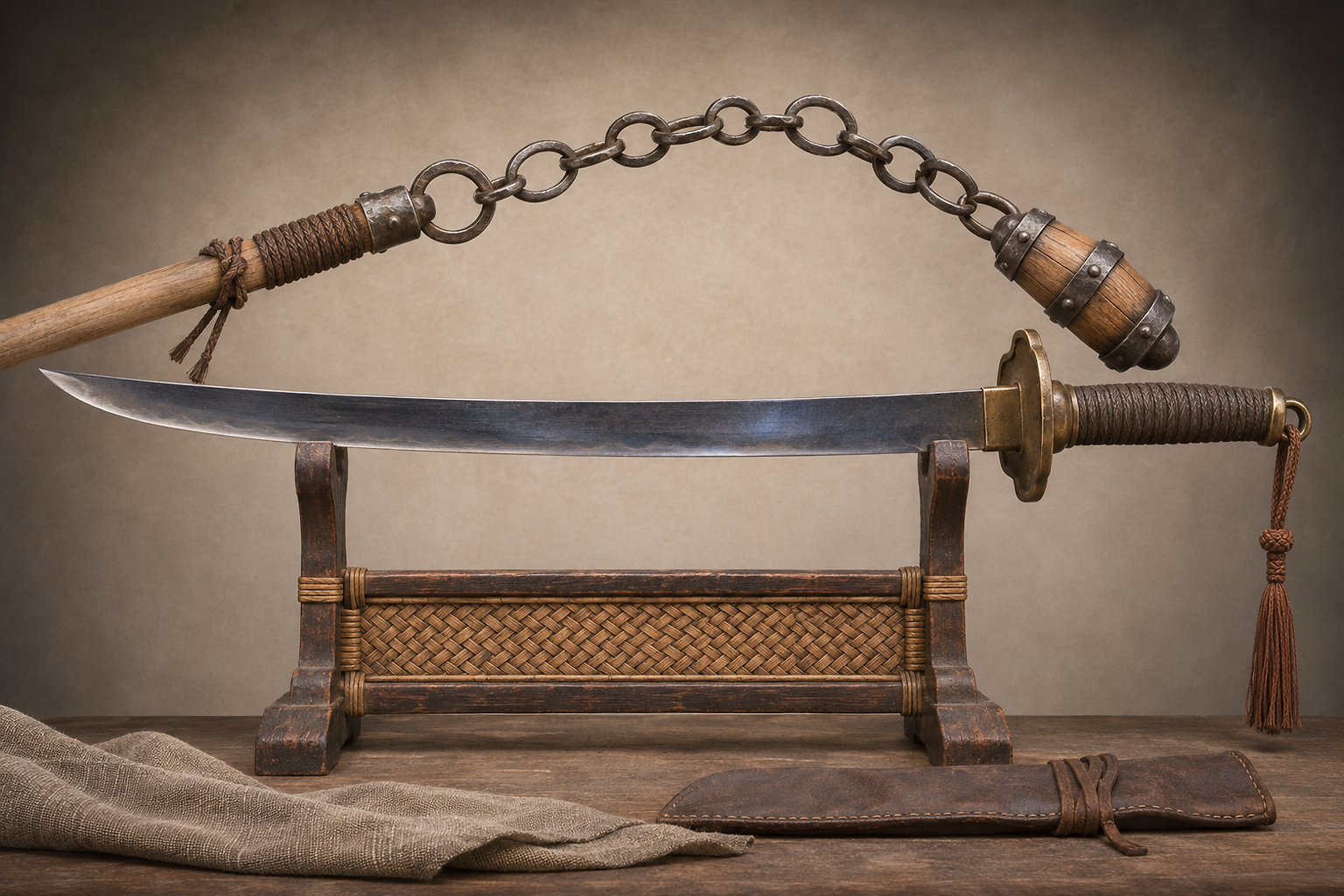
The two-handed Japanese sword (wodao or nihonto) possessed exceptional cutting ability against unarmored or lightly armored Ming troops. The speed and aggressive footwork of Japanese swordsmen routinely overwhelmed static formations. When meeting a straight polearm, a skilled swordsman could step inside the thrust, deflect the spear shaft, and close the distance before the spearman could reset.
The two-section flail altered this dynamic. Because the striking head was articulated, it could not be parried with the rigid edge-on-edge deflections typical of Japanese kenjutsu. When a swordsman raised his blade to block a downward blow, the flexible head whipped over the guard, striking the sword-bearer's hands, shoulders, or helmet. The downward energy of an iron-banded flail could also shatter an opponent's guard entirely, driving the sword down and exposing the attacker to follow-up thrusts from the squad's pikemen.
Field Maintenance and Garrison Logistics
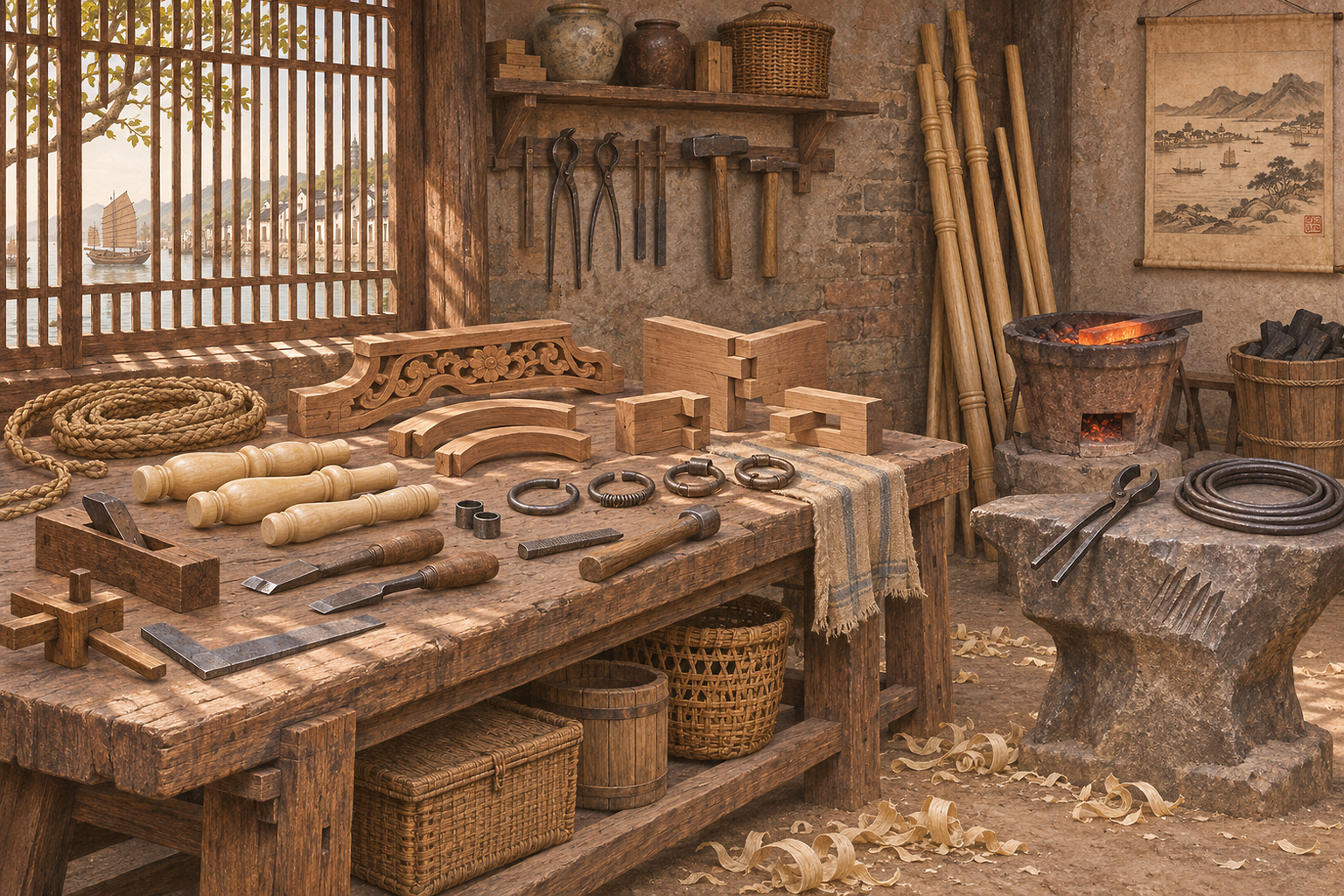
Logistical simplicity was one of the foremost advantages of the two-section flail during prolonged coastal campaigns. Iron swords and matchlocks required skilled smiths, imported gunpowder ingredients, and constant maintenance against salt-air corrosion. In contrast, the shaozi gun was built largely from regional forestry products and simple blacksmith work.
Garrison carpenters could manufacture dozens of replacement shafts in days using hand drawknives and turning jigs. Blacksmiths produced the joining rings and reinforcing bands from scrap iron. In military settlements (tuntian), soldiers drilled with weapons that their civilian neighbors could easily repair using workshop tools already present on coastal farming estates.
The Evolution from Military Weapon to Martial Art Implement
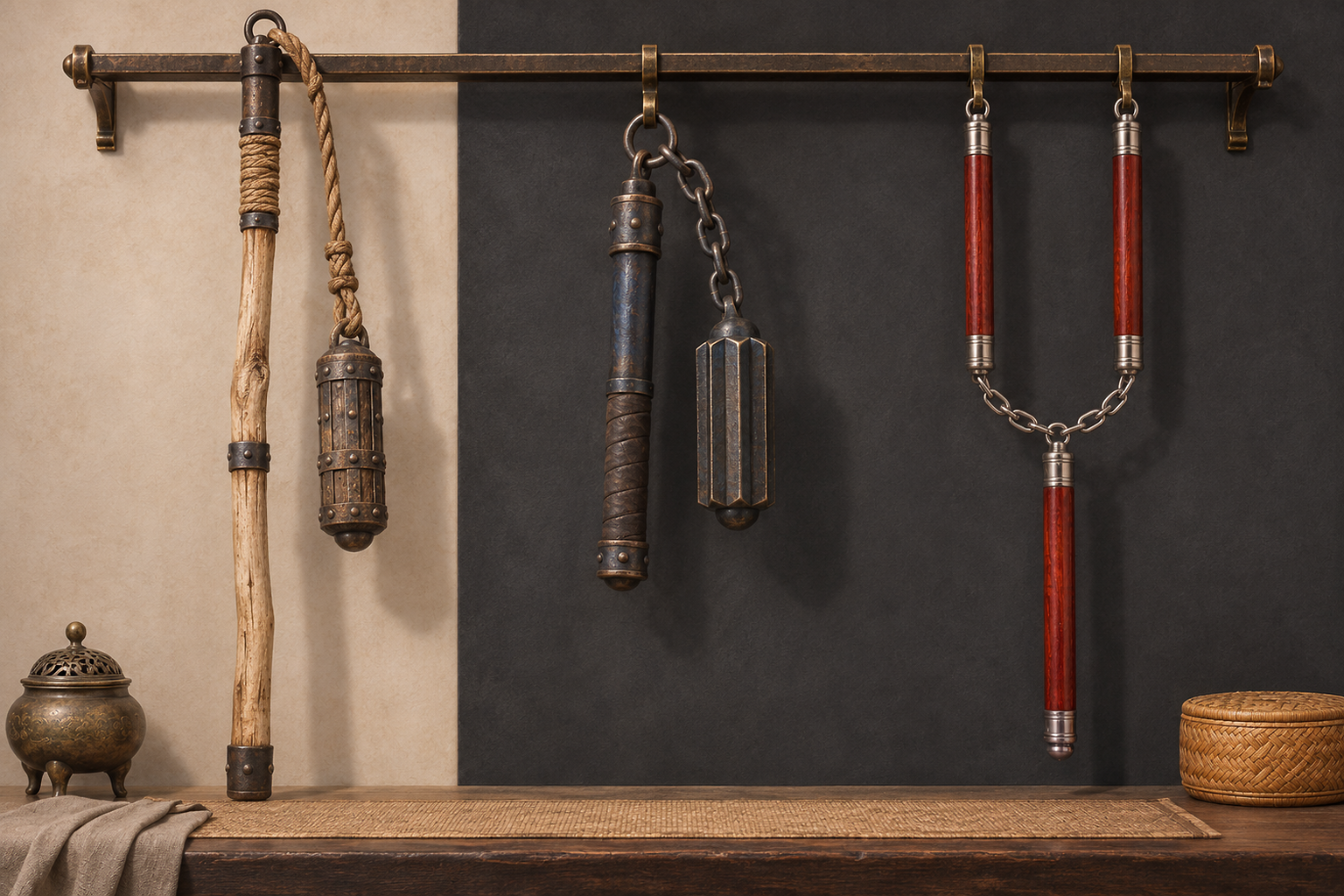
As the coastal piracy crises waned toward the close of the sixteenth century and the Ming dynasty faced new nomadic threats on the northern frontiers, the tactical role of the infantry flail shifted. While northern cavalry units adopted short iron horse-flails (tie lianjia) to strike over shields from horseback, the long infantry two-section staff gradually moved from active battlefield rosters into municipal militias, temple guards, and civilian martial traditions.
In the subsequent Qing dynasty, martial arts manuals began emphasizing symmetrical two-section and three-section staves (sanjiegun) optimized for individual self-defense and athletic exhibition. In this transition, the brutal concussive focus of the Ming squad weapon was largely overshadowed by complex spinning routines and continuous rotational passes. The original shaozi gun was not designed for fluid acrobatic flourishes; its purpose was a devastating downward or diagonal stroke aimed at smashing a charging raider behind a protective screen of rattan and bamboo.
Historiography, Archaeology, and Reassessment
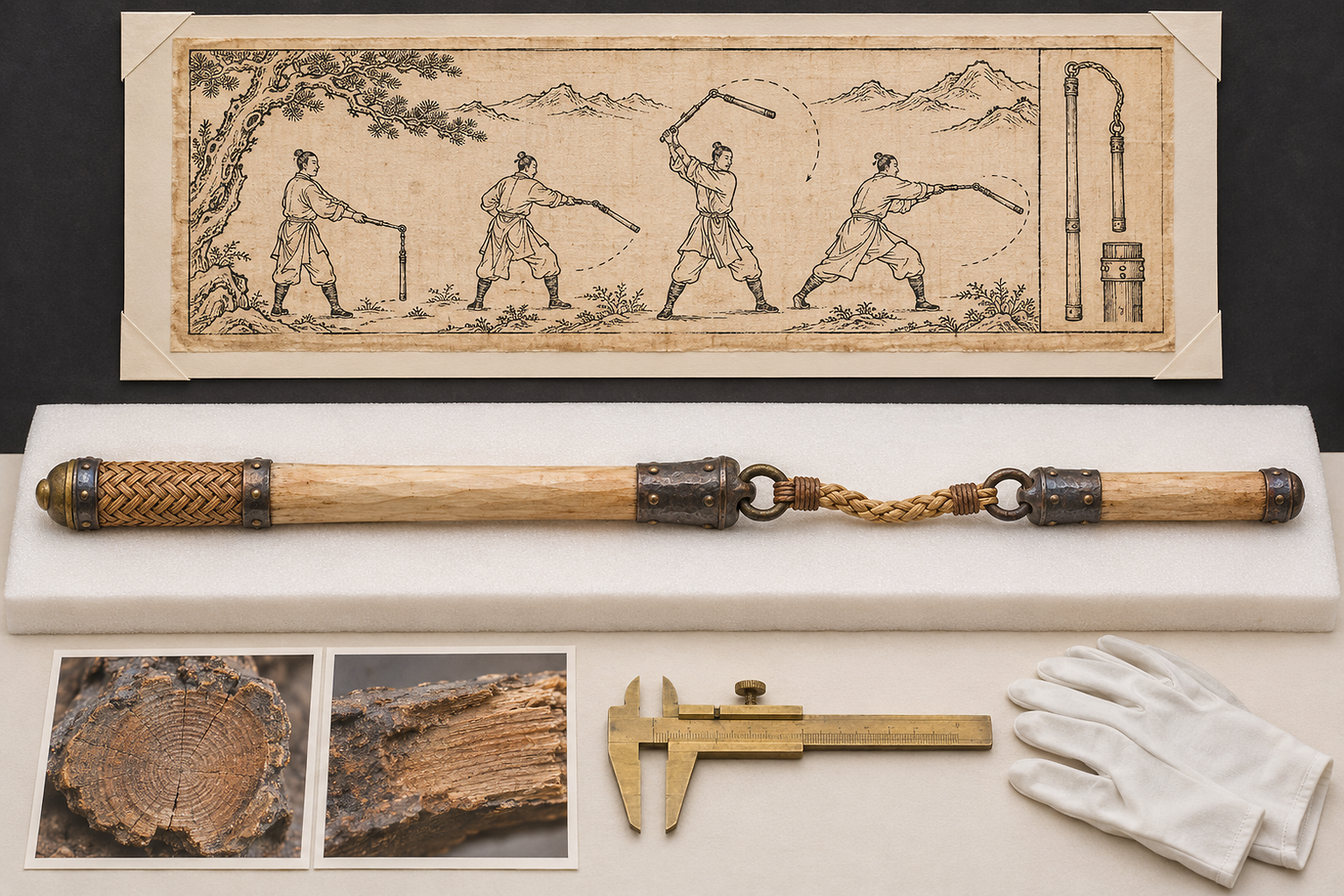
Modern historical understanding of the Ming two-section flail faces substantial evidentiary limitations. Surviving sixteenth-century examples with intact wood and original cordage are virtually nonexistent in museum collections. Most surviving flails preserved in regional armories date from the nineteenth century or represent late Qing theatrical weaponry with lighter fittings and polished wood.
Scholars and experimental archaeologists must therefore correlate the brief technical passages and woodcuts of the Jixiao Xinshu and Wubei Zhi with comparative agricultural ethnography and functional reconstructions. Such reconstructions demonstrate that the shaozi gun was neither an unwieldy peasant thresher nor an acrobatic showpiece. It was a calculated, cost-effective military tool that solved a specific tactical dilemma: delivering decisive concussive shock through the gaps of an aggressive sword assault.
Further reading
Follow the sources to examine the object and its historical context.
Jixiao Xinshu (New Treatise on Military Efficiency), Qi Jiguang, 1560/1588 editionsExternal reference · Opens in a new tab Wubei Zhi (Treatise on Armament Technology), Mao Yuanyi, 1621External reference · Opens in a new tab