In the armory inventories of early modern Russia, the sovnya occupies an elusive yet persistent place among the staff weapons carried by both mounted gentry and urban levies. Characterized by a broad, single-edged iron or steel blade curved gently toward an acute point, it joined the slashing reach of a saber with the leverage of a mid-length spear shaft. While nineteenth-century antiquarians sometimes conflated every curved polearm with European glaives or agricultural scythes, archaeological recoveries from Novgorod, Pskov, and Moscow demonstrate a dedicated weapon forged specifically to withstand the violent collisions of steppe and forest-fringe warfare.
The Geometry of the Edge: Blade Profiles and Curvature
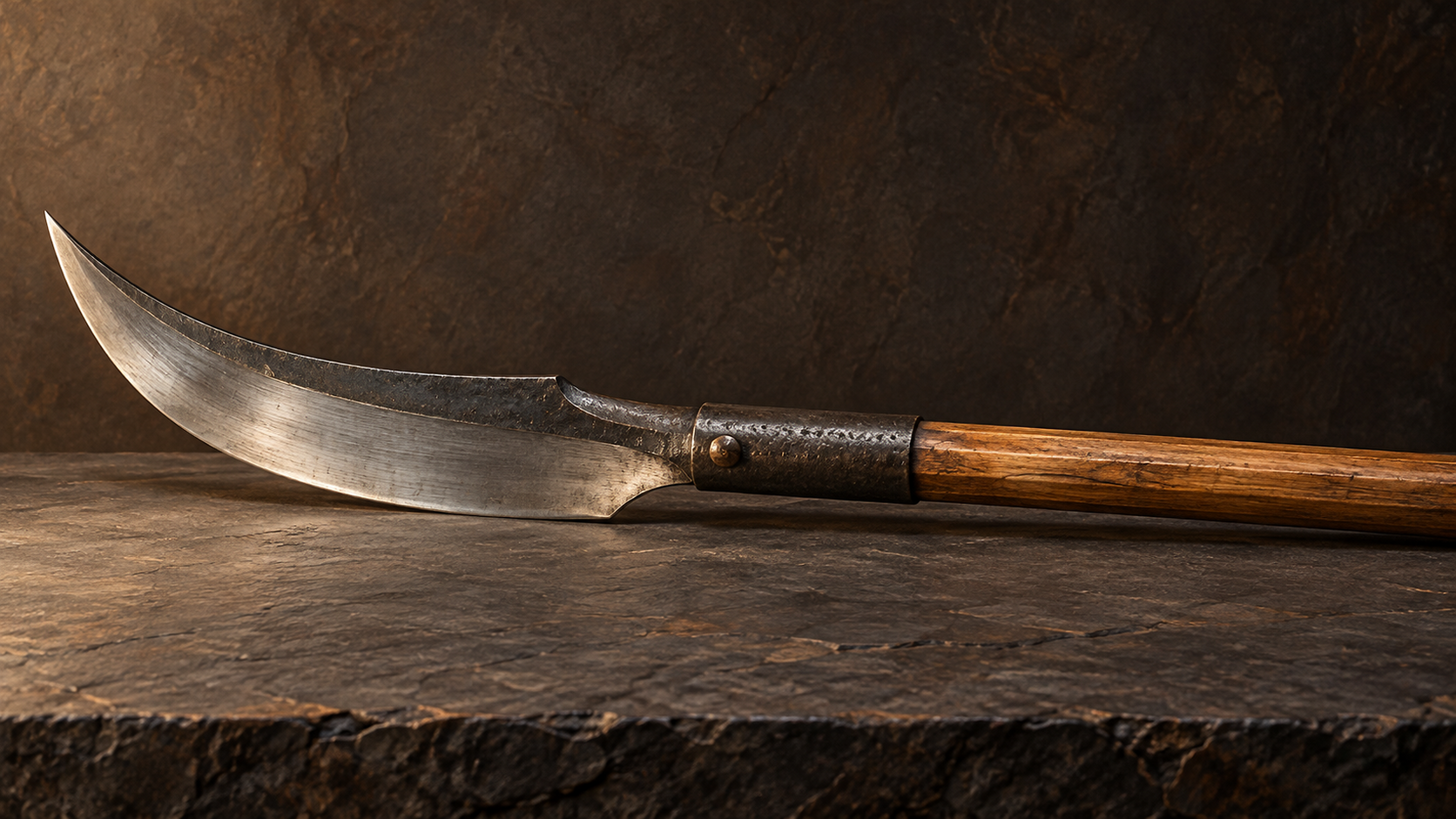
Surviving heads of the sovnya reveal an economy of line centered on versatility. Unlike the symmetrical, diamond-section heads of conventional hunting and war spears, the sovnya blade presents an asymmetric profile dominated by a continuous, sweeping cutting edge. The primary curve sweeps backward from the socket collar before rising toward a tip that sits almost in line with the haft axis. This alignment ensured that when a rider drove the weapon forward in a straight thrust, the force traveled cleanly through the spine into the target without wrenching the shaft from the grip.
The blade profiles preserved in archaeological finds from northwestern and central Russia typically measure between 30 and 50 centimeters in blade length, with a width varying between 4 and 7 centimeters at the widest swell of the belly. The back remains blunt and unsharpened along the lower two-thirds of its run, allowing the weapon to absorb heavy parries without chipping. Near the tip, many specimens exhibit a slight taper or a ground false edge, a feature that reduced mass at the distal end while keeping the point narrow enough to enter gaps in mail or the seams of plate-reinforced brigandines.
The Spine and Cross-Section: Structural Rigidity Under Impact
The mechanical demands placed on a single-edged polearm differ fundamentally from those placed on double-edged thrusting spears. When driven against a moving horseman or deflected by a wooden shield, a thin blade bends or snaps along its flat. Russian smiths addressed this vulnerability by forging sovnya heads with substantial spines, creating a wedge-shaped or triangular cross-section that concentrated steel behind the primary bevel.
At the base of the blade just above the socket, the spine often exceeds 8 to 10 millimeters in thickness. This robust core tapers gradually toward the point in a controlled distal thinning, maintaining stiffness without rendering the weapon top-heavy. Some sixteenth-century blades incorporate a distinct longitudinal ridge or a shallow fuller hammered along the upper third of the blade flat. This fuller did not serve to drain blood, as romantic folklore long asserted, but acted instead as an engineering measure to remove unnecessary dead weight while preserving the structural rigidity of the outer envelope.
Under microscopic and metallographic analysis of contemporary sixteenth-century Russian edged tools and weapons, these heads frequently display composite iron and steel construction. Smiths forge-welded high-carbon steel strips onto a softer, shock-absorbing wrought iron spine. This combination allowed the cutting edge to take and hold a keen temper while the resilient iron core flexed slightly under violent impacts rather than shattering.
Forging the Socket: Sleeves, Welds, and Fasteners
The transition from blade to shaft required a mount capable of enduring severe rotational torque. Surviving heads universally employ a socket mount rather than a tang, forged directly from the lower extension of the iron billet. The smith drew out the metal into a broad, flat sheet, then rolled it around a conical mandrel to form a tapered cylinder known in contemporary records as the trubka or tube.
In many working-grade weapons, the longitudinal seam of the socket was left open or merely overlapped cold, allowing the iron sleeve to expand slightly when driven onto the tapered wooden shaft. On higher-status or more carefully finished weapons, the seam was fully hammer-welded shut, creating a continuous ring of metal capable of resisting splitting even under direct blows from axes or maces.
To prevent the iron head from sliding off during a deep withdrawal, smiths pierced the socket walls with one or two transverse rivet holes. Through these, the armorer drove short iron nails or copper-alloy pins, clinching the ends flush against the metal collar. This mechanical connection was often supplemented by boiling pitch or animal glue applied directly to the shaved wooden tenon before final seating.
Medieval Predecessors: From the Common Knife to the Polearm
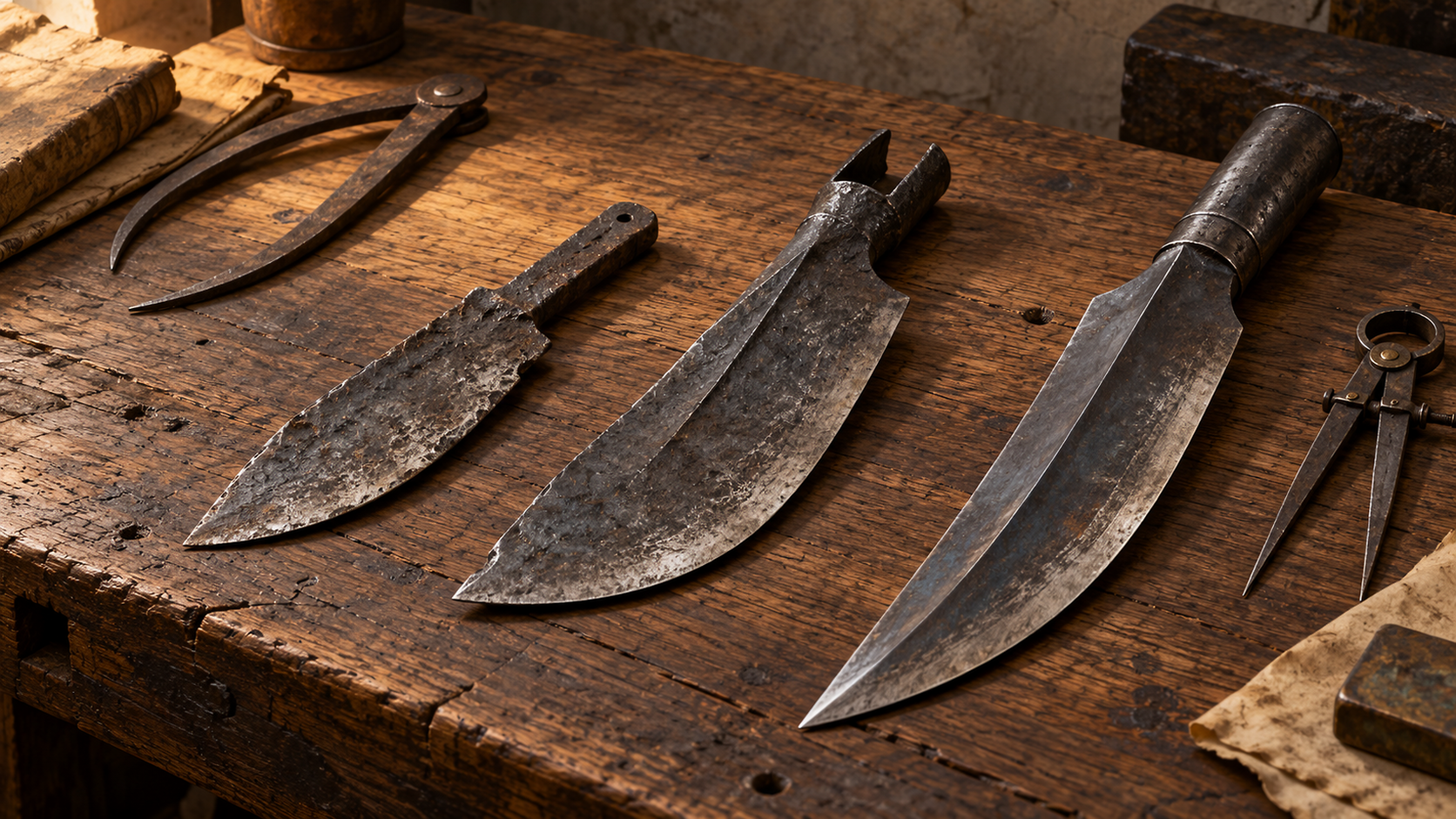
The emergence of the sovnya reflects a broader Eurasian pattern in which oversized single-edged utility implements evolved into specialized military weapons. In thirteenth- and fourteenth-century Rus', peasants and hunters frequently mounted scythe blades, billhooks, and large butchering knives onto poles during sudden levies. The martial sovnya, however, was not an improvised scythe; it developed from deliberate adaptations of heavy battle knives and short single-edged sabers.
The root of the word itself connects within Slavic linguistic tradition to the verb sovat', meaning to thrust, shove, or poke. This etymological link reinforces the functional priority of the weapon. While its belly permitted sweeping draw-cuts against unarmored opponents, the tip remained aligned for deliberate thrusting. Medieval archaeological strata at Novgorod have yielded elongated single-edged blades from the fourteenth and fifteenth centuries that bridge the morphological boundary between the heavy hunting knife (kolodach) and the fully developed cavalry staff arm.
By the opening decades of the sixteenth century, the Muscovite state had standardized its military levies under the grand dukes and early tsars. The improvised scythes of earlier peasant rebellions yielded to purpose-forged weapons produced in urban blacksmithing quarters, establishing the sovnya as an accepted item in muster rolls alongside the lance and the composite bow.
Sixteenth-Century Cavalry Warfare on the Muscovite Frontier
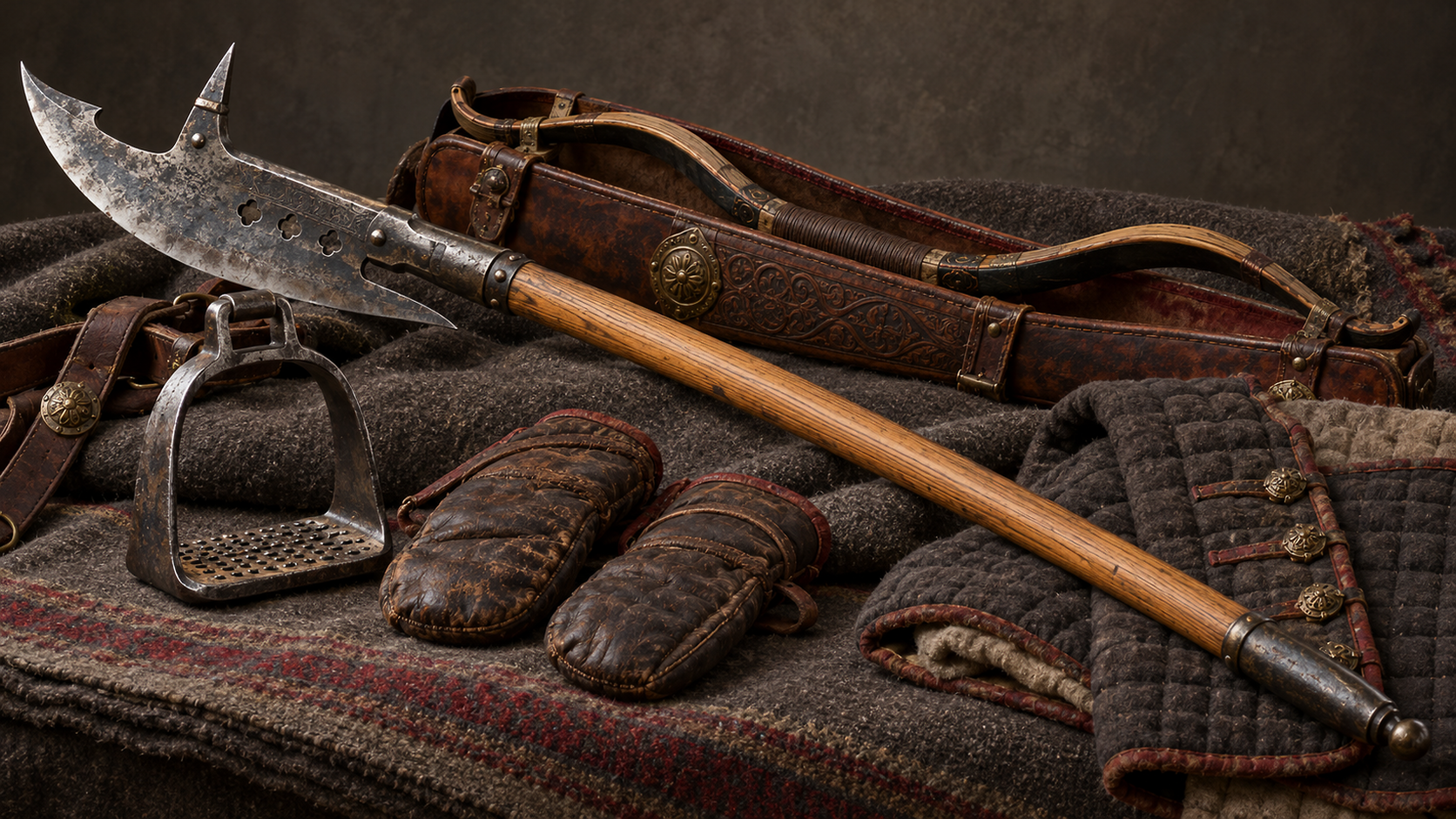
The operational environment of sixteenth-century Muscovy was shaped by chronic, fluid warfare across vast steppe borders and through dense northern river basins. The primary military instrument of the Russian state was the pomestnaya konnitsa, a provincial noble cavalry mobilized on land-grant tenure. These horsemen faced two radically different operational challenges: the lightning raids of Crimean and Nogai Tatar horse archers in the open southern steppes, and the disciplined, plate-armored cavalry and infantry pike squares of the Grand Duchy of Lithuania and the Kingdom of Poland to the west.
In this tactical landscape, flexibility was essential. Muscovite cavalrymen were mounted archers first, carrying the composite bow in a saadak bowcase, supplemented by a saber at the waist. Yet archery alone could not resolve every melee. When cavalry formations clashed or when mounted troops were forced to dismount and defend a fortified wagon-train (gulyay-gorod), the sovnya offered a weapon that could be deployed both from horseback and on foot.
Mounted servitors of modest means, who could not afford multiple warhorses or heavy imports of Western plate armor, relied on the reach of the sovnya to keep steppe raiders at bay. The long blade allowed a rider to thrust into an incoming horse's chest or slash at an unarmored flank during a passing skirmish, combining offensive bite with defensive space.
Haft Length, Balance, and Mounted Mechanics
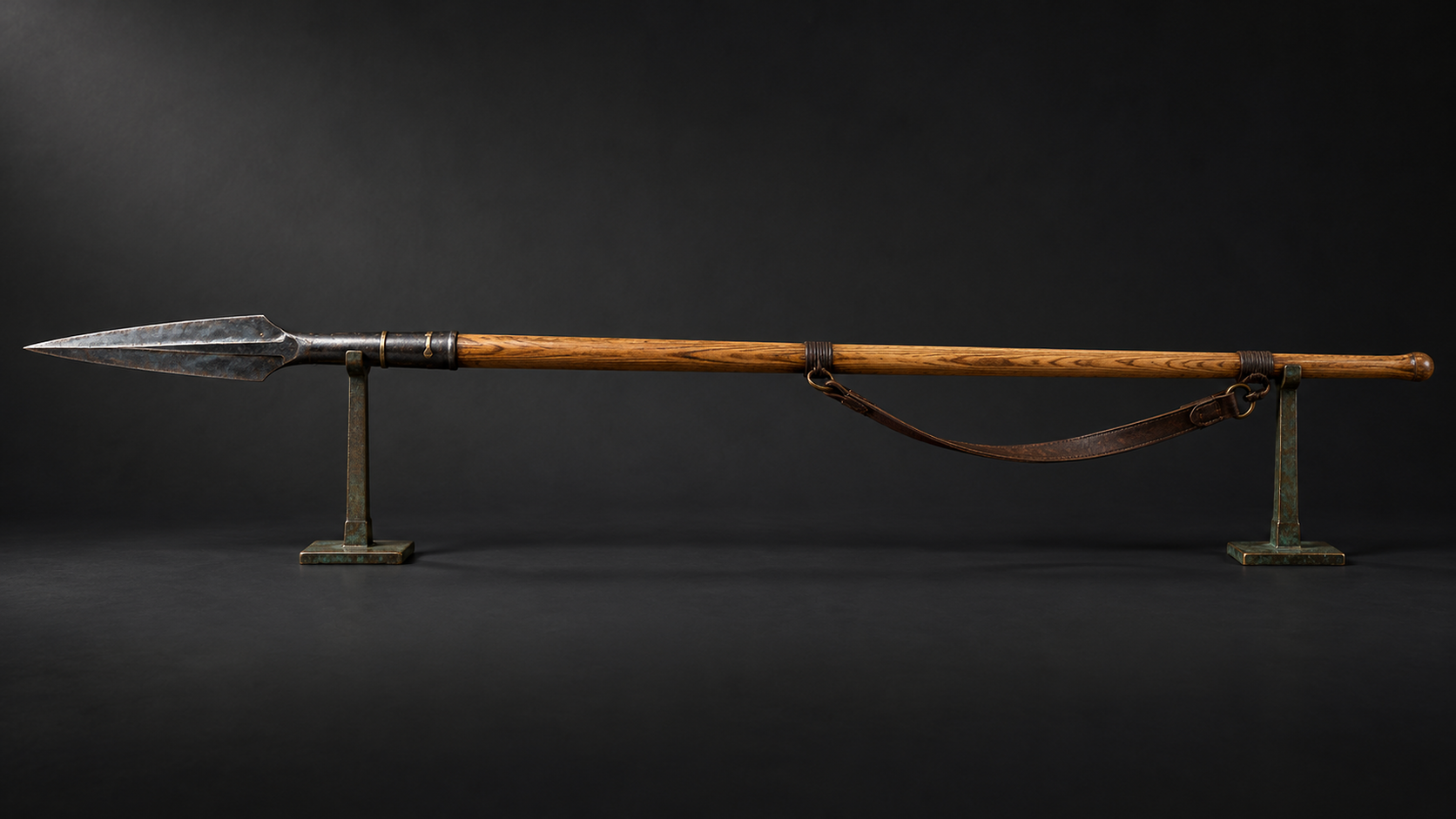
The length of the wooden haft distinguished cavalry weapons from the sprawling pike-like arms of the infantry. A haft designed for the saddle could not exceed the rider's ability to manage it with one hand while holding the horse's reins, nor could it be so long that it caught in dense brush or tangled in the horse's rigging during a sudden pivot.
Archaeological reconstructions and documentary evidence indicate that cavalry hafts for the sovnya generally measured between 1.5 and 2 meters in total length. This stood in marked contrast to the massive foot soldier's rogatina, which could feature shafts over 2.5 meters long, or the European infantry pike which exceeded 4 meters. A 1.8-meter shaft allowed the weapon to rest comfortably along the rider's thigh or be slung via a leather loop over the shoulder while the horseman operated his bow.
Effective mounted handling depended directly on how that haft balanced against the forward weight of the iron head.
The point of balance typically sat roughly 20 to 30 centimeters below the socket, placing sufficient mass forward to deliver shearing power during a downward slash without exhausting the rider's forearm during prolonged maneuvers. When couched under the arm for a short charge, the relatively light total weight—rarely exceeding 1.8 kilograms—permitted rapid changes in direction, allowing the horseman to redirect the point toward an elusive target with a flick of the wrist.
The functional equilibrium of the cavalry sovnya depended on three mechanical relationships:
- The blade mass counterbalanced the longer wooden shaft, shifting the center of percussion into the upper third of the cutting edge.
- The overall length remained short enough to be drawn across the horse's neck without striking the animal's ears or bridle.
- The haft diameter was pared down toward the butt, reducing rearward bulk while preserving grip ergonomics near the point of balance.
Timber Selection and Woodworking for Horseback Combat
The survival of a polearm depended as much on the timber selected for its haft as on the steel of its head. In the forest zones of Muscovy, craftsmen possessed deep experiential knowledge of local hardwoods. Ash (yasen) was prized above all other species for weapons hafts due to its long, straight grain, exceptional tensile strength, and natural elasticity, which absorbed violent shock waves before they reached the wielder's hands.
Where ash was scarce, armorers turned to dense birch (berezovoe derevo) or mature oak. Birch offered excellent resistance to splitting along radial lines, though it required careful seasoning in sheltered sheds to prevent warping under humidity changes. Oak provided immense strength and hardness, making it nearly impossible for an opponent to sever the haft with a sword strike, but its greater weight and tendency toward brittleness under sub-zero temperatures made it less favored for light cavalry use.
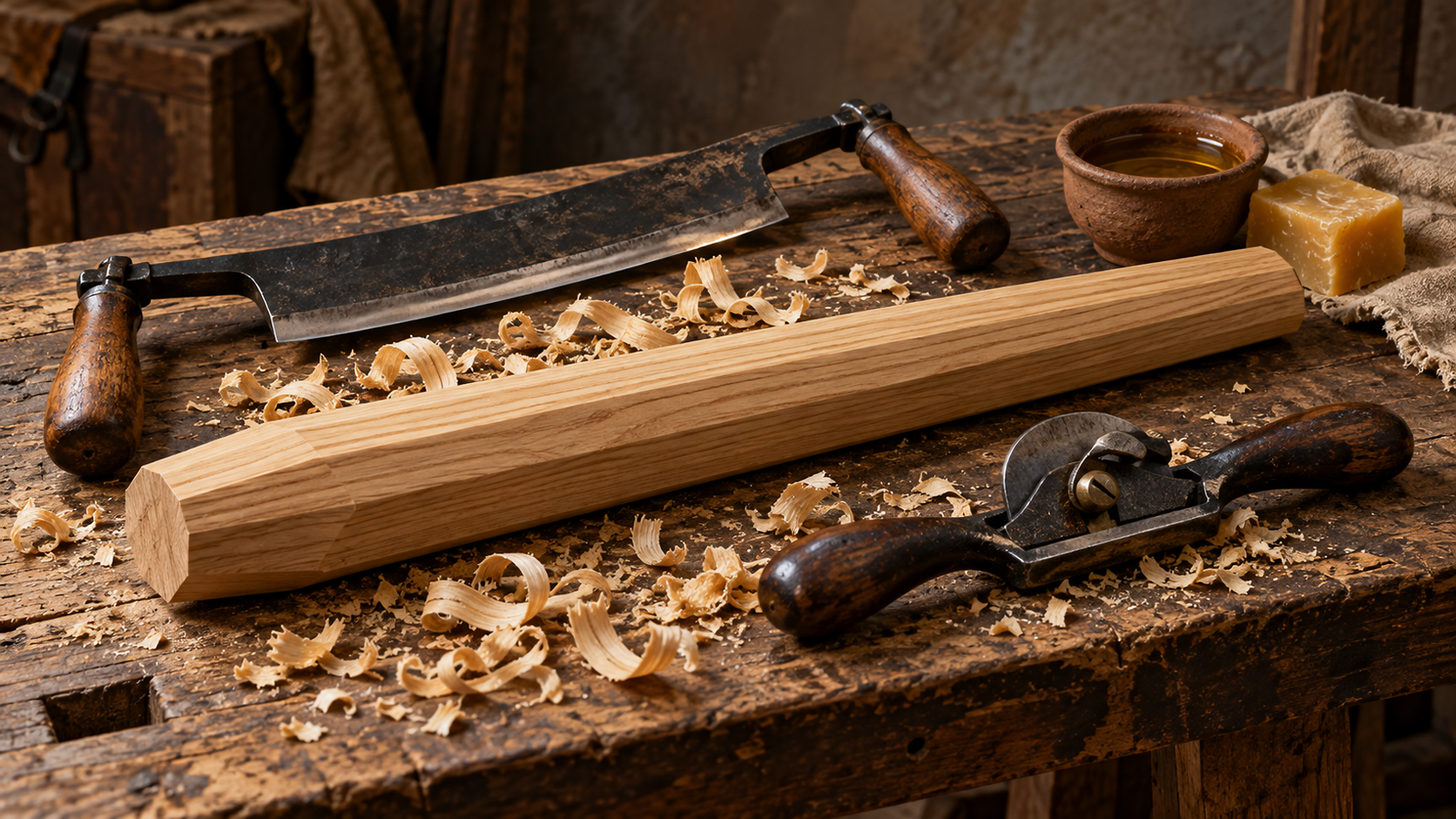
Hafts were shaped using drawknives and spokeshaves to an oval or octagonal cross-section rather than a smooth cylinder. This faceted profile served an indispensable tactile purpose: it allowed the fighter to orient the cutting edge instantly by feel alone, even through thick leather or fur-lined mittens, without glancing down at the blade. The surface was rubbed with linseed oil or beeswax to resist water penetration, preventing the wood from swelling and loosening the socket fitting.
Armor Penetration: The Sovnya Against Mail and Padded Gambesons
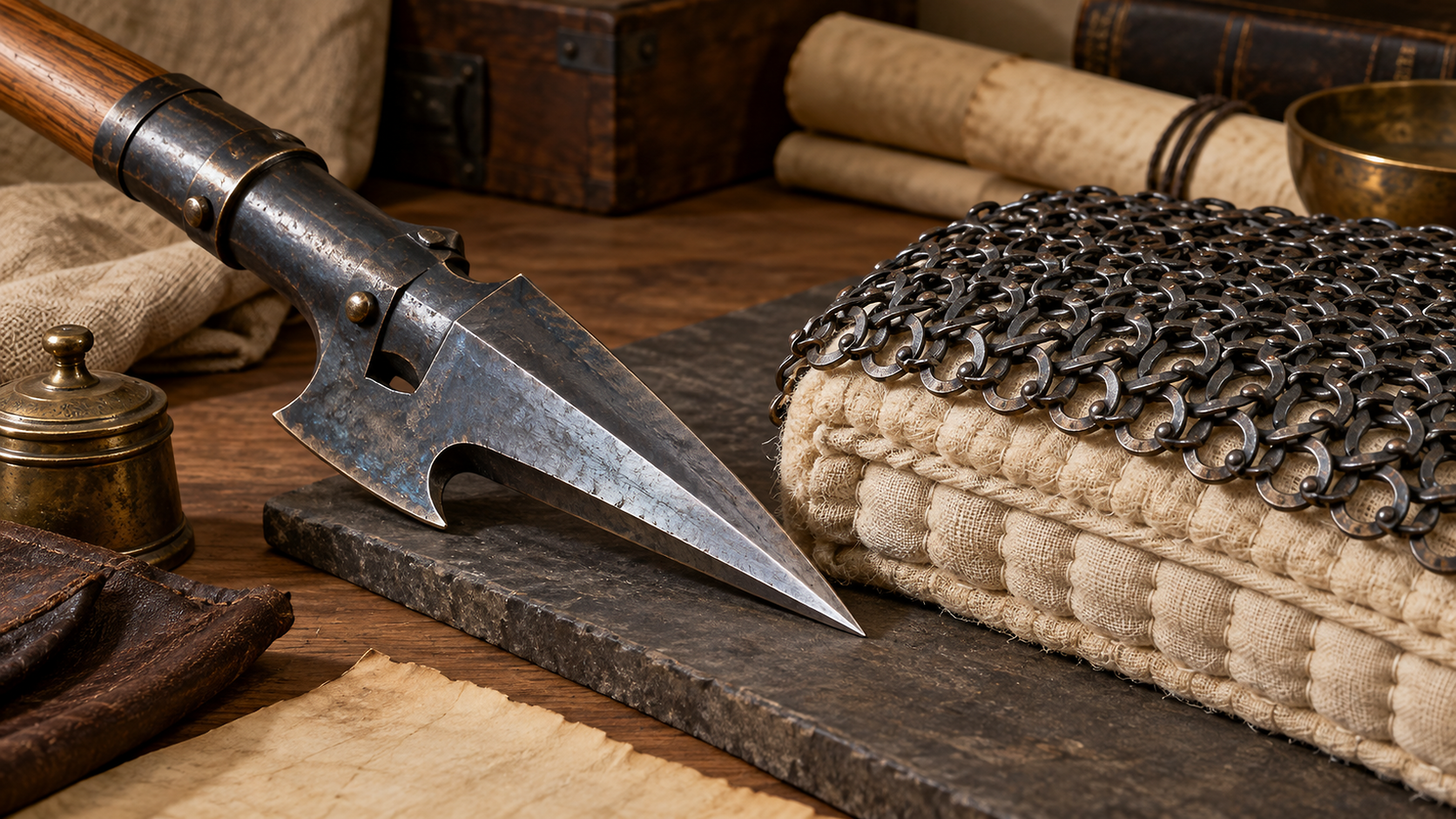
The defensive equipment encountered on the sixteenth-century Russian frontier ranged from multi-layered quilted coats (tegilai) and chain mail (kolchuga) to lamellar coats (kuyak) and imported Western cuirasses. The sovnya was engineered to contend with this diverse protective spectrum through distinct mechanical actions.
Against the heavy padded tegilai worn by many eastern horsemen, a slashing strike from a sword often dissipated without cutting through the compressed wool or hemp batting. The sovnya, with its forward-weighted mass and long two-handed lever, concentrated far greater kinetic energy along a narrower cutting arc, allowing it to slice through dense textiles. When facing chain mail, the acute reinforced tip functioned as a chisel point. The triangular cross-section forced the iron wire links outward until they ruptured at the rivets, driving the blade deep into the underlying torso.
Against rigid plate defenses, such as the steel breastplates worn by Polish husaria or German mercenary landsknechts, the sovnya's cutting edge was ineffective. In these encounters, horsemen used the weapon as an unseating tool or aimed for exposed extremities.
The rigid point was directed into the groin, armpits, throat, or horse harness, where plate coverage was interrupted. Furthermore, the thick iron socket and back of the blade could deliver blunt concussive blows against helmets and visors, stunning an adversary long enough to close with a dagger or war hammer.
Tactical engagements against armored targets followed specific physical mechanics:
- Thrusts targeted the open articulation points of limb harness and the unprotected sight slits of closed helms.
- The back of the blade served to hook reins, shields, or saddle furniture, pulling an opponent off balance.
- Downward chops focused on the neck and shoulders, relying on the weapon's leverage to crush mail collars.
Terminology and Clerical Records in Muscovite Inventories
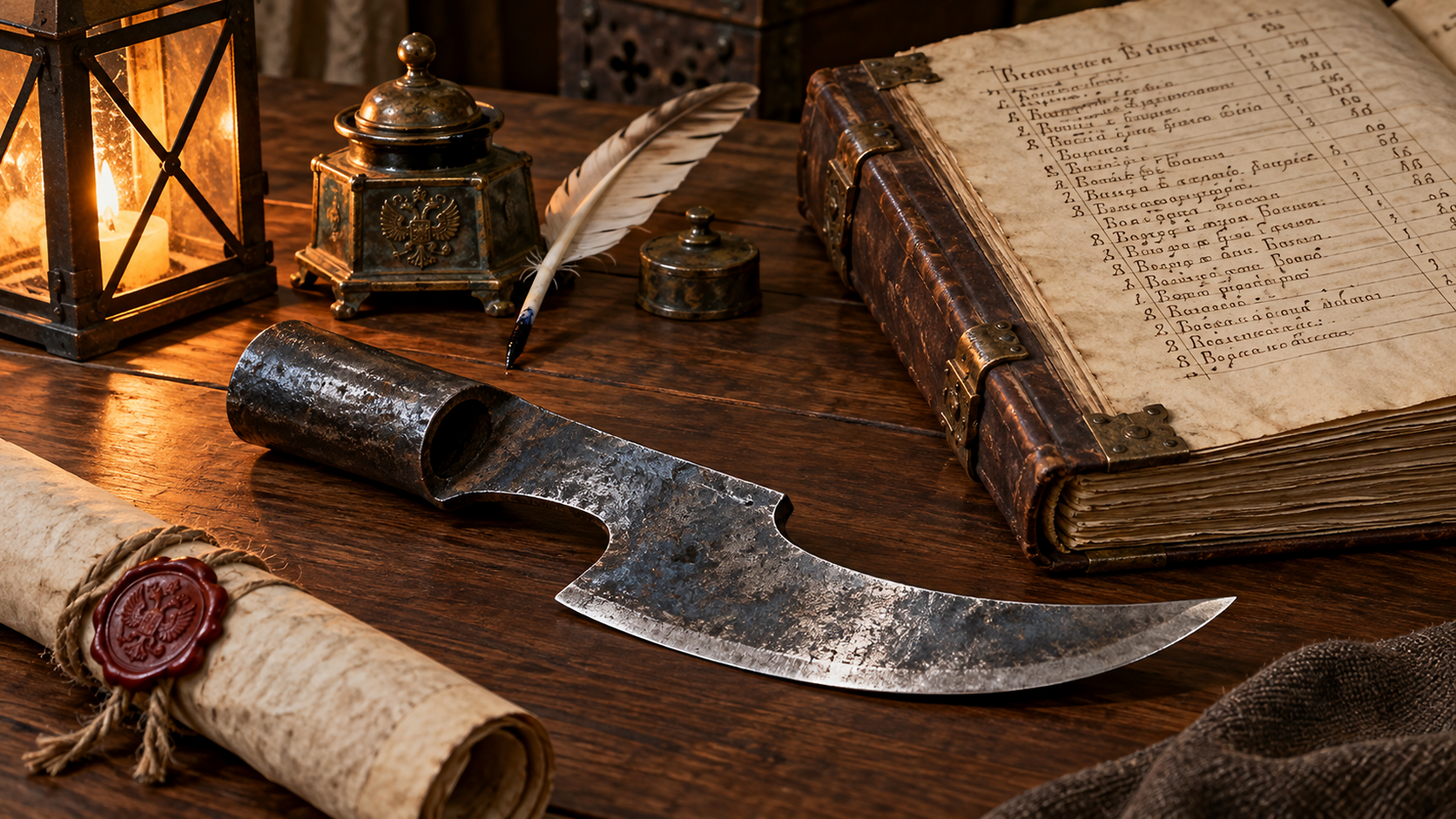
Navigating sixteenth- and seventeenth-century Russian armory records requires untangling a fluid clerical vocabulary. Scribes in the Moscow Military Chancellery (Razryadny Prikaz) and the Armoury Chamber (Oruzheynaya Palata) were practical administrators rather than typologists. In surviving property rolls, tax registers, and campaign inventories, weapons were frequently described by generalized terms based on their general shape or value rather than rigid formal classifications.
The sovnya appears alongside other staff weapons such as the rogatina (heavy hunting and war spear), the kop'e (light cavalry lance), and the berdysh (long-hafted crescent axe). In some regional inventories, particularly from the border towns of the south, clerks simply wrote of 'spears with knife-like blades' (kop'ya nozhevye) or 'broad knives on sticks' (nozhi na ratishchakh). Where the specific term sovnya appears, it denotes a distinct single-edged head, often kept in state storehouses for outfitting provincial servitors who arrived at muster without adequate gear.
This ambiguous terminology led early nineteenth-century historians, including Pavel von Winkler, to debate whether the sovnya constituted an officially recognized military standard or merely a folk weapon. The modern consensus among Russian military historians, rooted in the comprehensive cataloging of medieval weapons by Anatoly Kirpichnikov, affirms that the sovnya was a recognized, intentionally manufactured form within the sixteenth-century tactical system, even if administrative scribes varied in their exact labels.
Comparative Typology: The Sovnya, the Glaive, and the Naginata
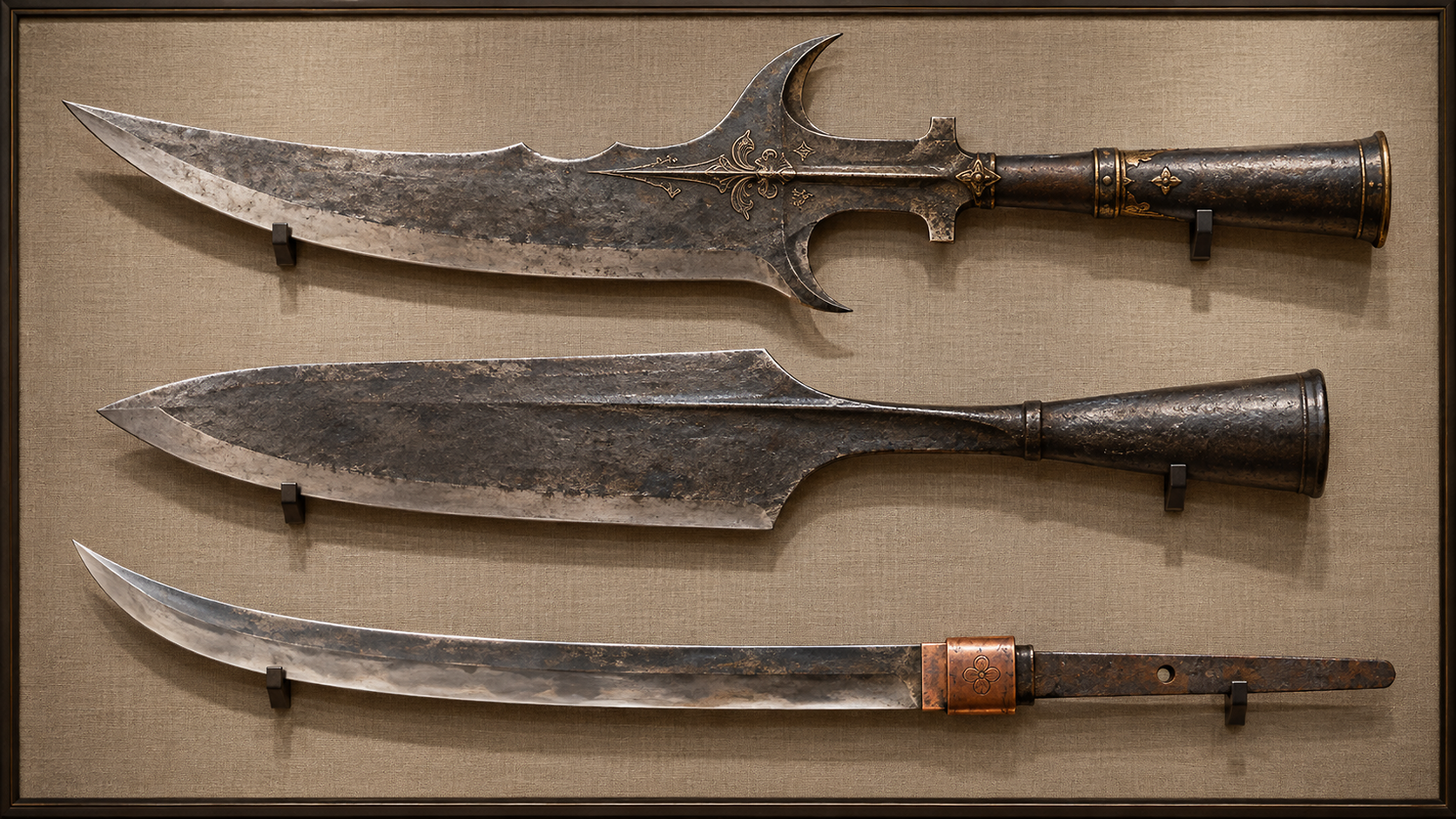
The convergence of form seen in the sovnya is not unique to Russian workshops. Across Europe and Asia, distinct martial traditions arrived independently at the concept of a single-edged curved blade mounted on a mid-length shaft. Comparing the sovnya with its foreign counterparts highlights how local tactical conditions shaped subtle differences in design.
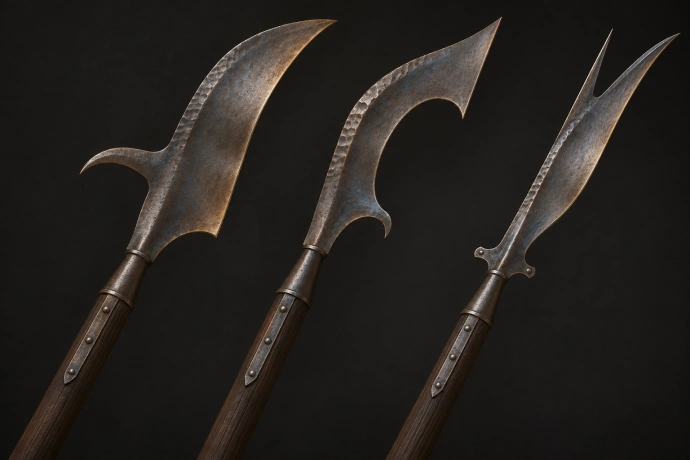
In Western Europe, the glaive developed into an elaborate infantry weapon. European glaives typically feature longer, wider blades, frequently adorned with defensive lugs, hooks, or parrying spikes on the spine to catch cavalry reins or disrupt pike formations. The sovnya lacks these complex ancillary protrusions. Its profile remains cleaner, narrower, and lighter, reflecting its use from the saddle, where extraneous hooks risked catching on the rider's own gear or mount.
In Japan, the naginata filled a comparable functional niche, combining cutting power with reach, though the structural engineering of the two weapons diverged sharply.
The naginata utilized a long internal tang inserted into a slotted oval shaft, wrapped tightly with cord and secured by wooden pins. The sovnya relied on an external conical socket that completely enveloped the wood. The socket design was far better suited to the heavy percussive shocks of shock cavalry combat and was significantly simpler to manufacture and repair in mobile field forges across the vast distances of the Russian plain.
Key distinctions among single-edged staff weapons across regions:
- The Russian sovnya favored a rugged conical socket, optimized for rapid field replacement on oval wooden hafts.
- The Western European glaive incorporated rear parrying lugs and decorative etching, suited for formal infantry ranks and bodyguard units.
- The Japanese naginata relied on complex tang mounting, thin cross-sections, and elaborate sword-quality blade polishing.
The Shift to Firearms and the Decline of the Russian Staff Arm
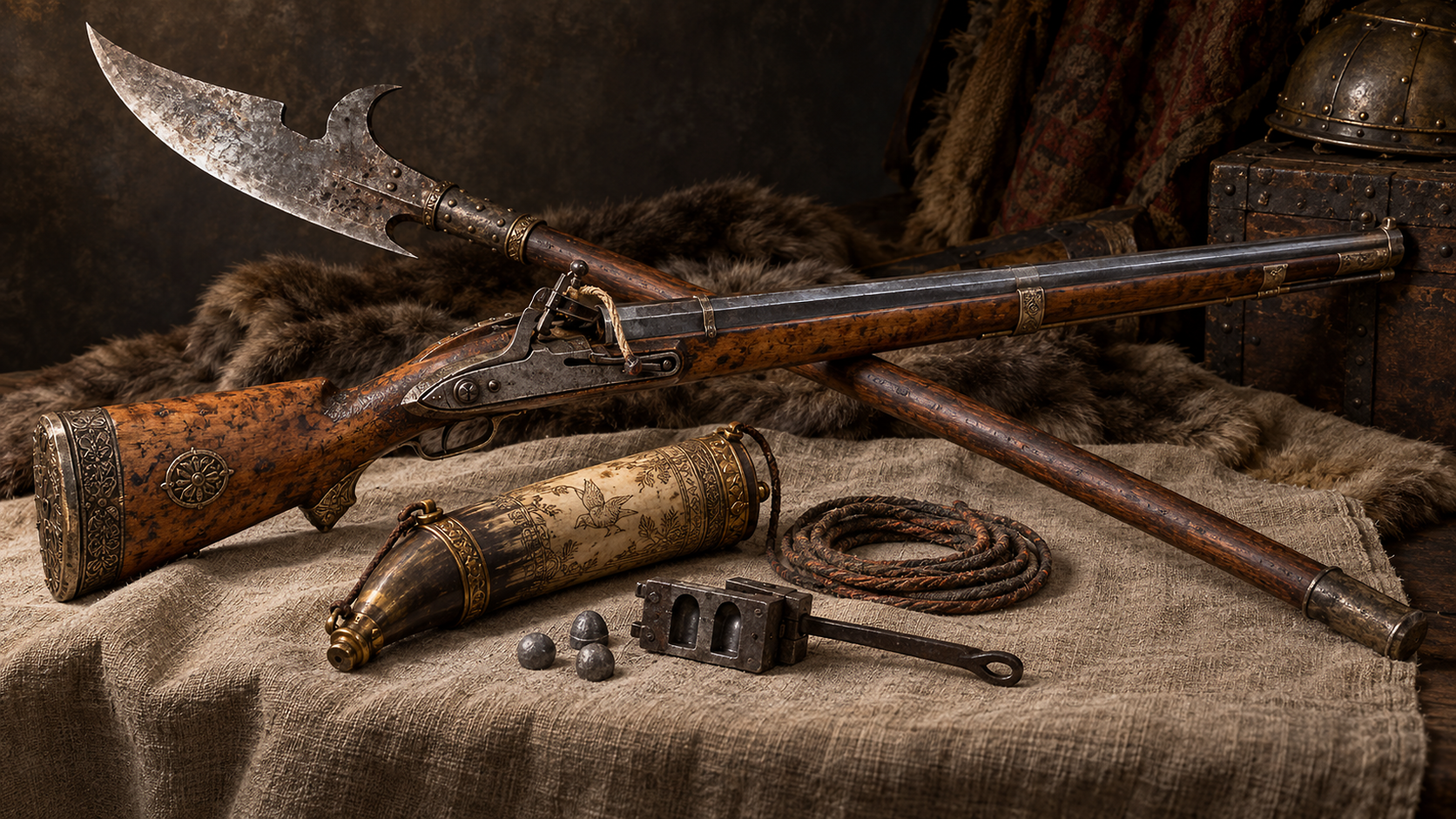
By the turn of the seventeenth century, the conditions that had elevated the sovnya began to change rapidly. The introduction of massed matchlock infantry—the Russian strel'tsy—and the growing availability of wheel-lock and flintlock carbines among cavalrymen fundamentally altered the rhythm of skirmish combat. The bow and spear steadily ceded ground to firepower.
During the Time of Troubles (1598–1613), the sovnya saw widespread deployment during desperate urban defenses and guerrilla actions against Polish and Swedish intervention forces. Militia units under Prince Dmitry Pozharsky carried sovnyas alongside converted hunting spears and axes. Yet in pitched field engagements, staff weapons without firearms were increasingly helpless against cavalry equipped with pistols and infantry firing coordinated volleys.
As the Muscovite state reorganized its military along 'new order' (polki novogo stroya) European lines in the mid-seventeenth century, the cavalry sovnya was relegated to secondary roles. It remained in the hands of border Cossacks, local auxiliary watches, and town garrisons, where it served as an economical sentry weapon. By the time Peter the Great established the regular imperial army at the beginning of the eighteenth century, the weapon was completely obsolete, replaced by the standardized bayonet-equipped flintlock musket.
Museum Survivorship, Corrosion, and Modern Interpretation
The material record of the sovnya presents serious challenges to modern conservators and curators. Because they were functional working weapons rather than gilded status symbols, few sovnyas were preserved in the pristine, ceremonial displays of imperial armories. The vast majority of surviving examples come from archaeological excavations, river dredgings, or rural church attics, bearing severe scars from centuries of oxidation and neglect.
In ground finds, the thin cutting edge is frequently lost entirely to iron oxide corrosion, leaving behind only the thickened spine and the hollow socket. Conservators must use radiographic imaging to examine the interior structure of the socket weld and detect traces of forge-welded steel inserts along the remaining core. In several regional Russian museums, misidentification remains common; rusted sovnya heads without hafts are occasionally mislabeled as simple agricultural brush hooks or broken saber tips.
In recent decades, experimental archaeology and historical European martial arts (HEMA) have revived interest in how these weapons functioned. Reconstructed blades, forged to the dimensions and weights of sixteenth-century originals, demonstrate a weapon of surprising agility. Rather than an improvised peasant tool, the genuine sovnya proves to be a balanced, effective implement adapted to the mobile warfare of the Muscovite frontier.
Further reading
Follow the sources to examine the object and its historical context.
A. N. Kirpichnikov, Drevnerusskoe oruzhie (Early Russian Arms), Vol. 2: Spears, Battle-Axes, Maces, FlailsExternal reference · Opens in a new tab State Historical Museum (GIM), Moscow: Collections of Medieval Russian Edged WeaponsExternal reference · Opens in a new tab The Moscow Kremlin Museums: Armoury Chamber Weapons CollectionExternal reference · Opens in a new tab