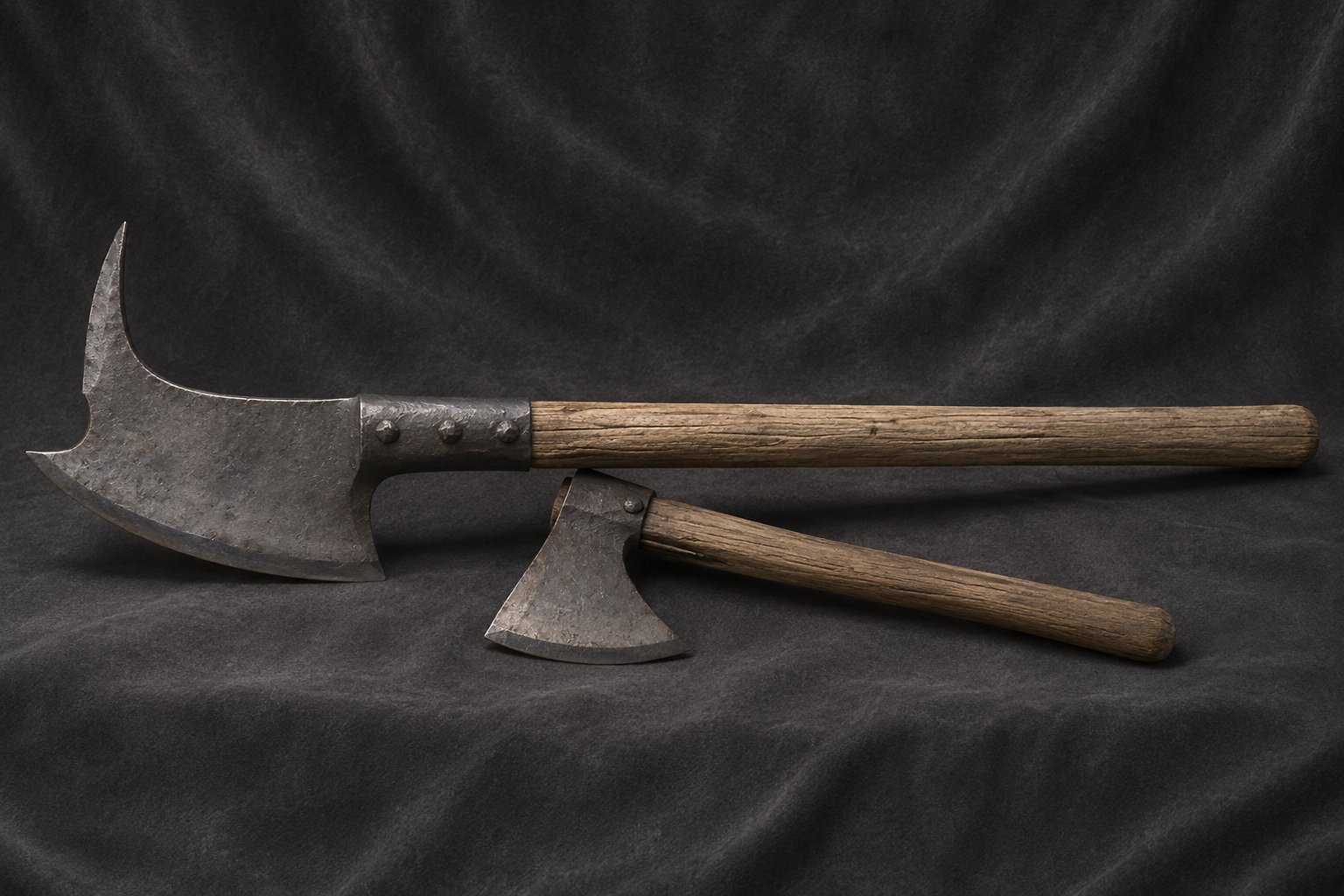
In the iconography of the late Middle Ages, the vouge appears as a rugged hybrid of a heavy cleaver and a defensive spear. Originally a specialized agricultural implement for clearing brush or processing timber, its transition into a military arm speaks to the pragmatic mobilization of rural resources. Unlike the more standardized halberd, the vouge relied on the inherent strength of a wide, forged blade secured by a robust ferrule, creating a weapon that bridged the gap between a tool and a frontline infantry polearm.
From the Field to the Fortification
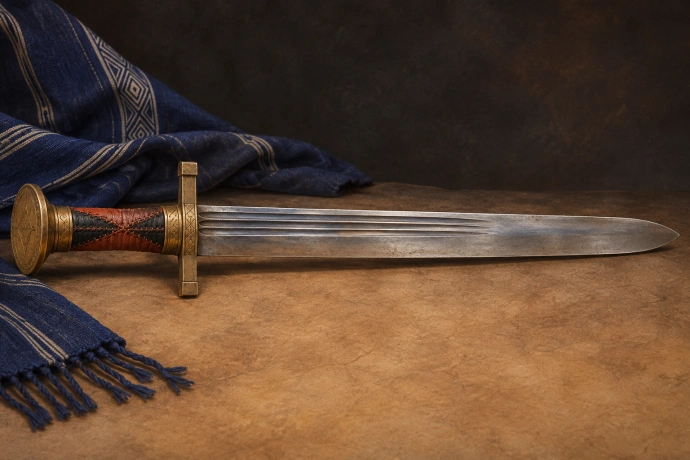
The ancestral form of the vouge was rooted in the woodland economy. It functioned as a heavy, single-edged blade capable of significant impact force. When drafted for conflict, its design remained largely tethered to these utilitarian origins. Unlike weapons designed exclusively for the battlefield, such as the sword, the vouge retained a weight distribution focused on the distal end of the blade.
Military adaptation saw the mounting of these cleavers onto longer, reinforced staffs. This extension allowed infantry to hold defensive lines against mounted adversaries. By lengthening the reach, the wielder could leverage the inertia of the heavy blade, effectively creating a barrier that functioned through both intimidation and the potential for a disabling strike.
Metallurgical Composition and Forging
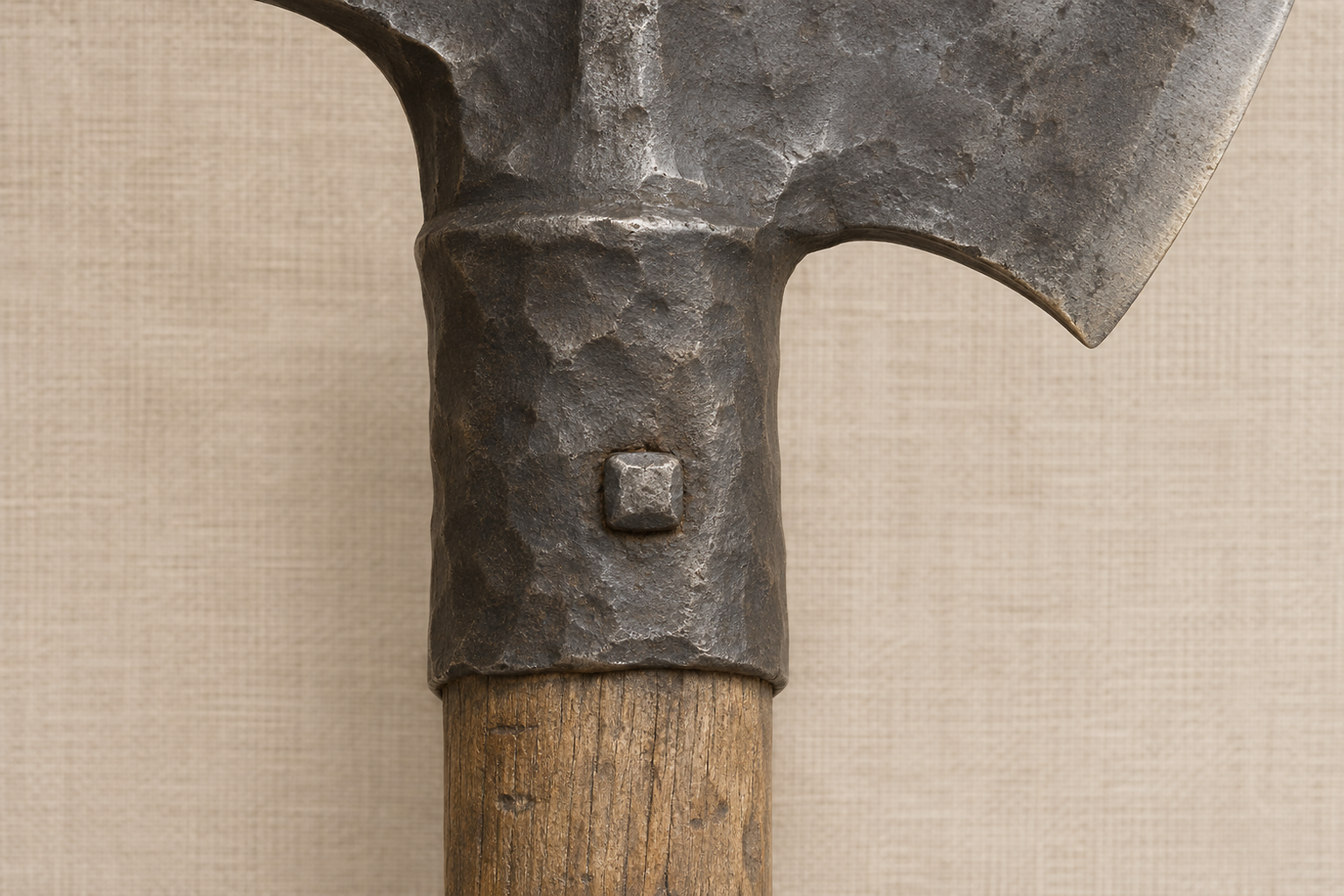
The construction of a vouge involved a specific approach to metallurgy common in regional smithies. To balance mass with performance, makers often utilized a core of iron, which provided structural integrity against bending or snapping. Onto this core, a high-carbon steel edge was forge-welded to ensure the weapon maintained a sharp profile even after heavy use.
The connection point between the blade and the shaft—the ferrule—represented the primary engineering challenge. A weak interface would result in the head detachment upon impact. Historical examples demonstrate a reinforced socket or a series of langets, strips of metal extending down the shaft, designed to distribute the stress of impact away from the point of mounting.
Essential features observed in metallurgical analysis include:
- Forge-welded steel inserts for edge hardness.
- Heavy-gauge iron for the primary body to prevent deformation.
- Integrated socket construction to manage vibration.
Blade Geometry and Cutting Performance
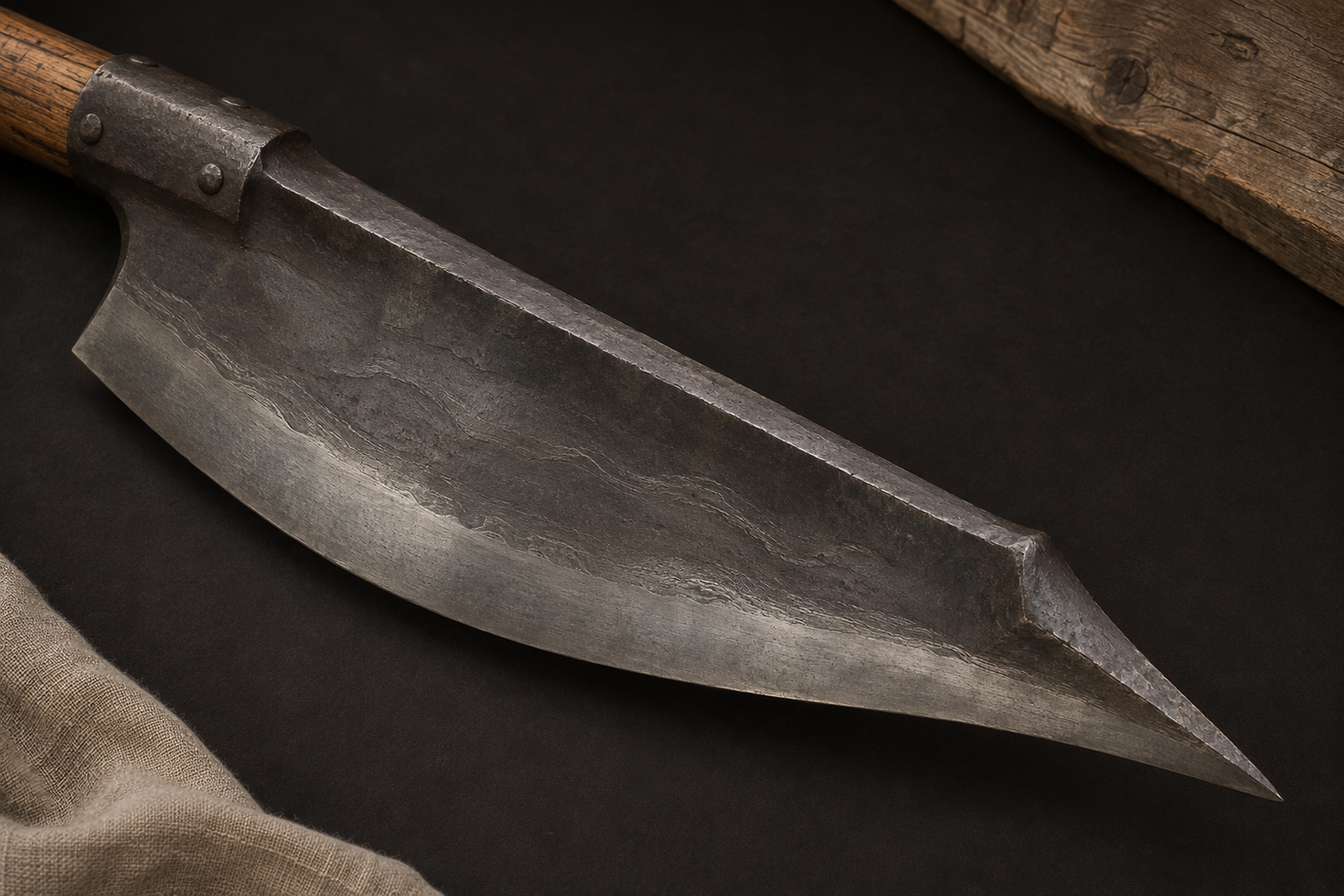
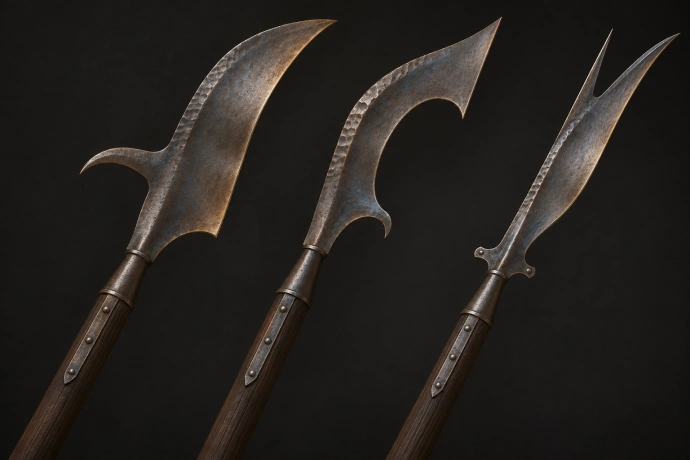
The geometry of the vouge blade is characterized by a straight or slightly curved spine, tapering towards a reinforced point. This profile allowed the weapon to function as both an axe and a spear. Unlike a thin sword blade, the thickness of the vouge allowed it to withstand the lateral forces encountered when striking dense wooden or metallic targets.
The edge geometry varied significantly depending on the intended use. Some blades exhibit a convex grind, which provides extra mass behind the cutting edge for chopping. Other variants show a thinner, more acute bevel, suggesting a focus on slicing through padded armor or leather garments commonly worn by infantry.
The Evolution of the Polearm Head
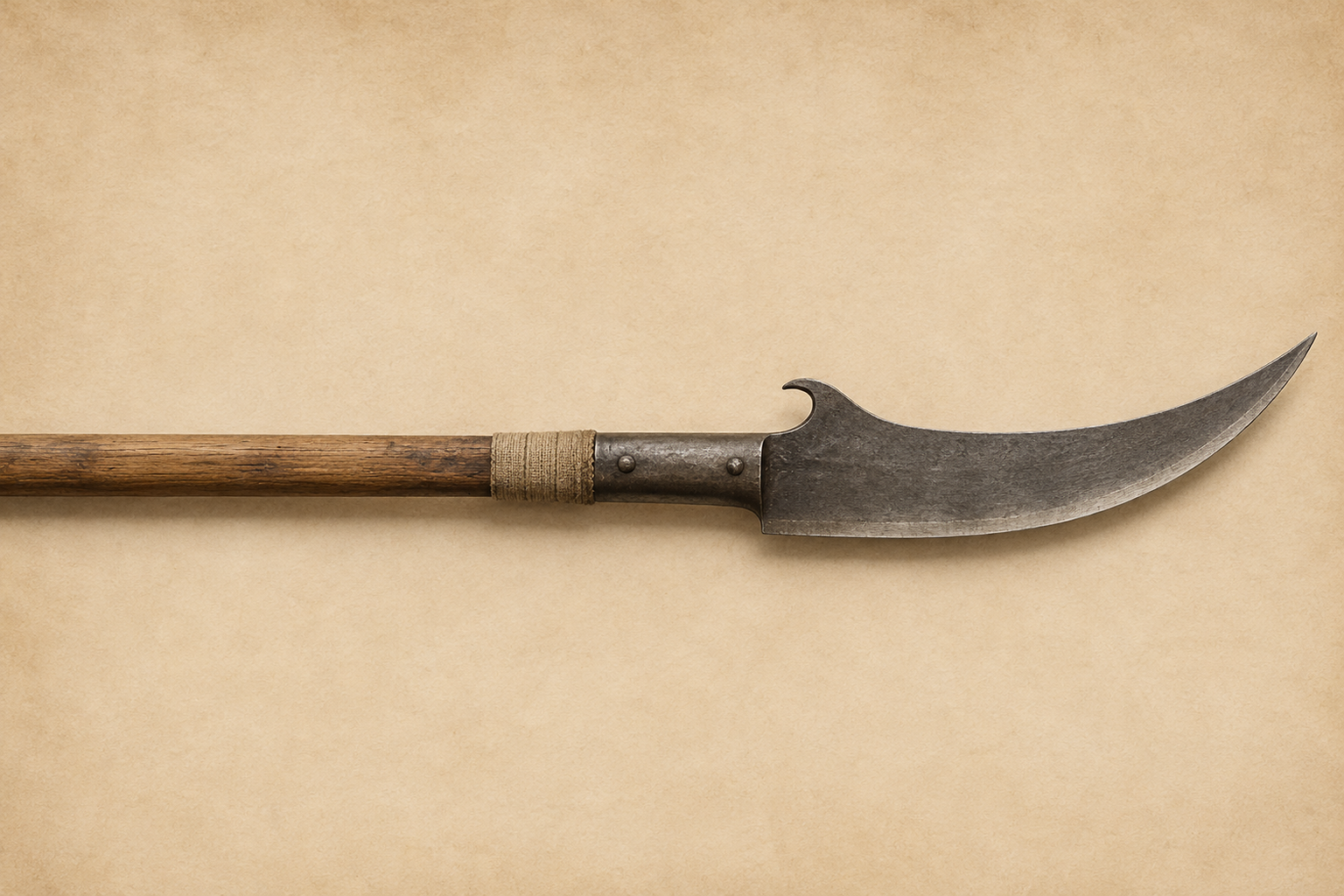
As the vouge transitioned from a field tool to a staple of infantry arms, the aesthetic and functional elements became more refined. Later iterations of the vouge began to incorporate minor spikes or hooks on the back of the blade, intended to catch the edges of enemy shields or the mail garments of horsemen. This diversification indicates that the weapon was no longer just an impromptu tool but a deliberate design choice for infantry formations.
The shape of the blade also began to shift, moving toward a more curved or sweeping profile. While this may have improved the weapon's effectiveness in slashing, it was primarily a refinement of the original cleaver's geometry. These design adjustments underscore the iterative process of trial and error in medieval workshops.
The Ferrule and Hafting Method
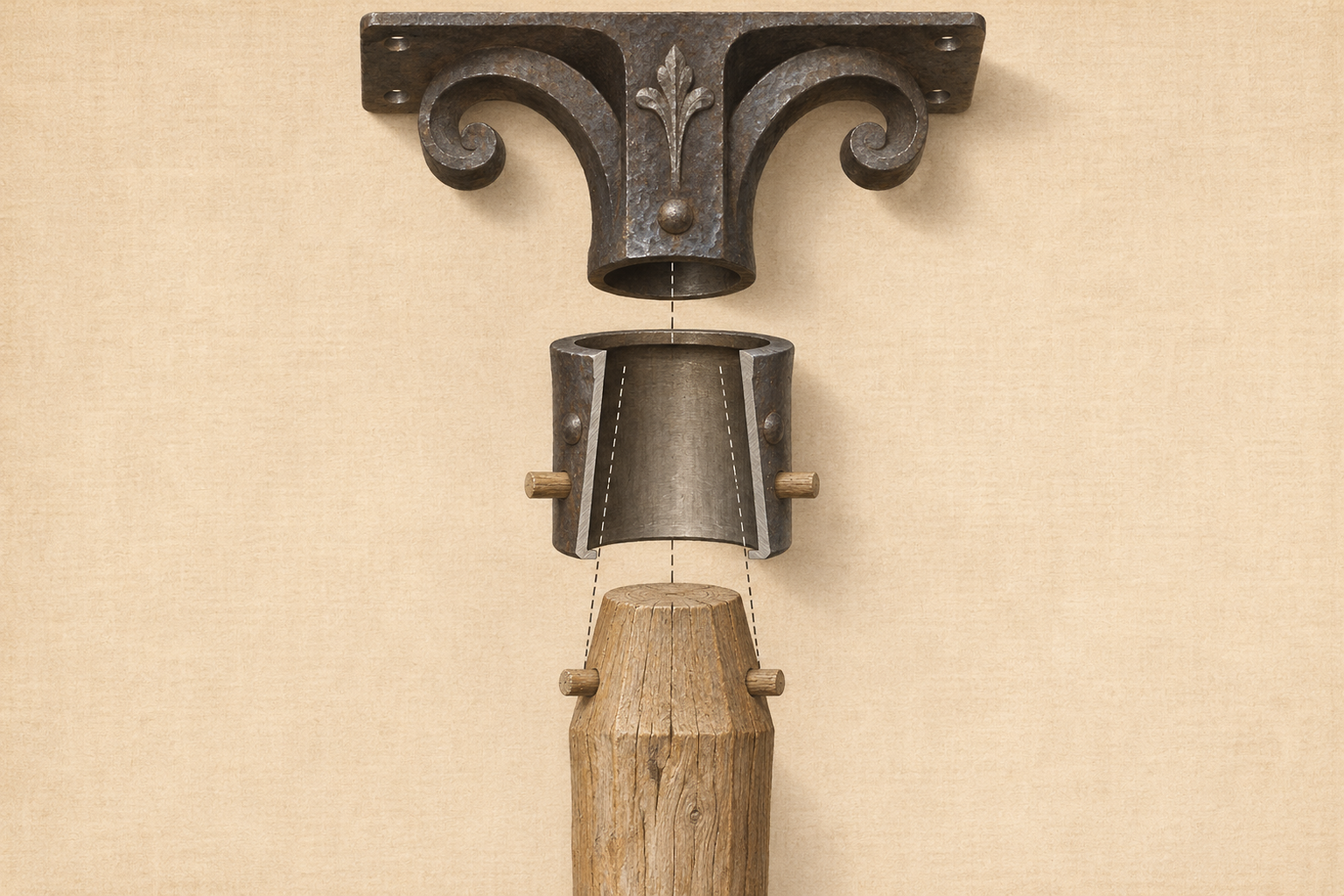
The ferrule, or socketed sleeve, was the critical link between the metal head and the wooden shaft. In early versions, a simple wrap of iron provided the necessary friction to hold the blade in place. As designs evolved, smiths began to use more sophisticated socket geometries, often incorporating a taper that allowed for a tighter fit as the blade settled against the wood.
Secure mounting was further achieved by the use of transverse rivets or nails. These fasteners were often placed in opposing directions to ensure that the blade remained stable regardless of the angle of impact. This method of construction is distinctly different from the tang-and-handle assembly seen in swords or daggers, reflecting the different mechanical demands of a polearm.
Urban Militias and Municipal Arsenals
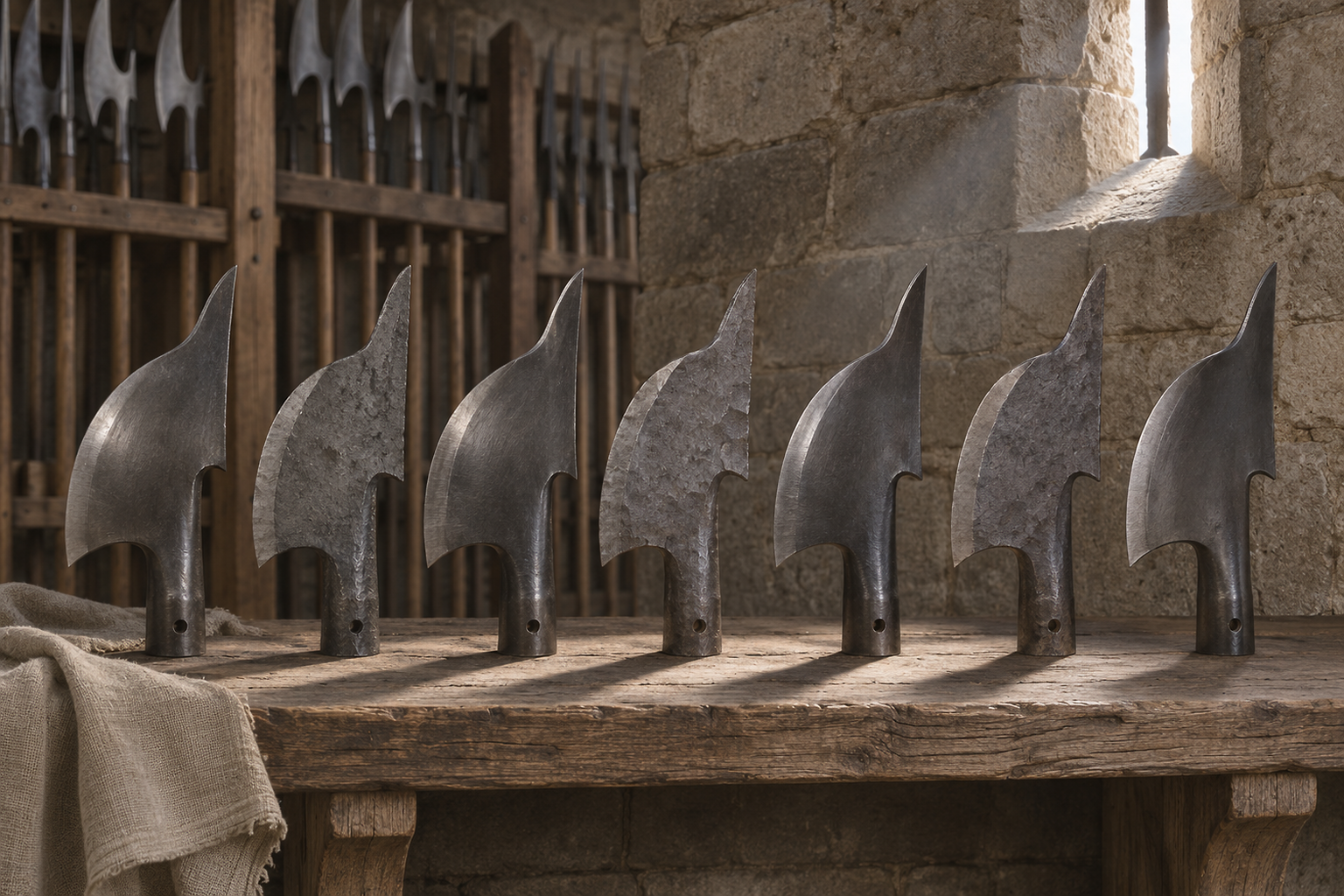
The deployment of the vouge was heavily tied to the rise of urban militia units. Unlike the noble knights who relied on expensive, custom-fitted arms, the urban infantry required weapons that were both affordable and effective in massed formations. Inventories from French cities often list hundreds of vouges, indicating that they were the standard equipment for the common soldier.
These armories maintained the weapons, ensuring that heads were kept sharp and shafts replaced as needed. This municipal oversight helped standardize the design of the vouge, leading to more uniform patterns across a given region. The existence of these records confirms that the vouge was a legitimate military asset, not merely a civilian tool pressed into service.
Tactical Deployment in Infantry Lines
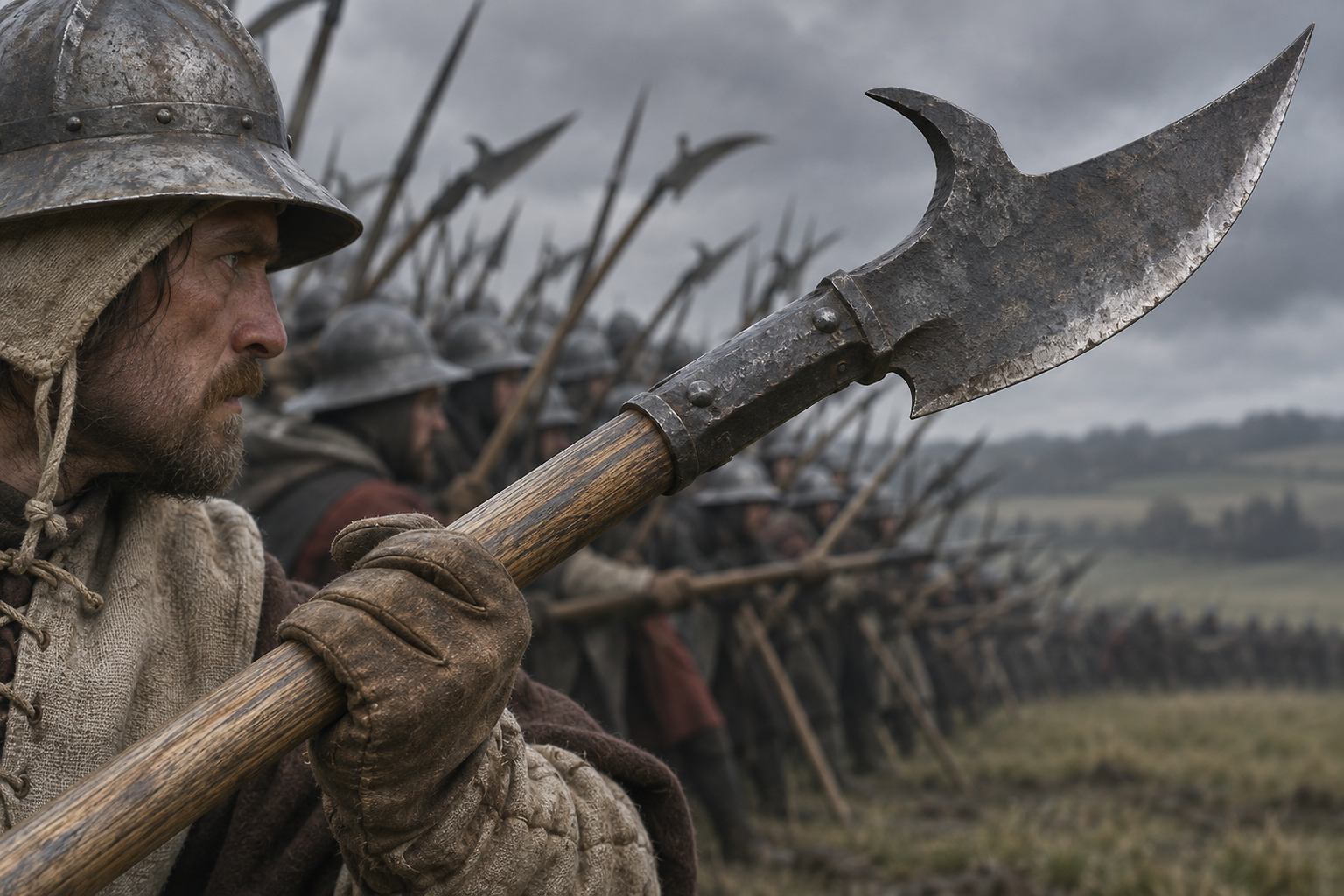
In the context of the battlefield, the vouge was most effective in dense, synchronized formations. Soldiers equipped with these weapons could create a wall of steel, preventing cavalry from effectively engaging the line. The length of the shaft allowed the front rank to strike at distance, while those behind provided support and replenishment of the line.
The vouge was particularly useful in defensive maneuvers, such as holding a bridge or a gate. Its weight and reach allowed the user to repel repeated charges, while its sharpness made it dangerous to anyone attempting to close the distance. This tactical flexibility made it a staple of infantry warfare for several generations.
Experimental Archaeology and Functional Reality
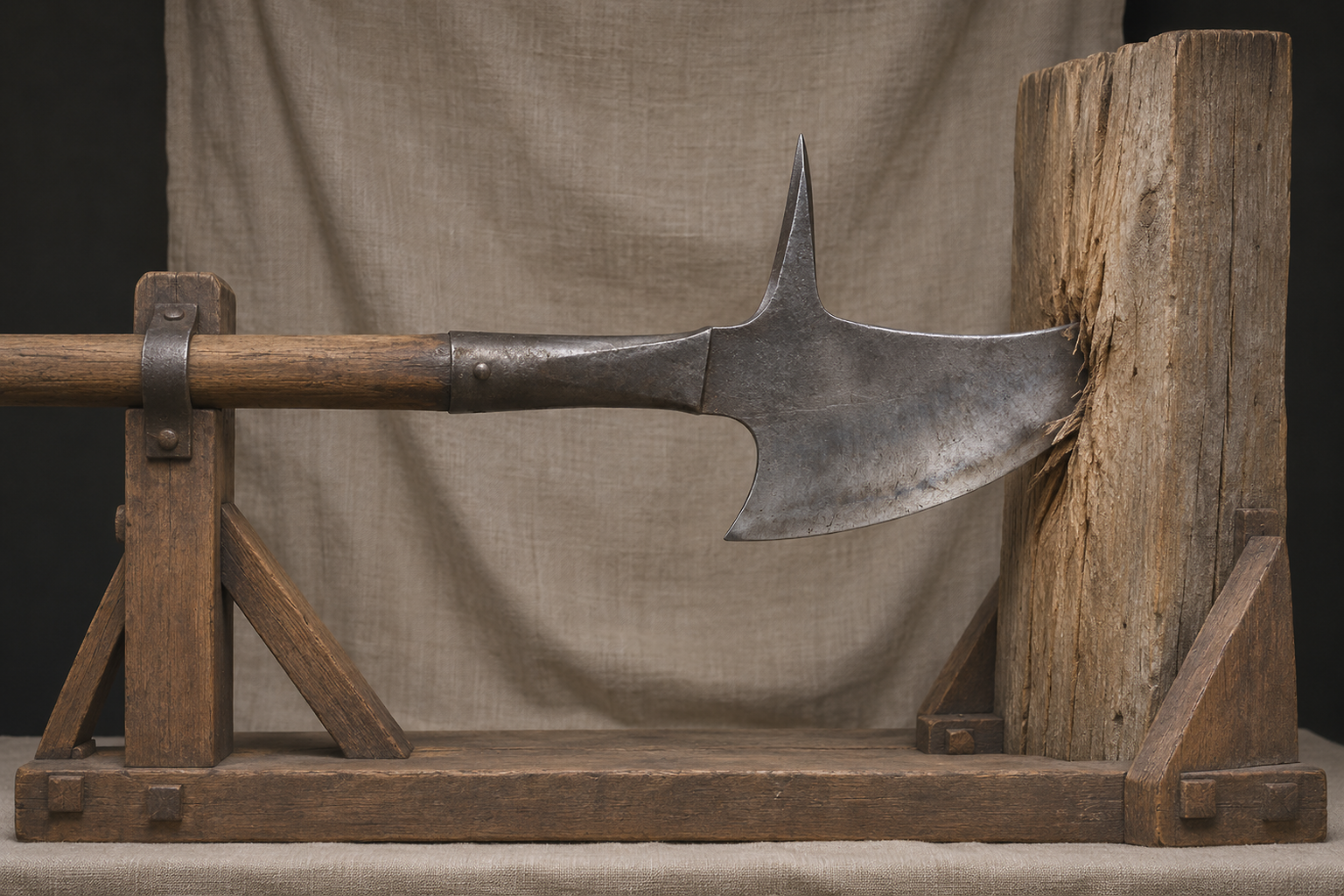
Modern researchers have used high-fidelity replicas to study the performance of the vouge in various scenarios. These tests focus on the physics of the blow, assessing how the mass of the blade translates into kinetic energy upon impact. Results indicate that while the weapon is inherently slower than a sword, the amount of force it can deliver is significantly higher.
Practical testing also highlights the limitations of the weapon, particularly in confined spaces or against highly mobile opponents. The length of the shaft, while an advantage on an open field, can be a liability in close-quarters skirmishing. These experiments provide valuable data that bridges the gap between historical theory and the physical reality of medieval combat.
Conservation and the Modern Record
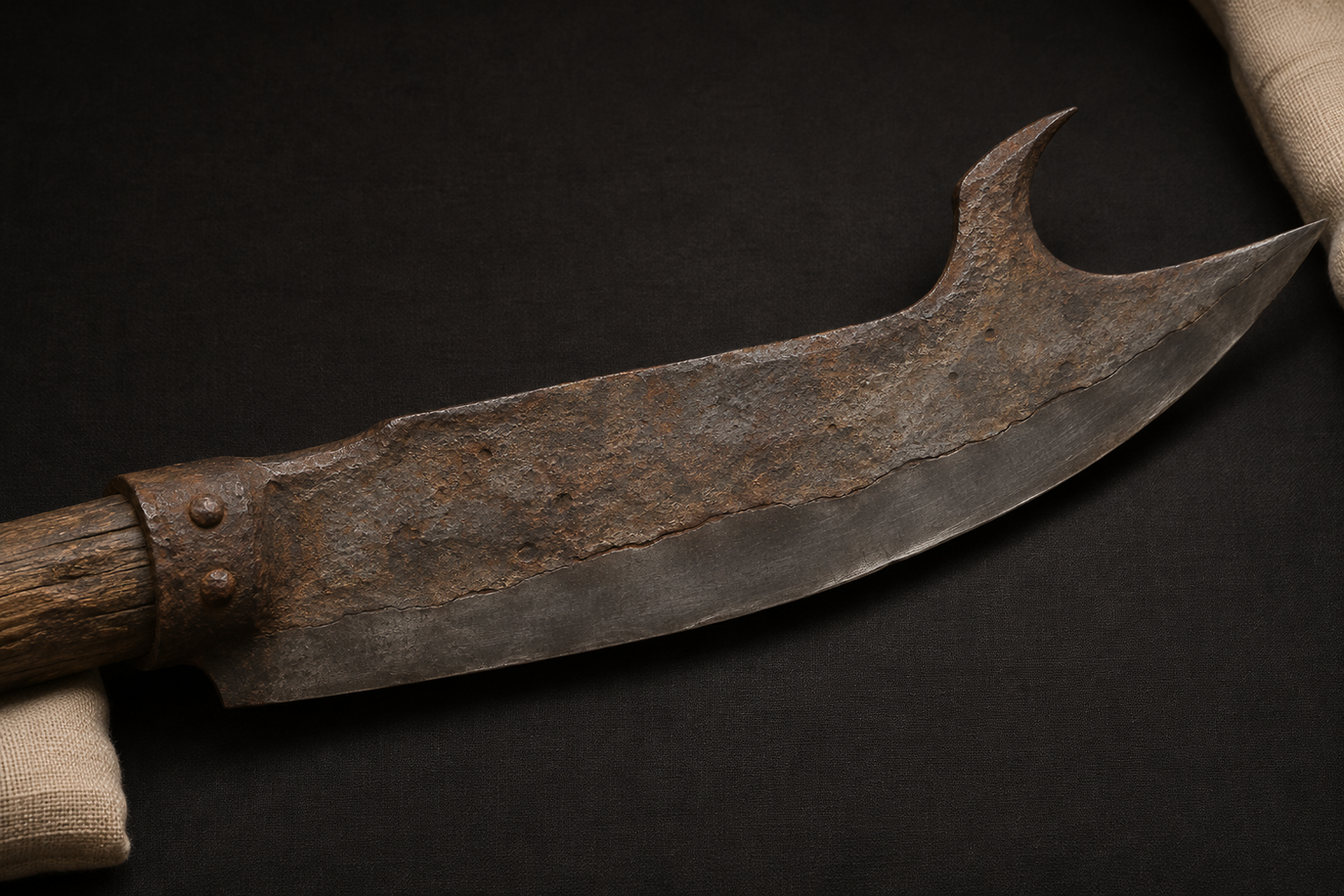
Preserving surviving vouge blades presents unique challenges for museum conservators. The composite nature of the weapon—iron body and steel edge—often leads to differential corrosion, where the two metals react to moisture at different rates. Without careful maintenance, these blades can suffer from delamination along the forge-weld line.
Today, curators use various techniques to stabilize these artifacts, including controlled atmospheric storage and electrochemical cleaning. By treating the blade as a single, complex system rather than a uniform object, conservators are able to prevent further degradation. These efforts ensure that the vouge remains a tangible piece of history for future study.
Representation in Iconography and Art
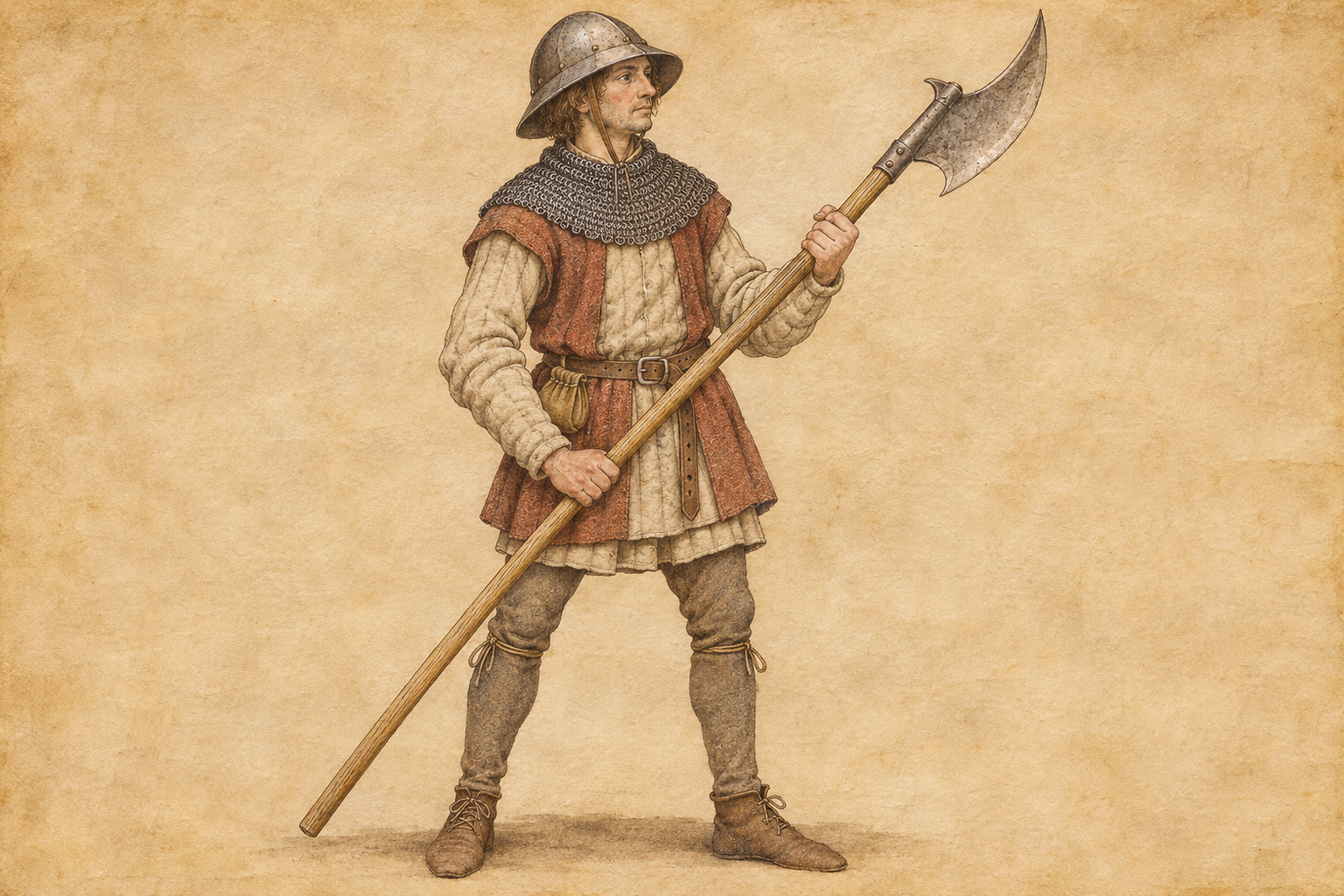
Period manuscripts and tapestries often depict the vouge in the hands of soldiers, providing a visual record of how the weapon was carried and used. These artistic representations, while not always technically precise, confirm the widespread distribution of the arm across social strata. They show the weapon in diverse contexts, from guard duty to open field battle.
Scholars use these depictions to supplement archaeological findings, helping to fill in the gaps where physical evidence is absent. By analyzing the way artists rendered the ferrule or the blade shape, historians can track stylistic changes over time. These depictions are essential for understanding the cultural significance of the vouge in the medieval imagination.
Legacy and Historical Perception
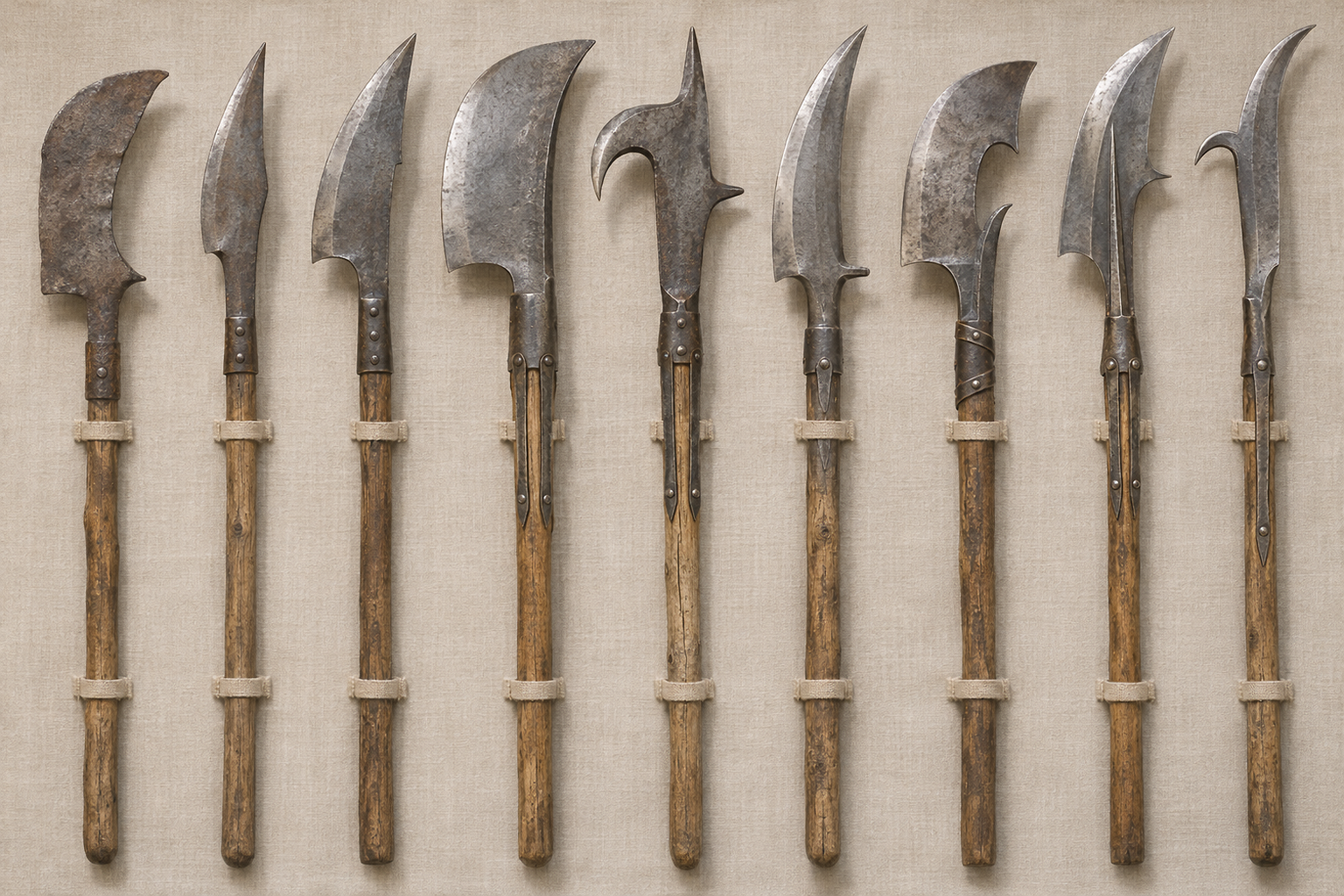
In modern study, the vouge is often categorized within the broader class of glaives, though its specific French provenance gives it a unique place in the history of the Hundred Years' War. While legends often depict the peasantry as having little beyond simple tools, the evidence of standardized ferrules and professional smithing marks suggests that the vouge was a recognized piece of military hardware in municipal arsenals.
The vouge demonstrates the ingenuity of medieval smiths and the pragmatism of infantry. Its evolution shows that weapon development relied on adapting existing resources as much as specialized design. The weapon bridge the gap between agrarian tool use and the professionalized armies of the Renaissance.
Further reading
Follow the sources to examine the object and its historical context.
Musée de l'Armée, Paris: Collections and InventoryExternal reference · Opens in a new tab European Polearms: A History, British Museum PressExternal reference · Opens in a new tab