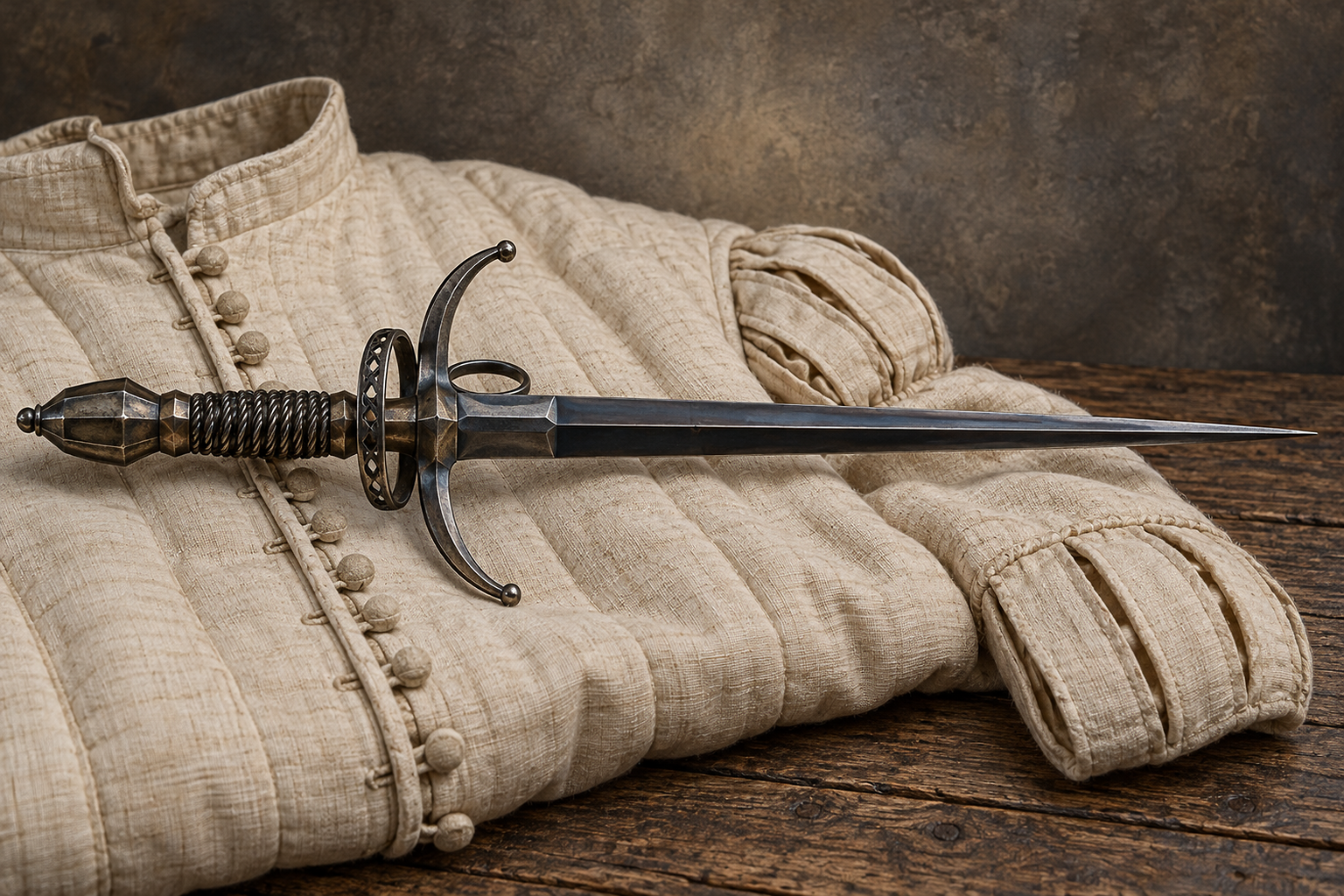
In the late sixteenth century, French dueling culture placed heavy mechanical demands on the left hand. As the rapier lengthened and thrust-centric fencing superseded earlier military styles, the companion dagger transitioned from a simple belt-carried emergency blade to a specialized defensive tool. Surviving examples from the reigns of Henri III through early Louis XIII reveal a deliberate structural shift: forward-swept quillons, dropped side rings, and integrated thumb loops that anchored the hand, locked the wrist against impact, and provided direct mechanical leverage.
The Dueling Crisis and the Left Hand
During the French Wars of Religion, personal combat moved from the battlefield into urban streets. The civilian duel became an obsessive practice, often fought without armor in linen doublets. The right hand held a long, relatively heavy rapier balanced for extended thrusts, which was agile at distance but difficult to bring back into line once committed.
The left hand bore the responsibility of closing lines of attack and binding the opponent's blade. Neither leather gloves nor simple bucklers possessed the reach or stopping power of a dedicated steel weapon. Consequently, the dagger transformed from a passive utility blade into an active mechanical counterpart to the sword.
Anatomy of the Transitional Hilt
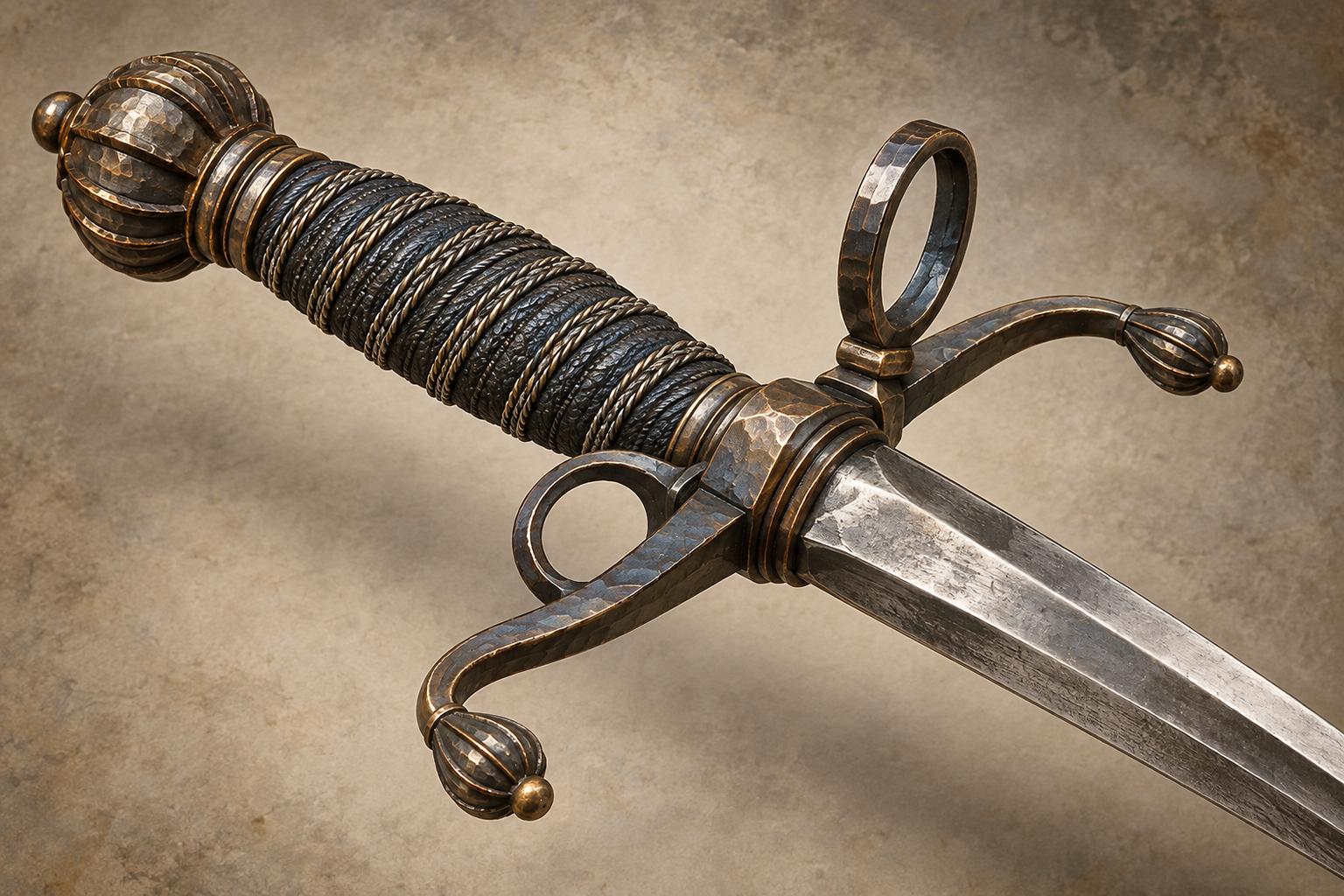
The transitional designation captures the hilt's state between 1580 and 1630. Prior to this, most daggers used simple crossguards that offered little mechanical advantage if a rapier struck with momentum. French bladesmiths began elaborating the guard to create complex, open-hilted parrying tools.
Key components included quillons curved in specific directions, an external side ring, and a dedicated thumb ring forged onto the inner branch. Unlike later sail-hilted daggers, which enclosed the hand behind a solid plate, this skeletal design minimized weight and kept the center of gravity close to the palm.
The Thumb Ring and Skeletal Alignment
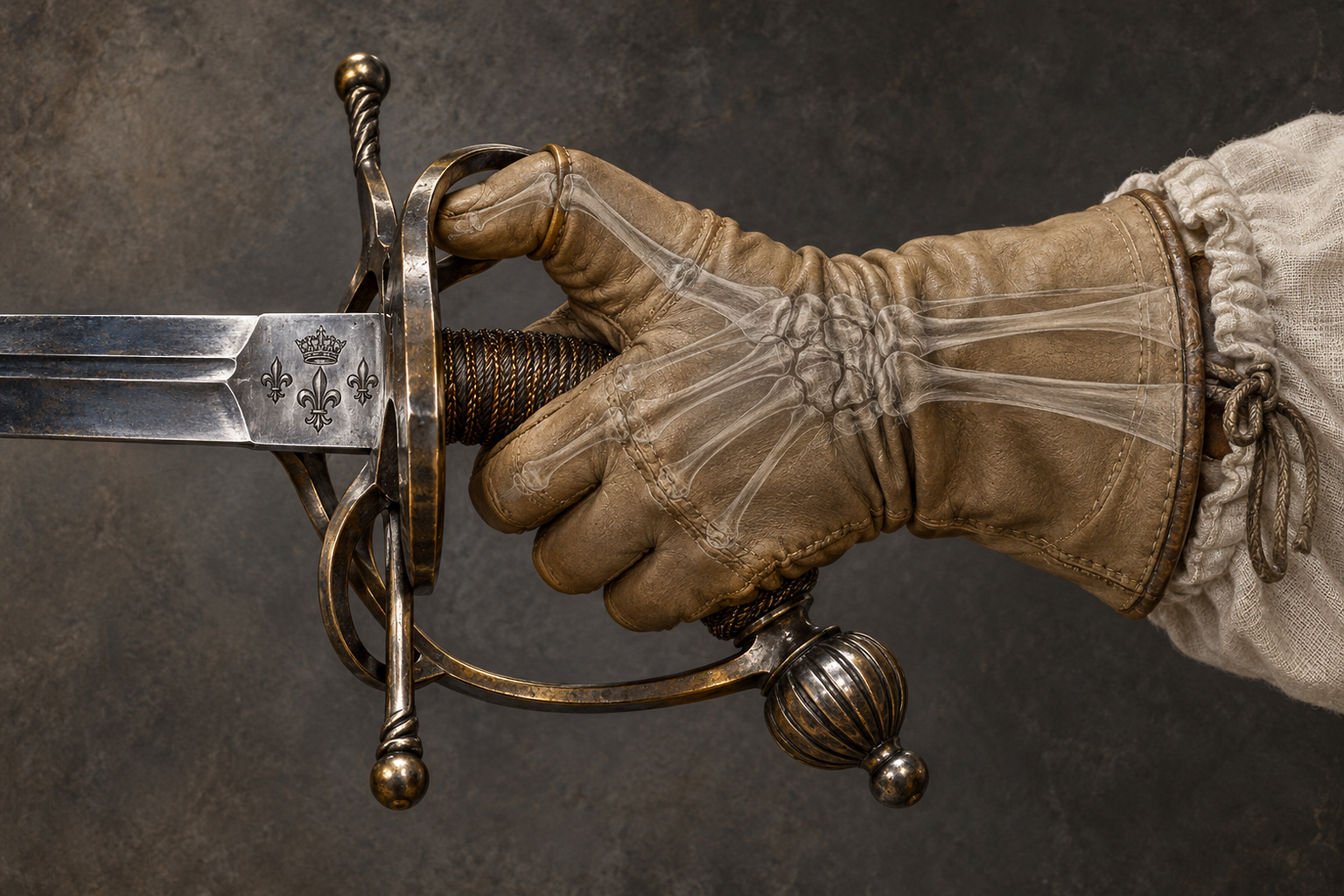
The thumb ring is the most revealing fitting of the transitional dagger. Located on the reverse side of the crossguard, this loop sits against the forte. Instead of a traditional hammer grip, the fencer extended their left thumb forward through the ring, resting the pad against the base of the blade.
This placement alters the arm's mechanics. By bracing the thumb forward, the bones of the hand and forearm form a rigid, locked column. Incoming strikes are transmitted directly into the skeletal structure of the arm and shoulder rather than straining the small muscular flexors of the wrist.
Quillon Curves and Blade Trapping
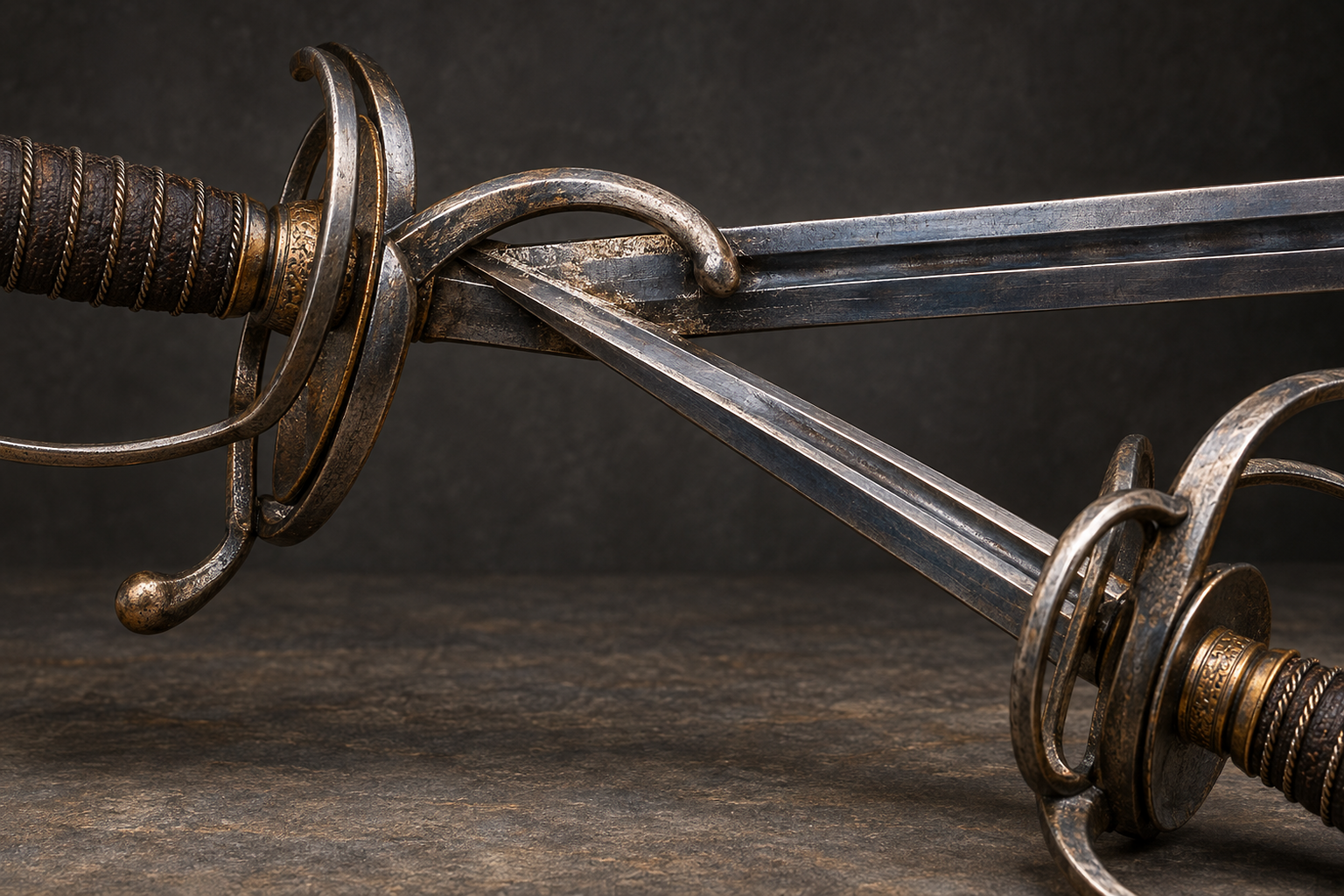
Quillons on these daggers rarely follow the straight, symmetrical bars of earlier models. Most commonly, they are swept gently forward toward the point, forming a shallow crescent. This creates a mechanical funnel for an adversary's rapier.
When an opponent's blade strikes the dagger, it is driven down along the steel edge. Upon reaching the cross, the forward-curving quillon catches the blade, preventing it from sliding onto the user's hand. A slight rotation then levers the trapped weapon away, opening a path for a riposte.
The Mechanics of Wrist Leverage
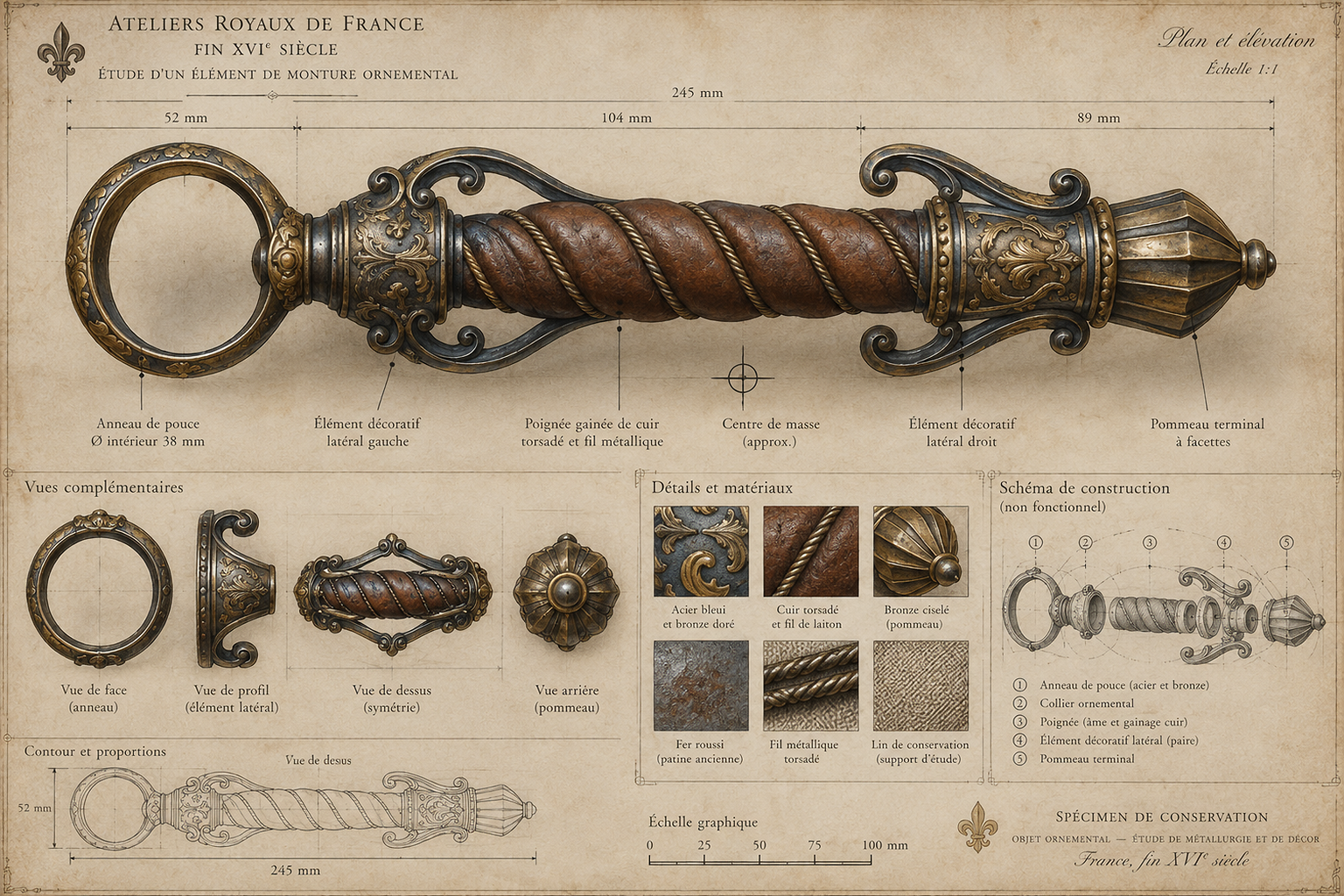
Parrying a long, heavy rapier requires significant torque. Because the rapier acts as a long lever arm, striking the middle of a short dagger blade generates high force. The combination of curved quillons and a locked thumb ring provides the leverage needed to overcome this disadvantage.
With the thumb anchored, the fencer utilizes a push-pull mechanic. The thumb pushes forward while the remaining fingers pull the pommel against the palm, turning the dagger into a Class 1 lever. This enables rapid, powerful rotational movements, allowing the fencer to flick the point across defensive lines instantly.
Fencing Doctrine and Tactical Use

While contemporary French fencing treatises from this period are rare, the influence of Italian masters like Giganti and Capoferro is evident in French practice. These masters emphasized keeping the dagger extended forward to meet the opponent's blade early, rather than using it as a static shield.
French practice adapted these principles to more aggressive ends. Fencers held the left hand slightly lower and forward of the lead shoulder. Upon an opponent's thrust, the dagger moved forward to meet the weak of the incoming steel, pushing it offline while the fencer stepped into range to deliver a counter-thrust.
Blade Architecture and Reinforcements
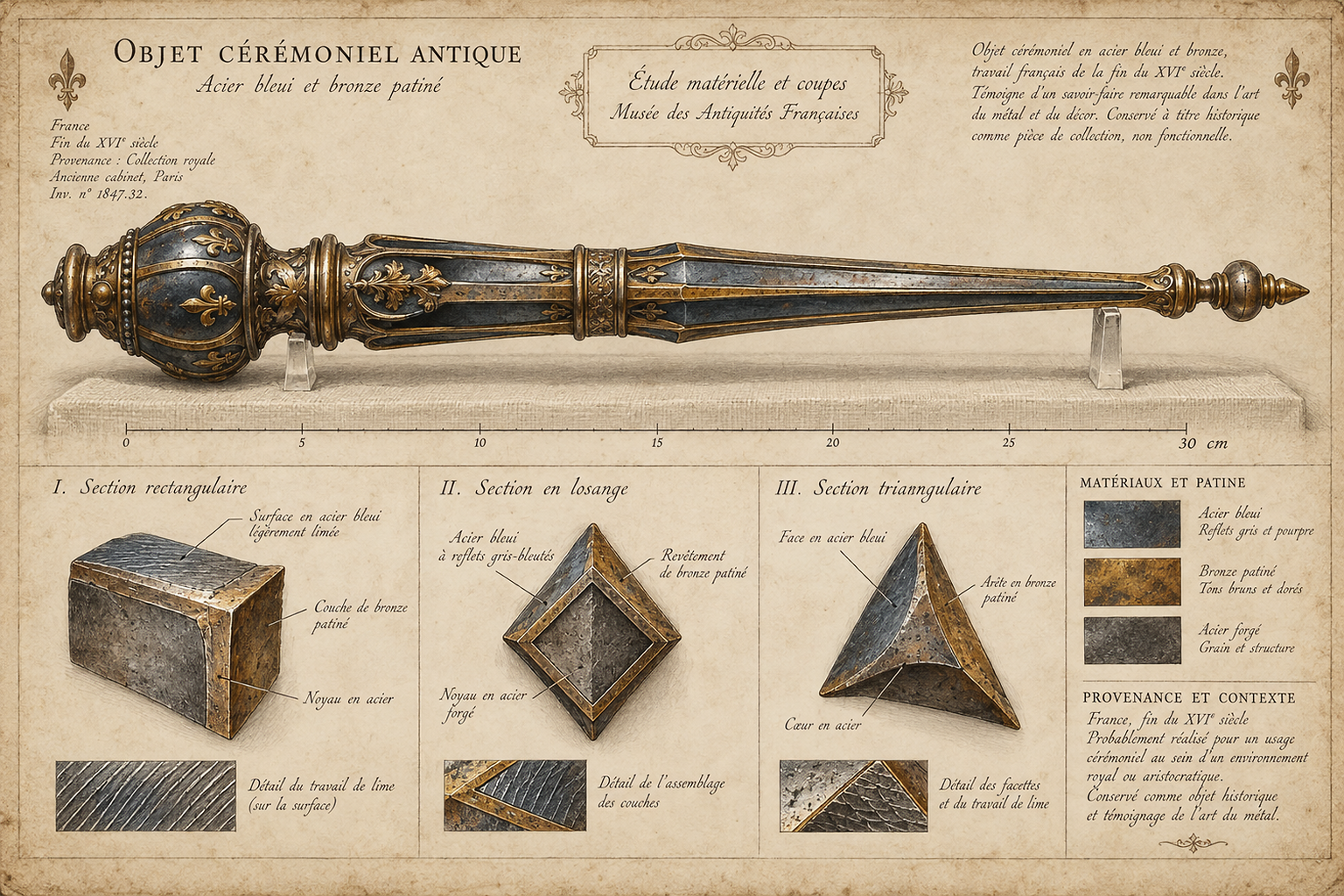
Dagger blades had to withstand brutal impact forces. A typical blade measures 25 to 35 centimeters with an extremely stiff diamond or triangular cross-section. Bladesmiths paid meticulous attention to the forte, the lower third of the blade closest to the hilt, to ensure structural integrity.
The blade's internal construction reflected these demanding functional requirements:
The blade's internal construction reflected these demanding functional requirements:
- The base was left thick, often exceeding six millimeters in depth, to absorb percussive shocks.
- Shallow longitudinal depressions or wide fullers provided platforms where the thumb could rest securely.
- Edges near the cross were frequently dulled, allowing the user to press against the blade without laceration.
- Decorative file-work or serrations along the spine were used to catch and retard incoming sword edges.
Workshop Practice and Metallurgy
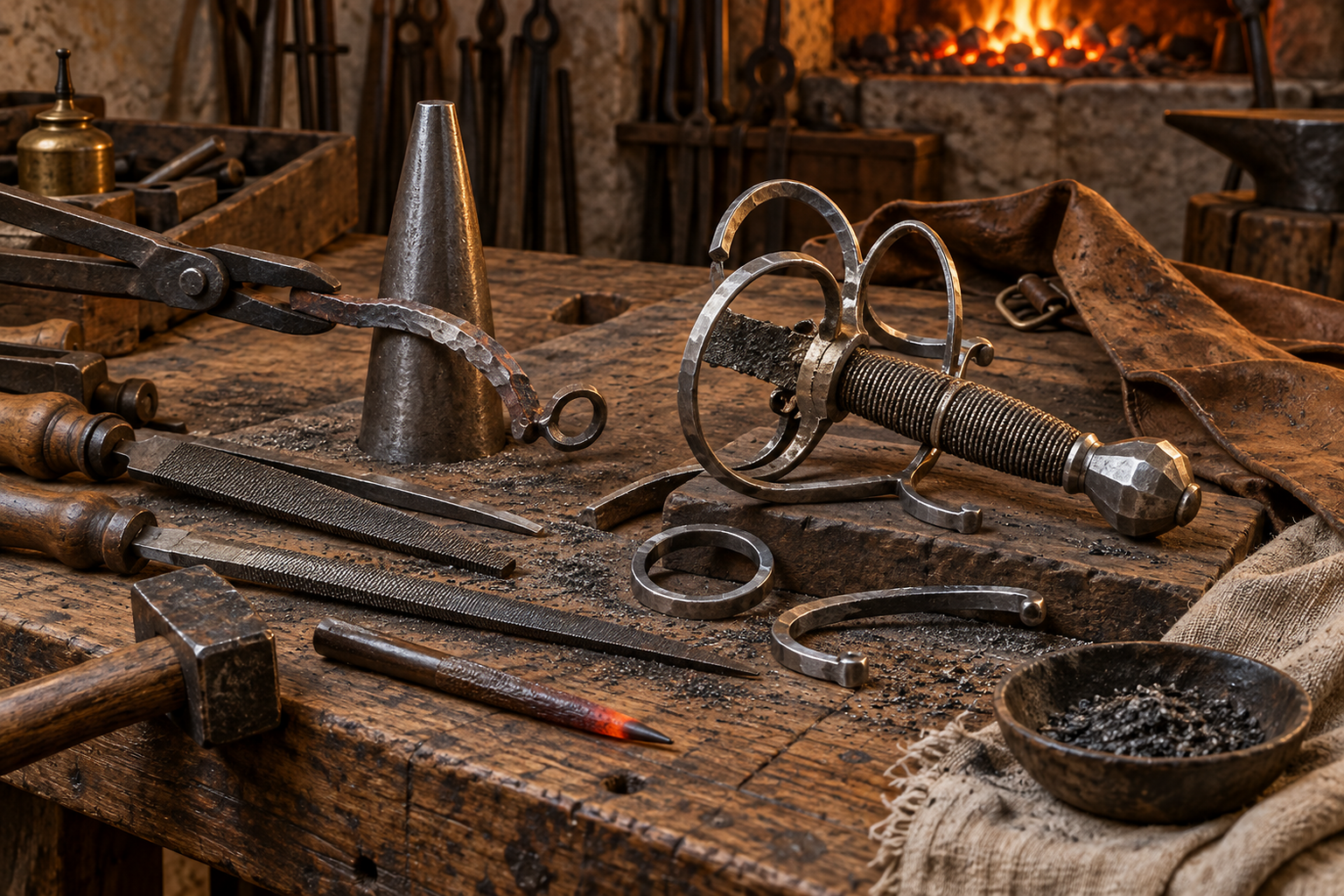
Forging a transitional dagger required balancing ductility with edge hardness. French cutlers in centers like Paris and Thiers often employed wrought iron cores flanked by carburized shear steel edges, or utilized homogeneous blooms refined through repeated folding.
Hilt fittings were shaped by cold-hammering and filing low-carbon wrought iron. Creating the thumb ring involved hot-punching an iron bar and drifting it over a conical mandril. After assembly, surface finishes ranged from mirror-polishing to chemical russeting to protect the iron from corrosion.
The Side Ring and Outer Hand Defense
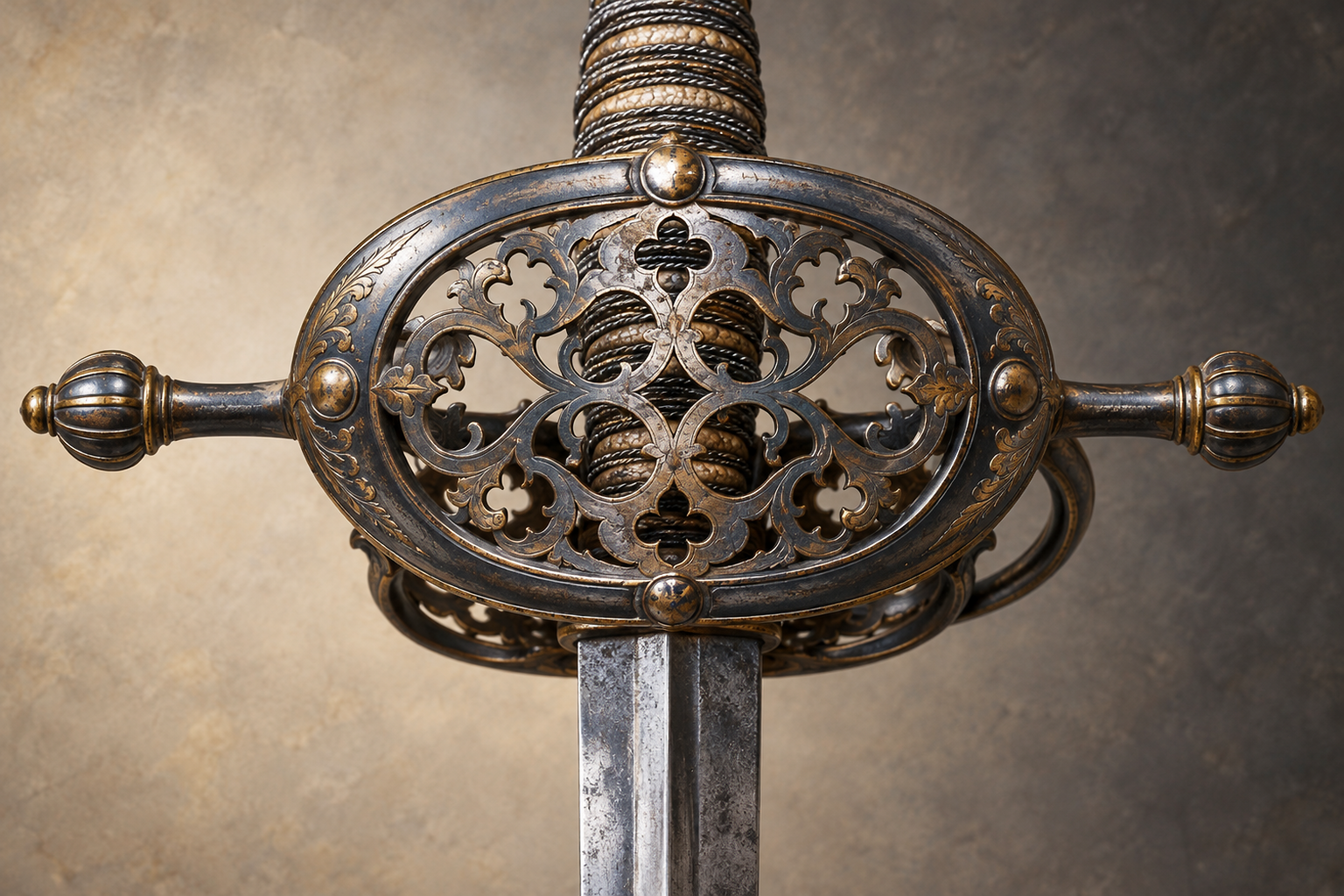
While the thumb ring managed internal leverage, the external side ring addressed the vulnerability of the fencer's outer knuckles. In a parrying guard, the back of the hand faces the opponent, leaving the fingers at risk if a parry fails or a blade glances.
The side ring projected perpendicularly, often featuring openwork plates or pierced shell motifs. This barrier caught glancing blows and protected the fingers, allowing the fencer to parry more aggressively. By meeting a strike well in front of the body, the fencer maintained superior control over the engagement.
Distinction from the Sail-Hilted Main-Gauche
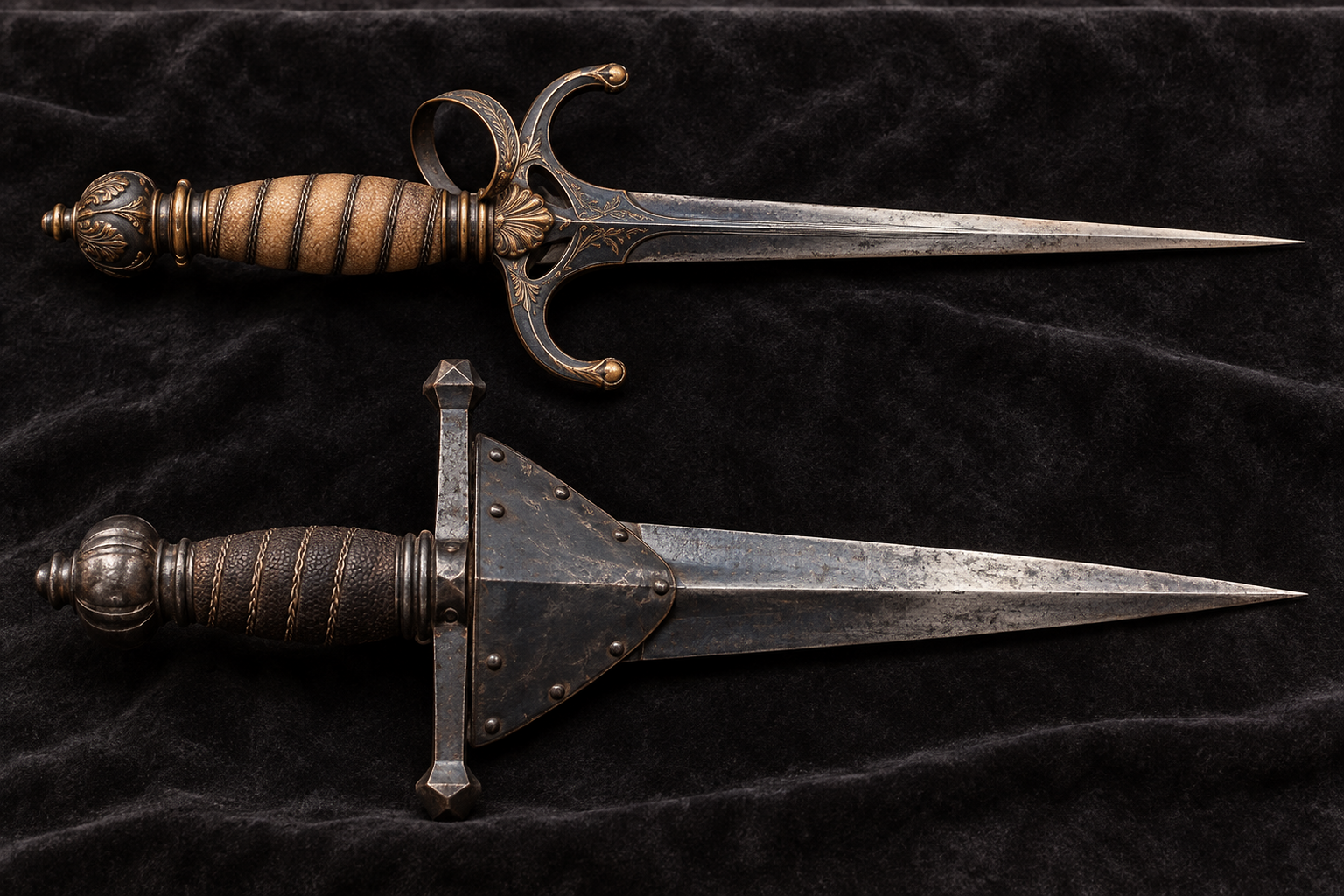
Though often labeled main-gauche, the term strictly refers to the large, sail-hilted daggers of the mid-17th century. Conflating the French transitional dagger with the later, more rigid sail-hilted variants obscures a significant mechanical evolution.
The sail dagger was a specialized wall of steel, featuring massive triangular plates and long crossbars. By contrast, the French transitional dagger maintained an agile, skeletal framework. It prioritized maneuverability and wrist flexion over the static, impenetrable defense provided by the later sail-plate designs.
Survival and Physical Evidence
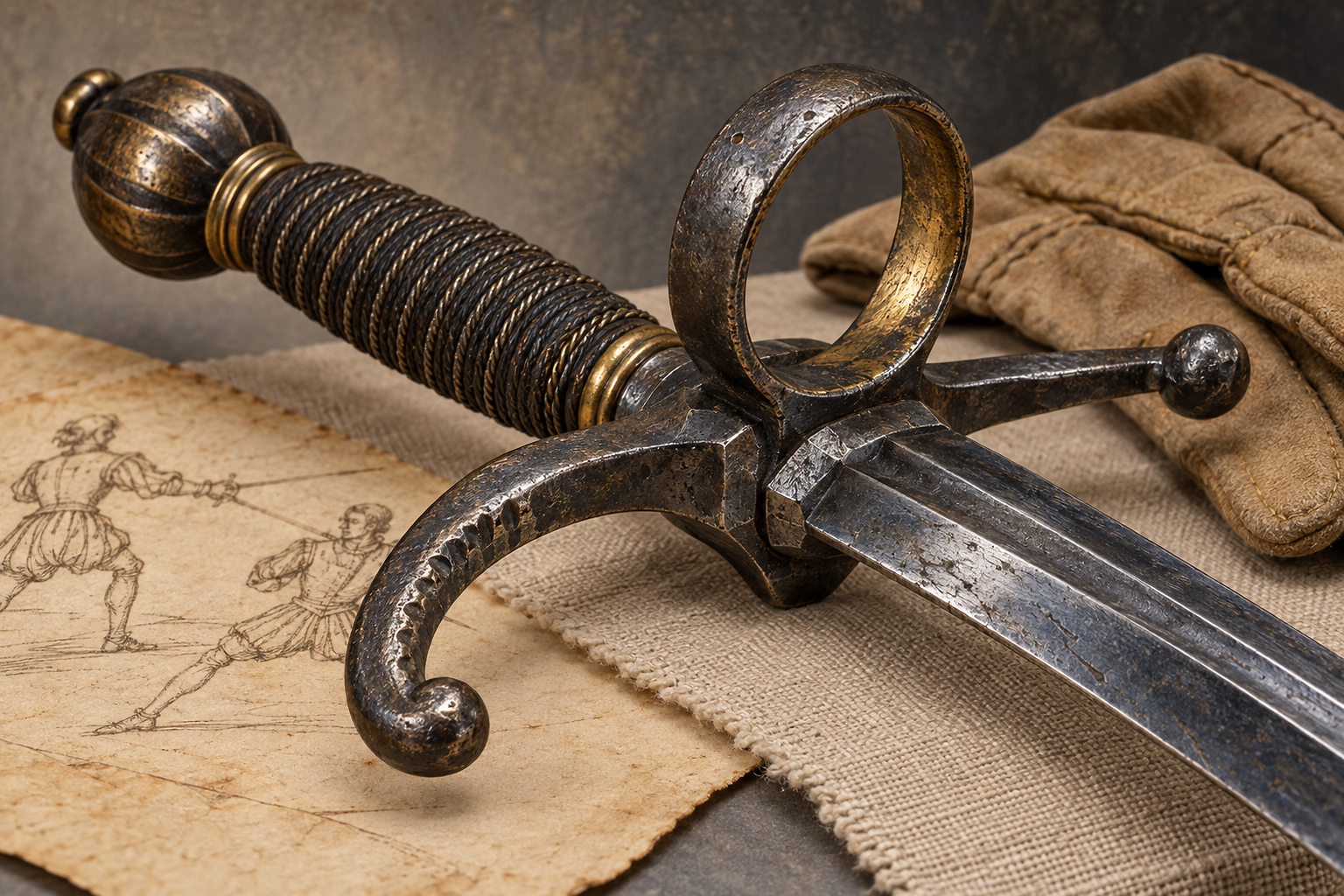
Transitional daggers are rare in pristine condition. As functional civilian weapons, they were subject to constant attrition. Museum specimens often show evidence of working modifications, such as quillons bent back into place after combat or thumb rings filed smooth to accommodate different users.
The inner curve of the quillons often displays minute denting where hardened sword edges hammered against the iron. The thumb ring frequently exhibits thinning on its forward inner edge, worn down by years of contact with leather dueling gloves.
The Demise of the Dagger Guard
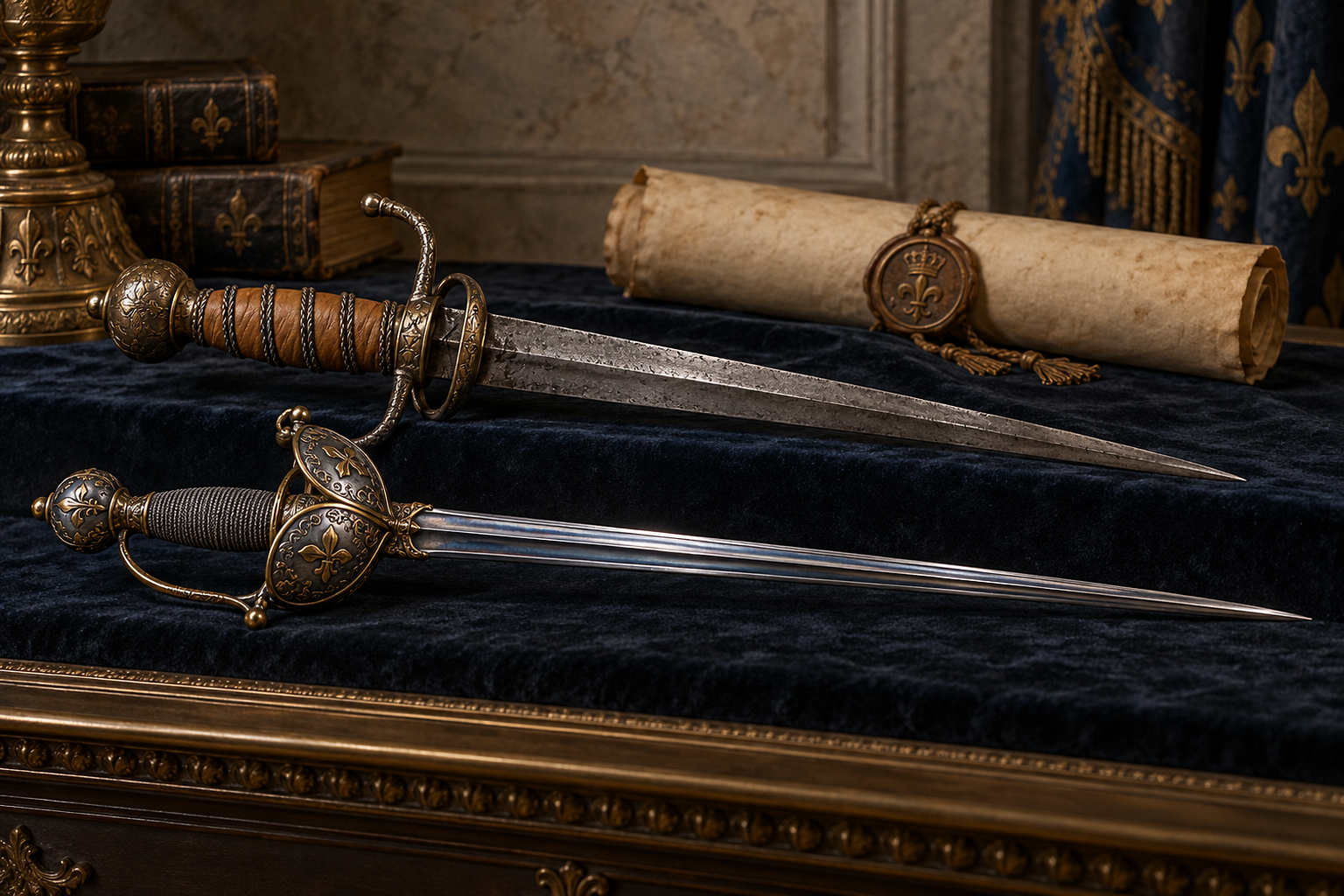
The ergonomic sophistication of the transitional dagger reached its peak in the 1620s but was short-lived. By the mid-17th century, the rapier evolved into the shorter, lighter smallsword, which allowed a fencer to execute both parry and riposte in one motion without needing a secondary implement.
Louis XIV's edicts against dueling further suppressed the open carrying of paired weapons. The dagger was retired from the street and the dueling field, relegated to armories and collections as a relic of a time when survival relied on the structural strength of a thumb braced against iron.
Further reading
Follow the sources to examine the object and its historical context.
Norman, A.V.B. The Rapier and Small-Sword, 1460–1820. London: Arms and Armour Press, 1980.External reference · Opens in a new tab Blair, Claude. European and American Arms, c. 1100–1850. London: B.T. Batsford, 1962.External reference · Opens in a new tab