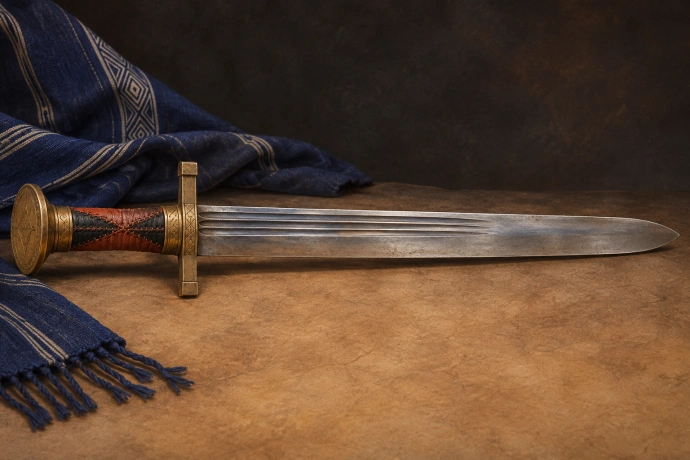
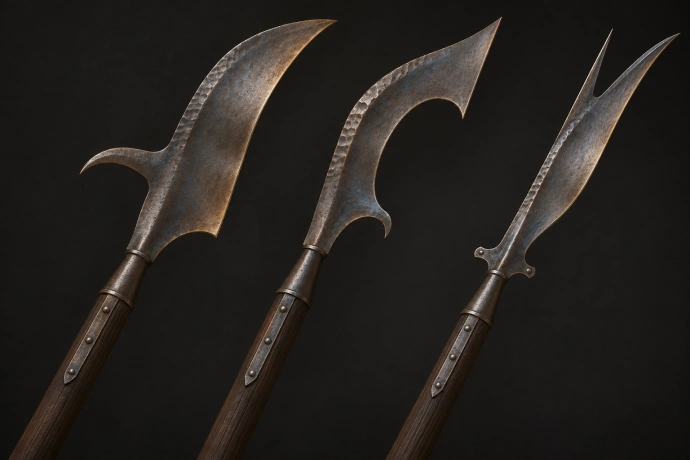
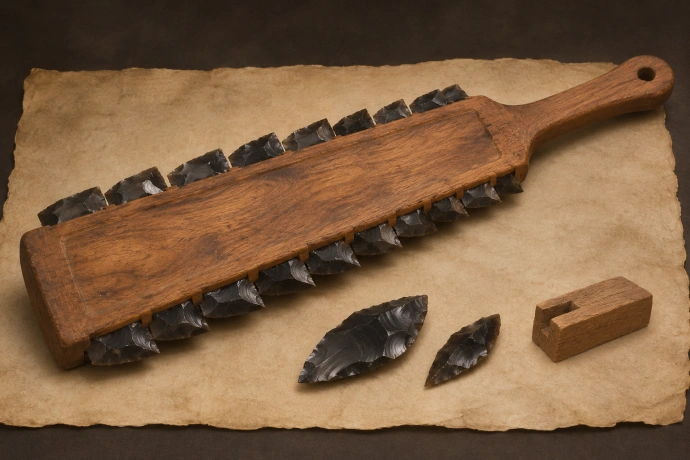
Excavations along the fortified northwest frontiers of Han Dynasty China have yielded thousands of wooden inventory slips alongside corrosion-crusted iron armaments. Among these findings, the pi (鈹) stands out as a distinctive polearm: a weapon featuring a long, double-edged blade shaped like a short sword, attached to a wooden shaft using a flat tang and socketed collar rather than a conventional spear socket. Wooden logbooks unearthed at watchtowers in Juyan and Xuanquan detail the issuance, inspection, and repair of these long blades, offering an unprecedented look at how early imperial armories equipped garrisons along the Silk Road.
Morphology of the Long-Bladed Spearhead
The pi occupies a unique structural middle ground between a double-edged sword and a polearm. Measuring anywhere from thirty to over fifty centimeters in blade length, its blade profile closely resembles the straight jian (sword) of the Han period. It features a pronounced central ridge for structural rigidity, tapering smoothly to a sharp thrusting point. Rather than finishing in a hollow conical socket like a standard thrusting spear (qiang), the base of the pi blade terminates in a sturdy, flattened tang.
This long tang was seated into a split at the head of a long wooden shaft. A metallic ferrule or a series of riveted iron collars encased the joinery, preventing the shaft from splitting under the lateral strain of parrying or heavy thrusts. The resulting profile yielded a weapon with the reach of a spear and the substantial cutting surface of a short sword.
Transition from Cast Bronze to Forged Iron
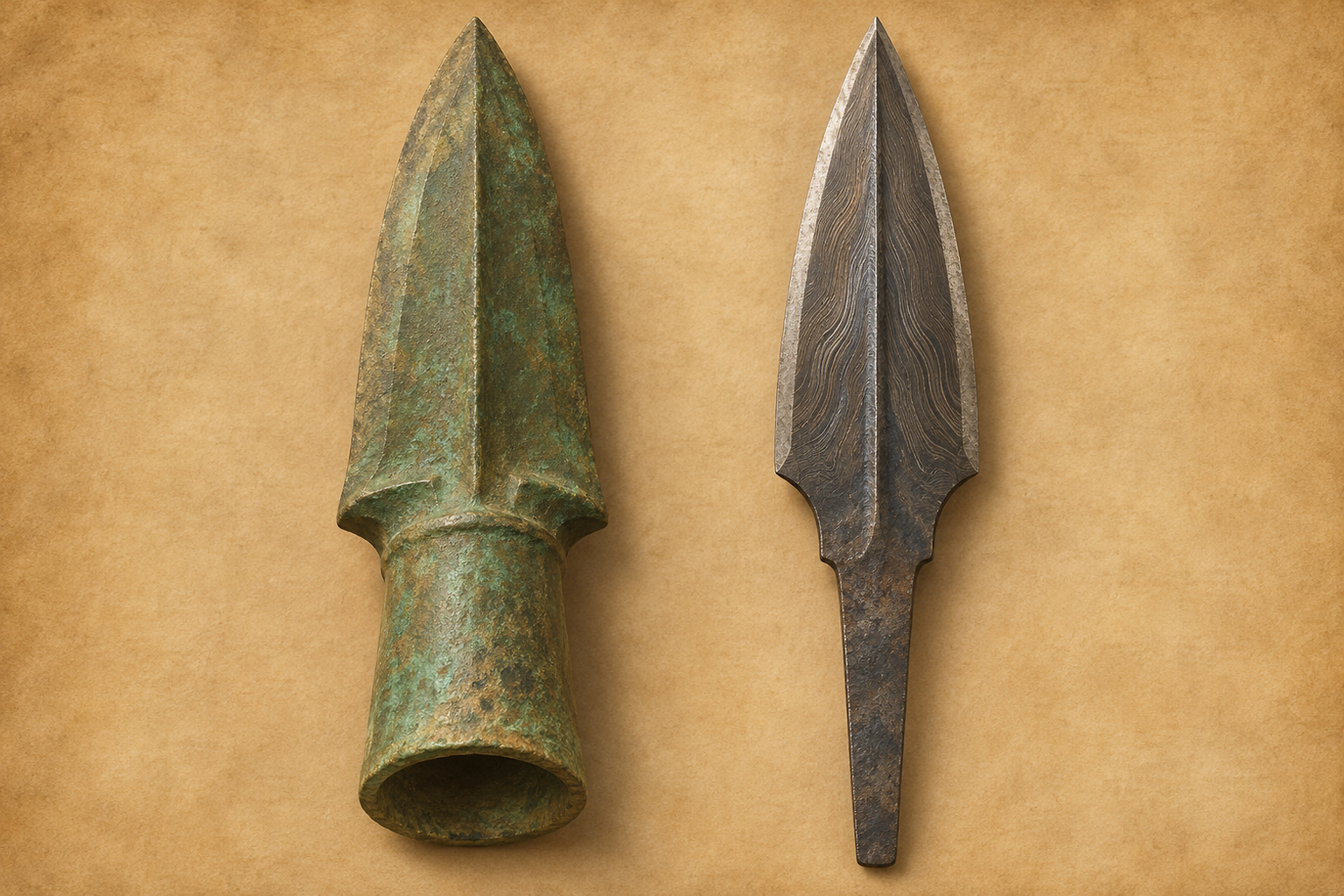
During the Warring States period, ancestral forms of the pi were cast in bronze, relying on high-tin alloys for hardness and precise mold-casting techniques. With the consolidation of the Han Empire under Emperor Wu, state-run iron monopolies transformed the imperial military industrial base. Metallurgical analysis of excavated Western Han weapons demonstrates a rapid transition toward forged iron and early steel production.
Iron pi forgings required skilled blacksmithing to achieve a straight, uniform double edge without warping. Smiths utilized multi-layer folding and carburization techniques, hardening the cutting edges while maintaining a tougher, more resilient core. This transition provided imperial armies with polearms that were less prone to catastrophic snapping than their cast bronze ancestors.
Garrison Armoury Logs of the Hexi Corridor
The hyper-arid climate of the Gobi Desert preserved thousands of organic records written on narrow wooden and bamboo strips, known collectively as Juyan Hanjian. These administrative slips contain routine logs compiled by low-ranking garrison clerks stationed at remote watchtowers along the Hexi Corridor.
Armoury ledgers (bingqibu) record precise inventories of state-issued weapons, tracking their distribution down to individual watchtowers (fengsui). Entries routinely list pi alongside iron crossbows, leather armor sets, and halberds, providing a clear picture of imperial logistics in practice.
Surviving wooden slips categorize weapons into distinct administrative classes:
- Pi (鈹): Double-edged long blade attached via a flat tang, recorded with shaft length and collar condition.
- Ji (戟): Combination dagger-axe and spear, used for hooking and thrusting.
- Mao / Qiang (矛 / 槍): Standard socketed thrusting spears used in dense formation.
- Dao (刀): Single-edged iron ring-pommel swords issued to infantry and cavalry.
Hafting Engineering and Structural Resilience
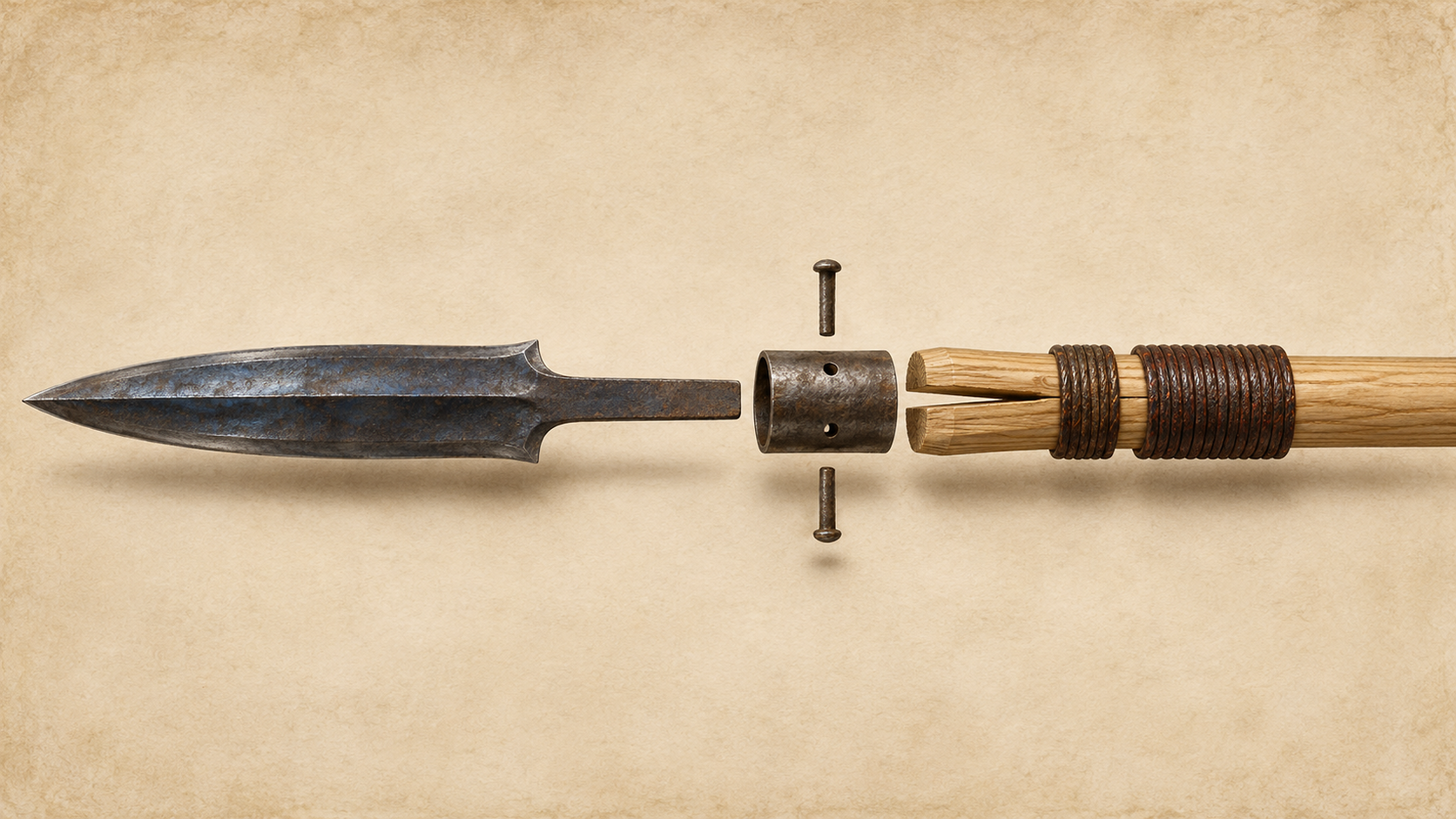
Securing a long blade to a wood haft presents severe mechanical challenges. Unlike a round socket that distributes impact force evenly across the circumference of the pole, a flat tang acts as a wedge when force is applied to the side of the blade.
Han blacksmiths and woodworkers solved this by crafting specialized iron ferrules (tong) that wrapped around the top section of the shaft. The tang extended deep into the core of the wood, pinned with cross-rivets. Thread wrapping, often sealed with dark lacquer, was applied below the collar to absorb vibrations and prevent splitting during heavy combat.
Frontier Logistics and State Quality Control
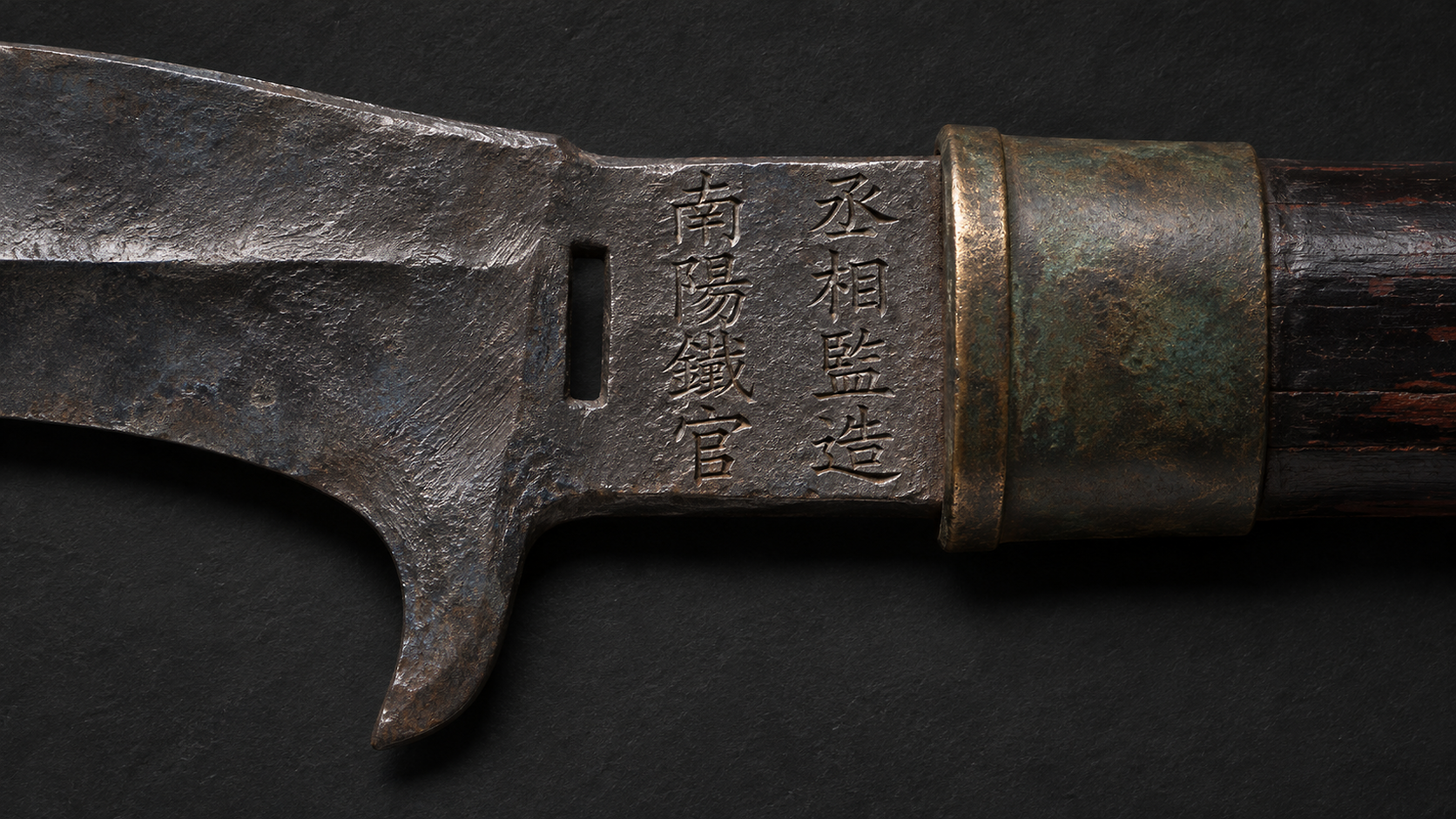
Imperial Han logistics relied on standardized manufacturing and strict accountability. Government workshops stamped or incised metal components with the name of the supervising official, the workshop location, and the date of production.
Garrison logbooks record periodic inspections of weapons. If an iron pi suffered rust, a loose ferrule, or a bent tang, the defect was recorded in the watchtower ledger. Servicemen were held financially accountable for lost or damaged equipment, creating a paper trail that linked distant frontier garrisons directly to provincial arsenals.
Tactical Application Against Steppe Cavalry
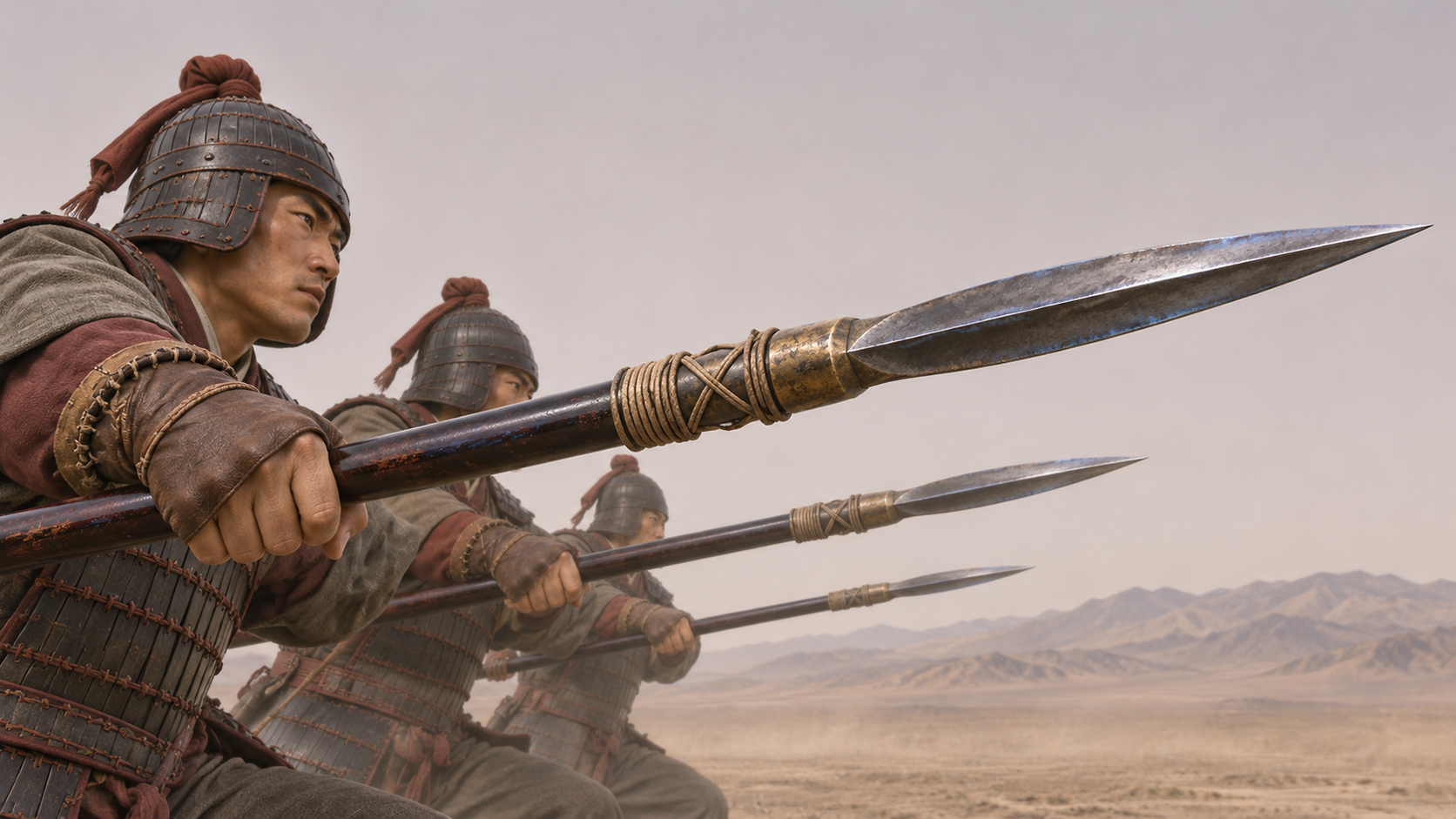
The primary strategic threat to the Han frontier came from the nomadic Xiongnu confederation, whose horse archers relied on speed, mobility, and hit-and-run tactics. Han infantry deployed at watchtowers and fortresses needed weapons capable of keeping mounted opponents at bay.
The long blade of the pi provided an effective defensive barrier. When set against a charging horse, the substantial cutting edge was capable of inflicting severe wounds on mounts, while the long haft allowed infantrymen to strike before a cavalryman's saber or short spear could reach them.
Armor Interaction and Penetration Dynamics
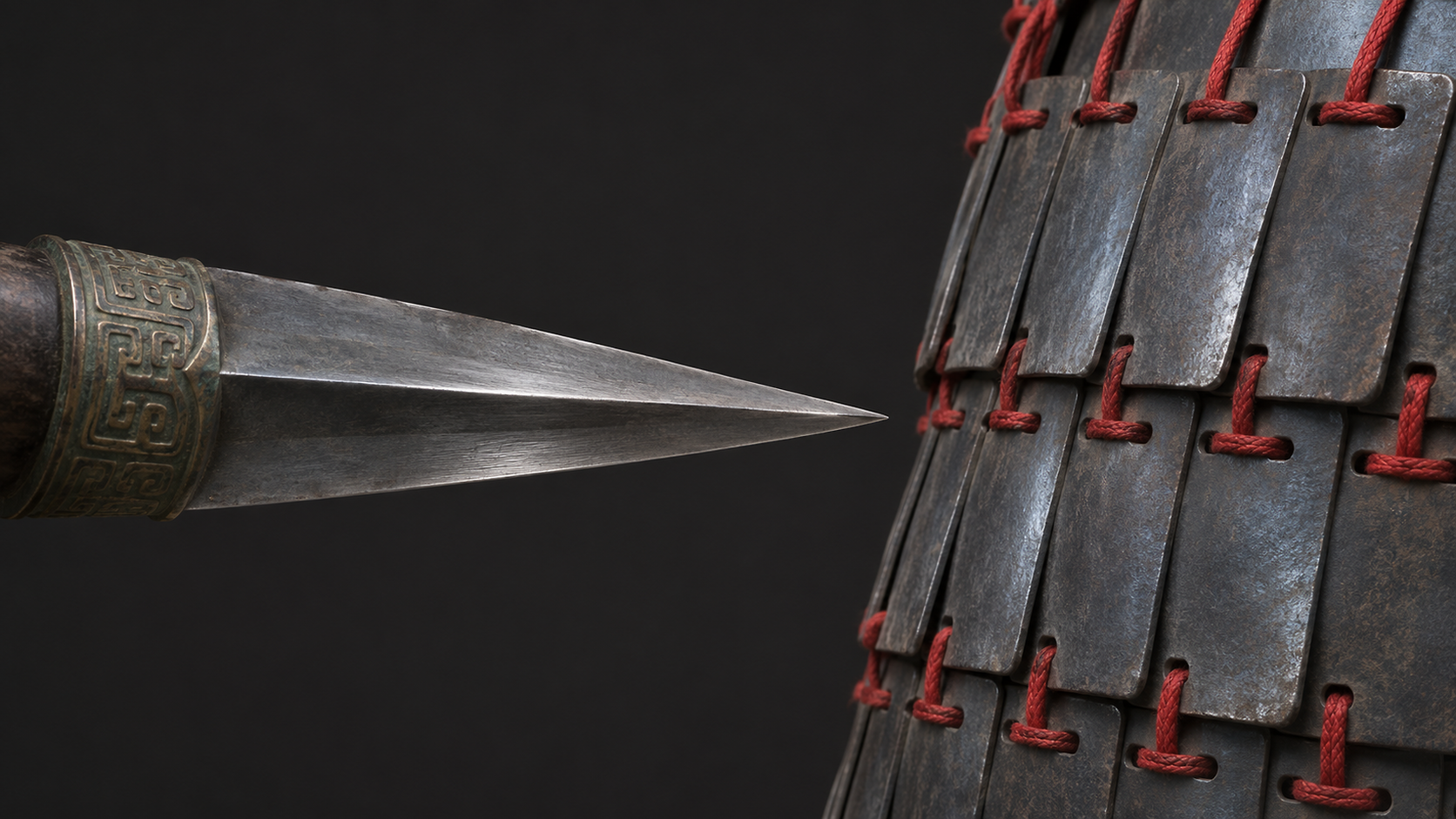
Han soldiers and their nomadic adversaries frequently wore lamellar armor constructed from small, overlapping plates of iron or hardened leather bound with cords. Piercing such protection required a rigid point supported by solid thrusting mechanics.
The reinforced stiffening spine running down the center of the pi blade prevented flexing during an intense thrust. While the width of the blade created wider entry wounds than a needle-pointed spearhead, its sharp diamond cross-section allowed it to split leather laces or shear through unarmored gaps in an opponent's defense.
Distinguishing the Pi from the Ji and Sword
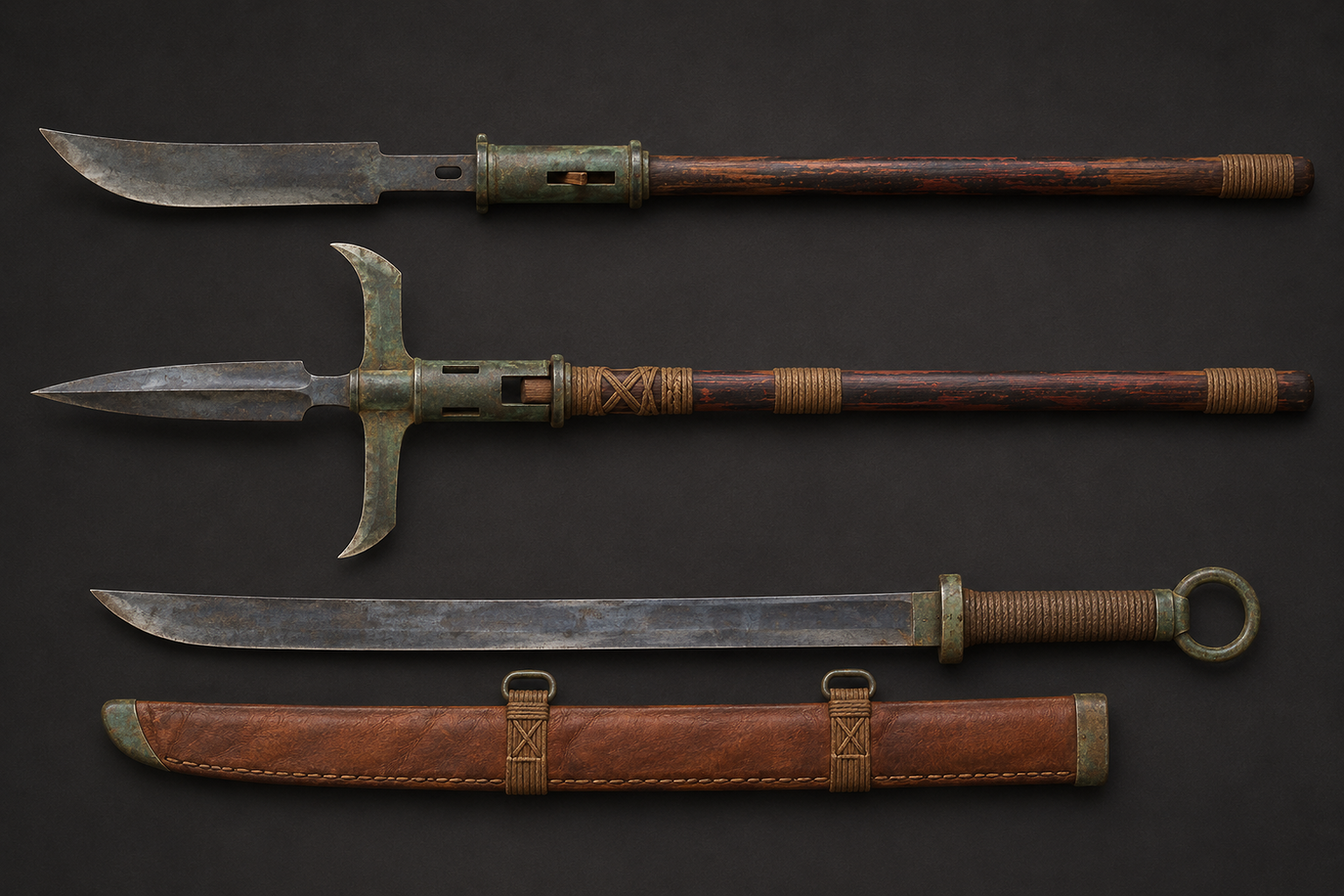
In modern pop-culture re-creations and later military literature, ancient Chinese polearms are often grouped under generic headings. However, Western Han records clearly separate the pi from both the ji (dagger-axe/halberd) and the jian (sword).
While a jian was worn at the waist in a scabbard for close-quarters sidearm defense, the pi was a primary infantry formation polearm. Unlike the ji, which featured horizontal hooking blades, the pi was streamlined strictly for thrusting, slicing, and direct mechanical parrying.
Archaeological Sites and Contextual Finds
Major discoveries along the Hexi Corridor—including sites like Juyan, Xuanquan, and the fortresses near Dunhuang—have provided crucial physical context for the pi. Iron blades are often found in collapsed armory stores or watchtower refuse pits alongside oxidized leather lamellae and arrowheads.
In tomb contexts, such as those of high-ranking Han military officers, ceramic figurines and painted lacquer shields illustrate how long-bladed weapons were carried on the march. The physical specimens recovered match the dimensional descriptions written on the desert wooden slips.
Conservation and Metallurgical Analysis
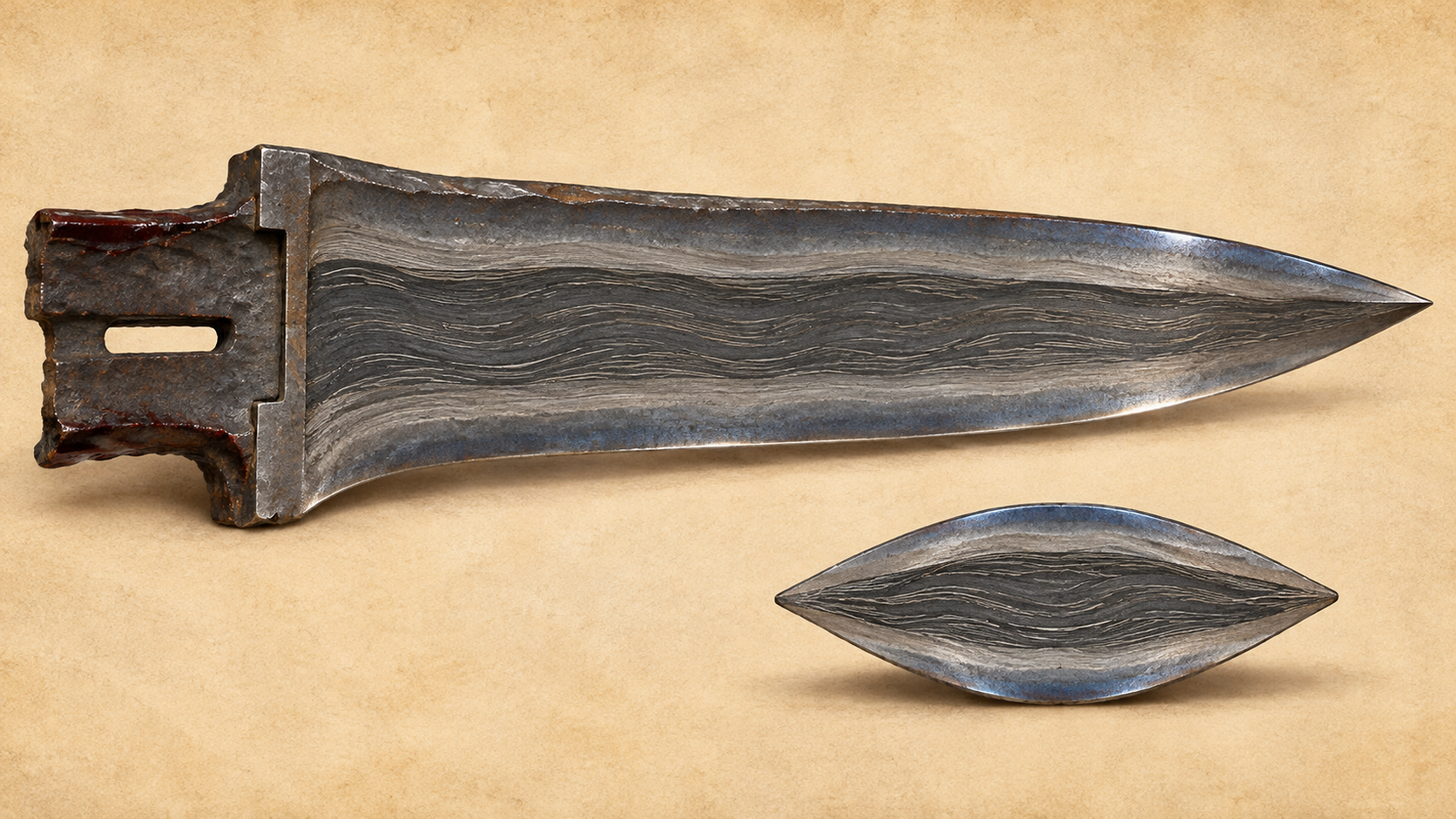
Surviving iron pi blades are heavily susceptible to corrosion due to centuries of exposure to ground moisture and salt deposits prior to excavation. Modern museum conservators utilize x-ray radiography to analyze internal grain structures and identify remaining metallic iron cores beneath layers of rust.
Metallographic studies reveal that many Han iron blades underwent process annealing and repeated folding, creating a laminated structure. Edges show elevated carbon levels resulting from deliberate surface carburization, demonstrating sophisticated metallurgical control in ancient state arsenals.
Modern Reconstructions and Experimental Archaeology
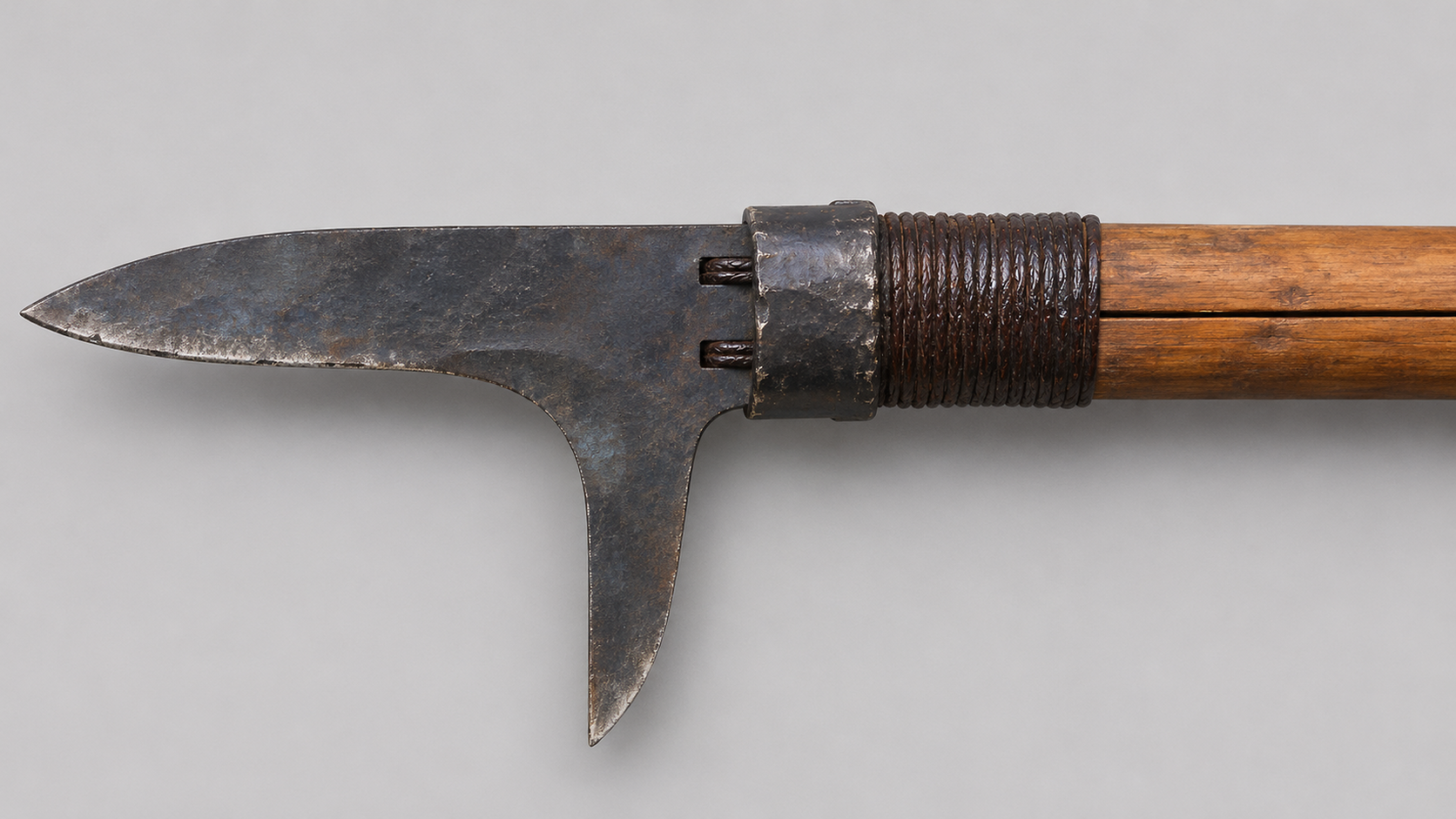
Experimental archaeologists and martial arts historians have crafted functional replicas of the Han iron pi using traditional smithing techniques. Tests on wooden posts and simulated target materials highlight the unique handling qualities of the weapon.
Because of the blade's weight and length, the center of balance sits further forward than that of a conventional spearhead. This forward balance grants immense power to slicing motions, while the flat-tang construction absorbs heavy impacts without slipping within the haft.
Legacy and Evolution in Post-Han Warfare
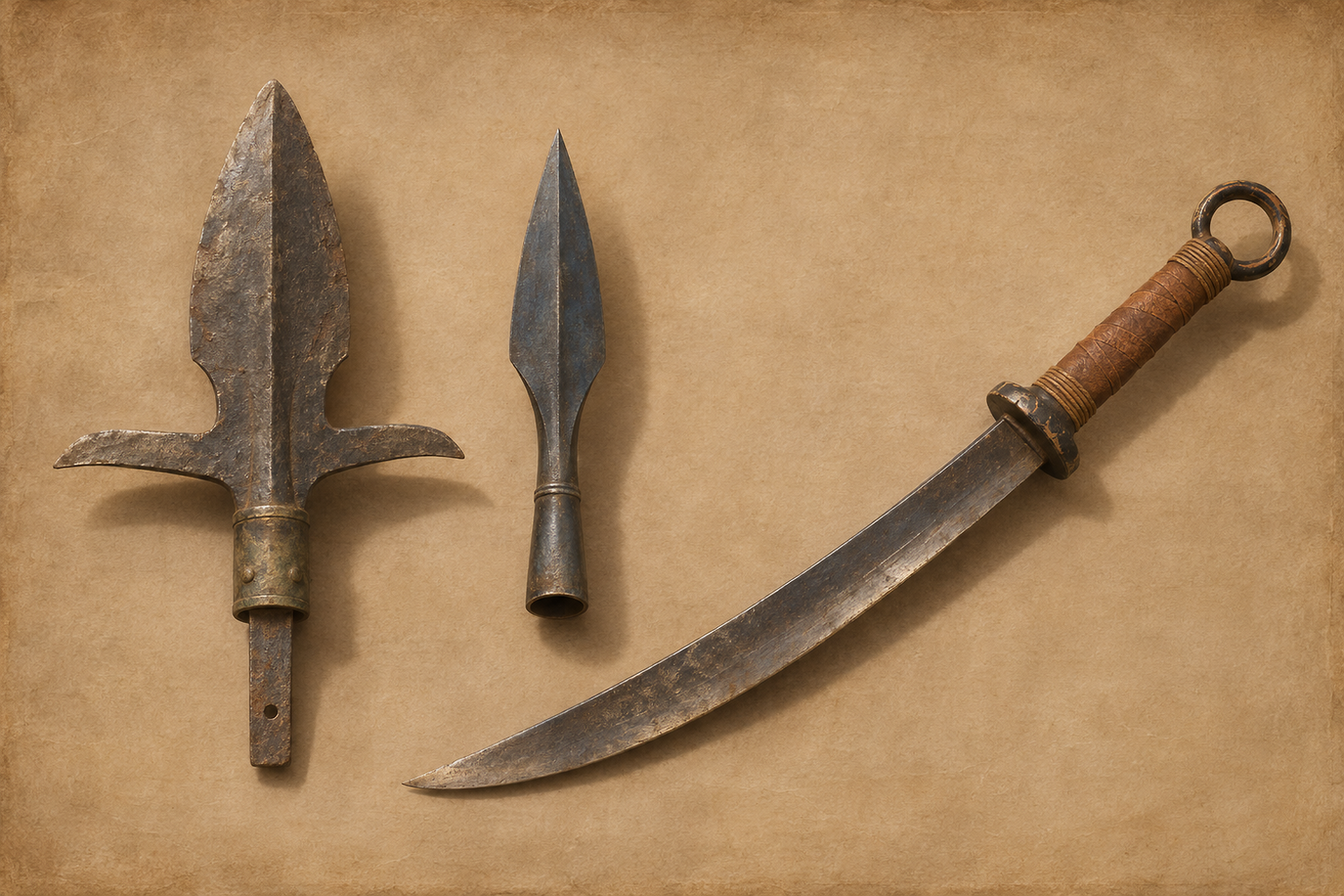
By the end of the Eastern Han dynasty and the onset of the Three Kingdoms period, weapon design shifted toward simpler, more easily mass-produced spear sockets (qiang) and heavy single-edged sabers (dao). The complex tang-and-ferrule construction of the pi gradually fell out of favor for general infantry issue.
Despite its decline as a standard infantry weapon, the structural concept of mounting a long, sword-like blade on a pole persisted in later Chinese martial traditions, influencing subsequent long-handled blades and specialized polearms throughout the Sui, Tang, and Song dynasties.
Further reading
Follow the sources to examine the object and its historical context.
Academia Sinica Institute of History and Philology: Juyan Wooden Slips CollectionExternal reference · Opens in a new tab Gansu Provincial Museum: Hexi Corridor Han Administrative Slips and ArtifactsExternal reference · Opens in a new tab