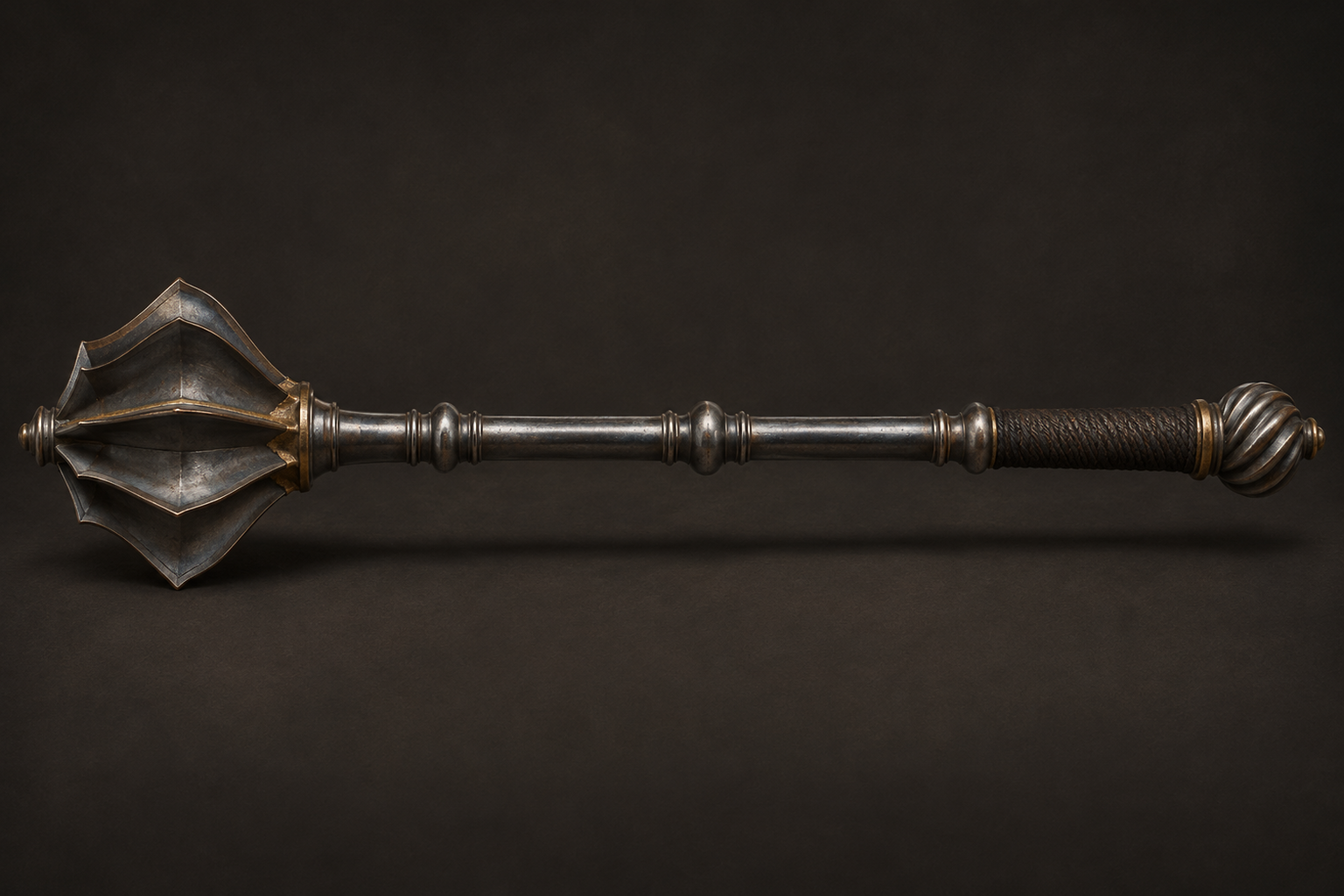
In the armories of sixteenth-century northern Italy, the all-steel flanged mace occupied a distinct tactical niche. Designed to contend with hardened cavalry plate and enclosed headgear, it delivered blunt trauma through kinetic shock rather than relying on an edge to pierce tempered steel.
Percussive Design Against Plate Defense
By the turn of the sixteenth century, Italian armorers had perfected white harnesses and fully articulated cavalry defenses. Plate steel quenched and tempered in Milan, Brescia, and Ferrara effectively deflected most slashing sword blows and resisted all but the most direct lance thrusts. Faced with heavy plate, infantry thrusting spears and broadswords routinely glanced off curved surfaces without disabling the wearer.
The flanged mace addressed this defensive superiority by changing the mechanical equation. Instead of cutting through steel, it concentrated the total momentum of an equestrian blow onto the narrow edge of a single radial flange. This limited point of impact multiplied contact pressure, transferring sufficient kinetic energy through the metal shell to buckle plate, collapse articulated lames, and impart severe concussive trauma to the flesh and bone beneath.
The Evolution from Iron Bars to Radial Flanges
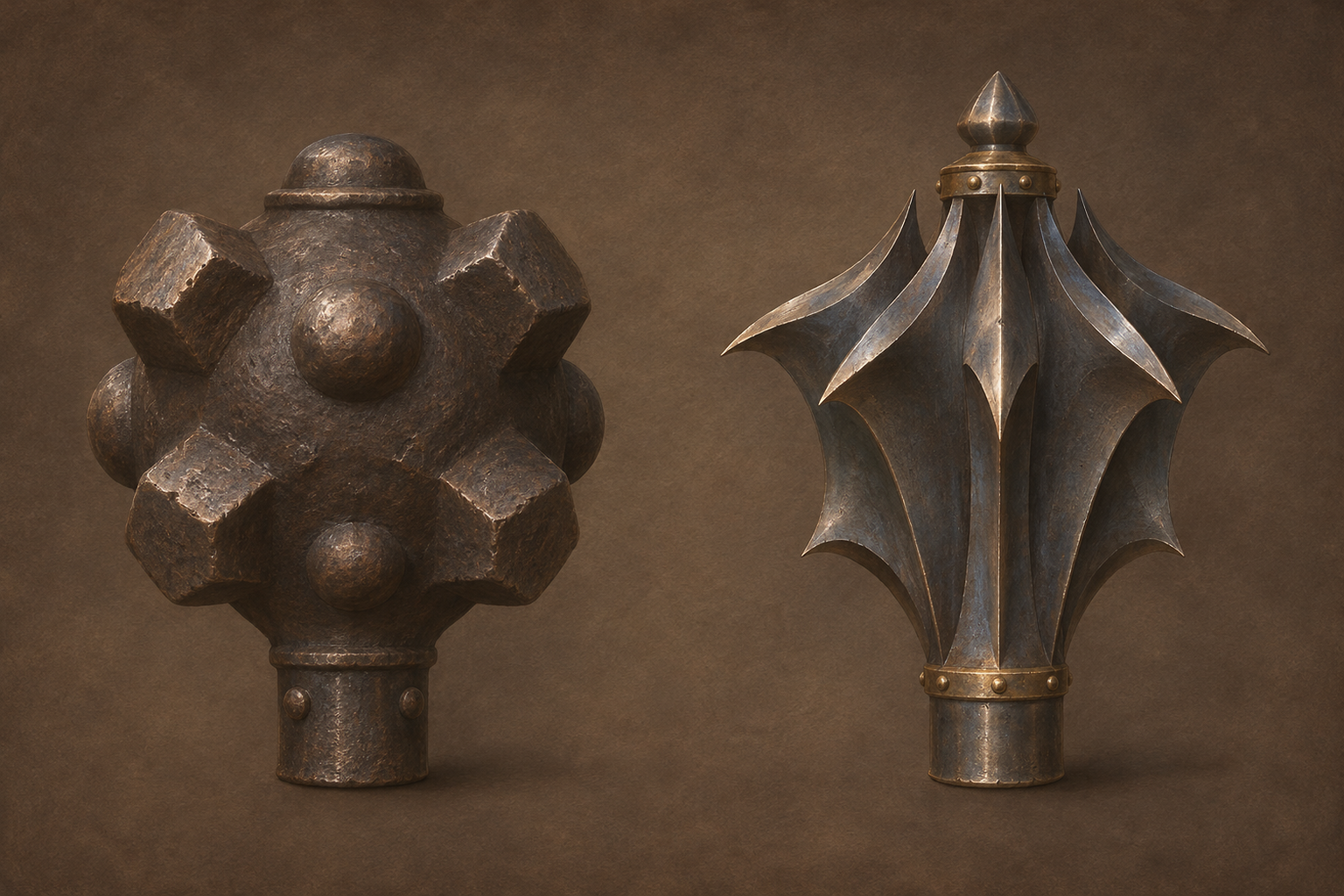
The earlier medieval mace frequently relied on heavy cast-bronze or iron heads with simple polygonal knobs. While effective against mail and padded gambesons, these rounded heads tended to skate across the steep, deflective curves of fifteenth-century Italian armets, great bascinets, and breastplates. Skimming impacts lost much of their kinetic energy before deforming the underlying metal.
Late fifteenth- and early sixteenth-century smiths resolved this failure mode by elongating and thinning the impact surfaces into pronounced radial fins. When a flange struck an angled surface, its leading corner or cusped edge bit into the steel plate rather than slipping off cleanly. This mechanical bite anchored the weapon for a fraction of a second, forcing the plate to absorb the full weight and speed of the swing.
Metallurgy of the Monolithic Steel Mace
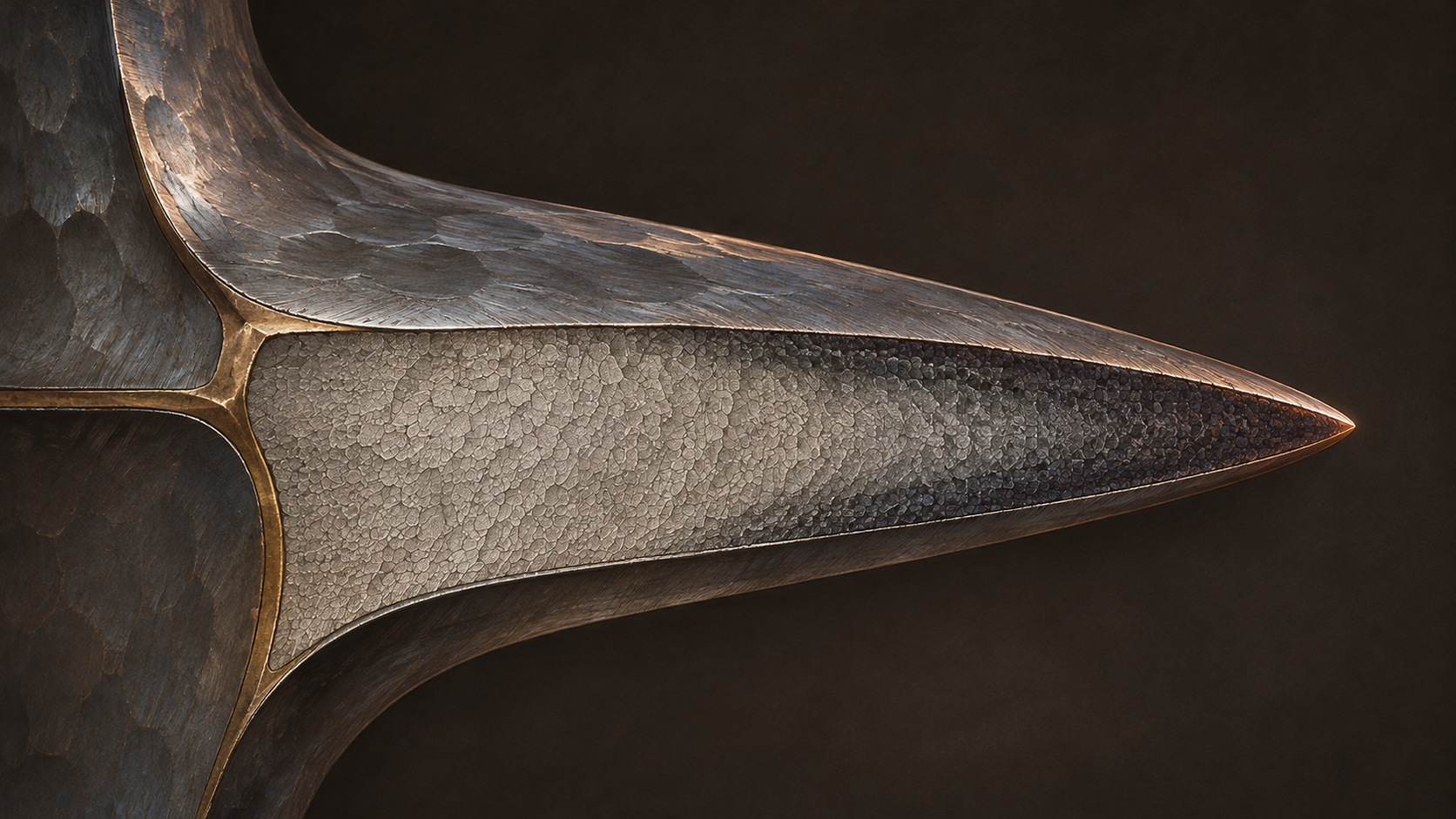
Surviving Italian maces from the early sixteenth century demonstrate a pronounced shift toward all-metal construction. While wooden hafts remained common for infantry clubs and lighter maces, heavy cavalry demanded weapons that could neither be sheared by a sword blade nor shattered by the violence of a parried blow. Smiths answered by forging the haft, head, and grip entirely from iron and medium-carbon steel.
Achieving structural reliability across an all-steel weapon required sophisticated metallurgical balancing. If the shaft and flanges were quenched too hard, the crystalline structure turned brittle and risked shattering upon striking a hardened helmet comb. Consequently, Italian workshops differentially treated these weapons, leaving the haft and core tough and ductile while moderately hardening the percussive edges of the flanges to resist curling or chipping.
Joinery and Brazing in Milanese Workshops
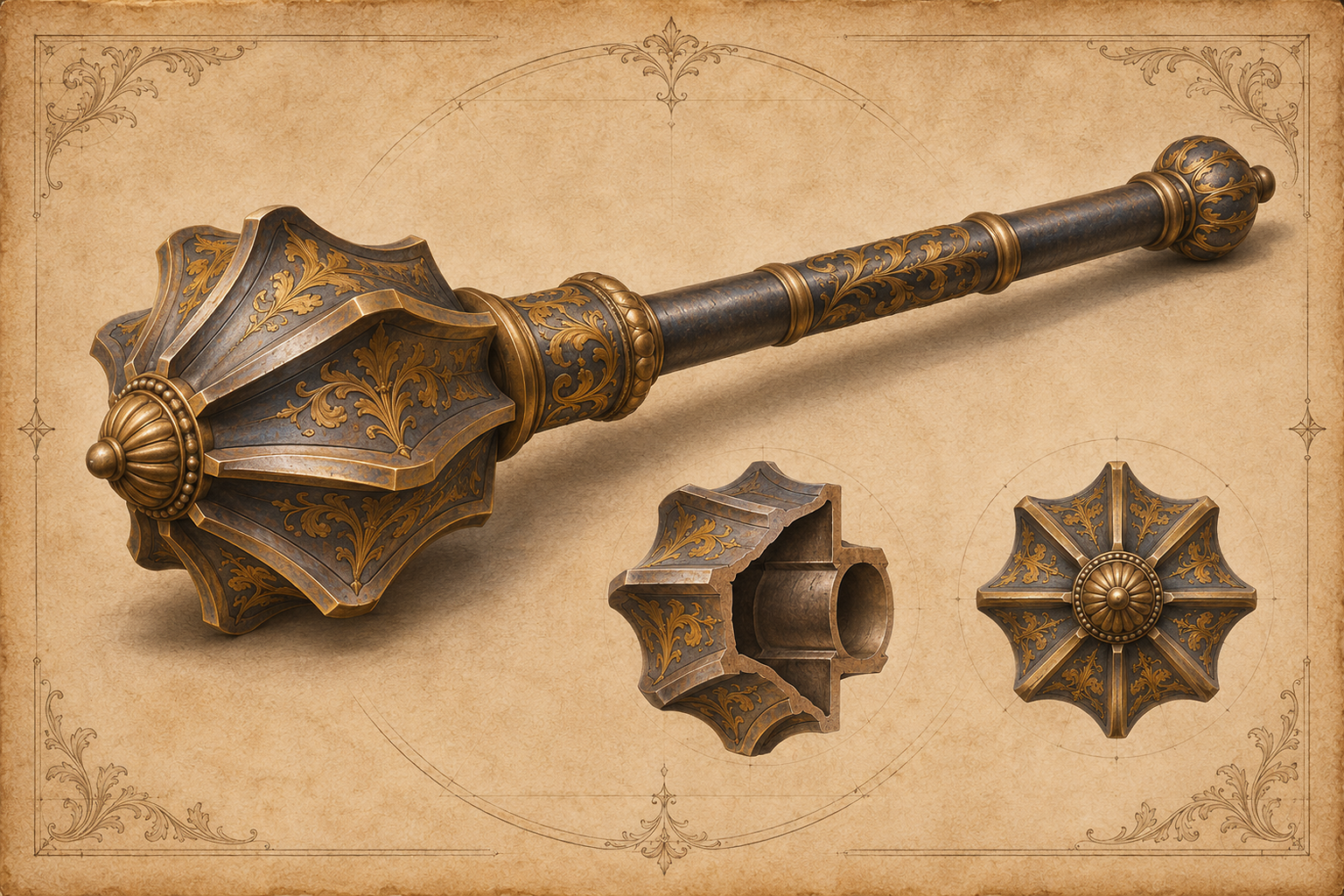
The assembly of a six- or eight-flanged mace tested the joinery skills of urban bladesmiths. In higher-status pieces, the central socket was bored from a solid billet or wrapped and forge-welded from sheet iron, after which longitudinal slots were filed or chiseled down its length. Individual flanges were shaped with tenons that seated directly into these slots.
Once seated, the flanges were permanently fixed using copper-alloy brazing. The armorer packed the joints with powdered copper, zinc alloys, and borax flux before heating the entire assembly in the forge until the brass melted and wicked through capillary action into every seam. Traces of this golden brazing alloy remain visible around the bases of the flanges on numerous surviving specimens in modern collections.
Flange Geometry and Impact Physics
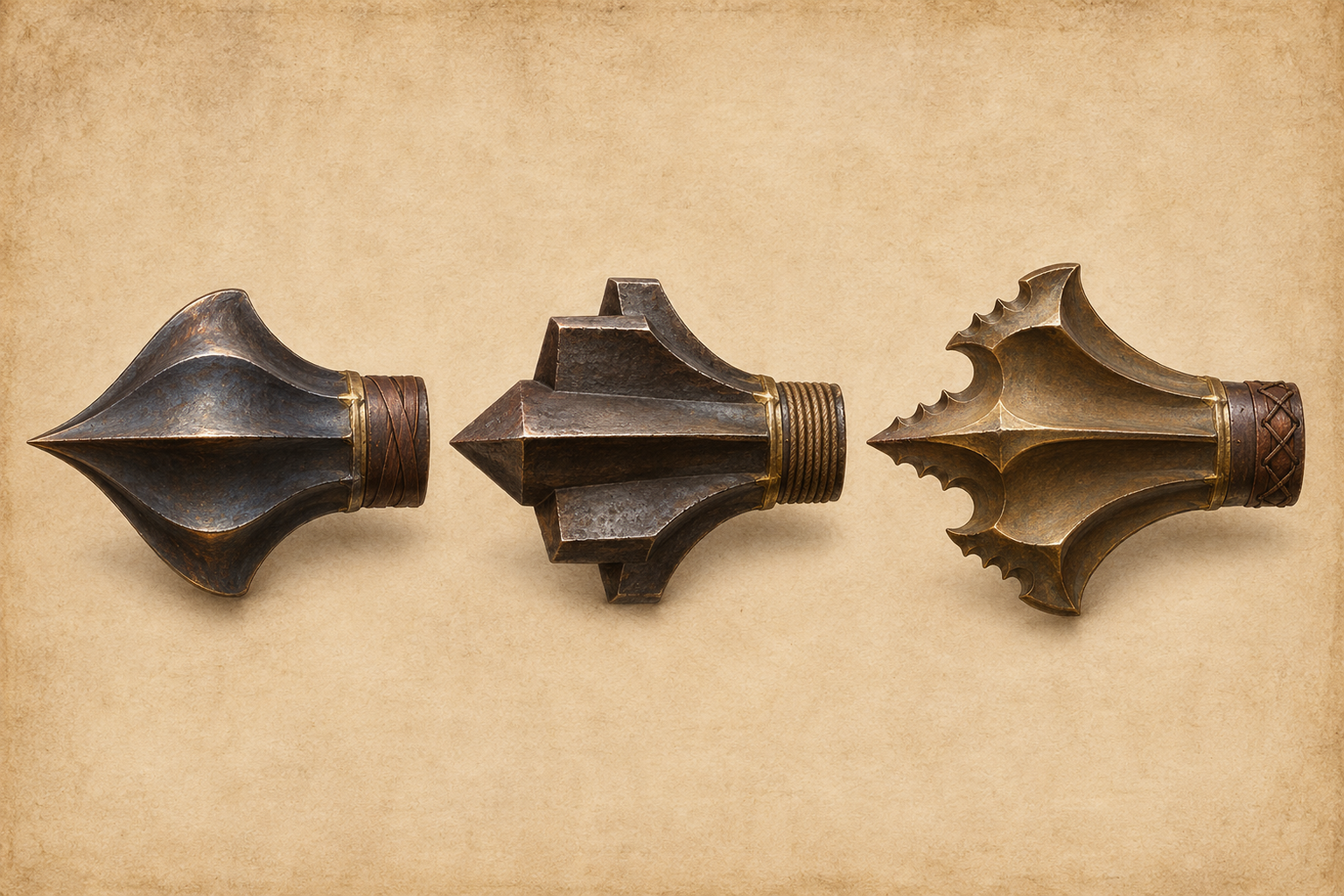
Italian mace flanges display considerable geometric variation, reflecting an ongoing balance between penetration and structural resilience. The most prevalent form featured an ogival or triangular profile with a stepped outer apex. This design placed maximum mass directly behind the forward striking point while tapering toward the rear socket to minimize overall swing weight.
Some northern Italian examples incorporate cusped flanges with small decorative serrations or pierced tracery. While these embellishments demonstrated the maker's bench skill, their practical function was to establish multiple localized bite points along the blade of the flange. If a strike landed short of the apex, an adjacent cusp could still bite into the curve of an opponent's helmet or couter without glancing wide.
Haft Mechanics and Shock Dissipation
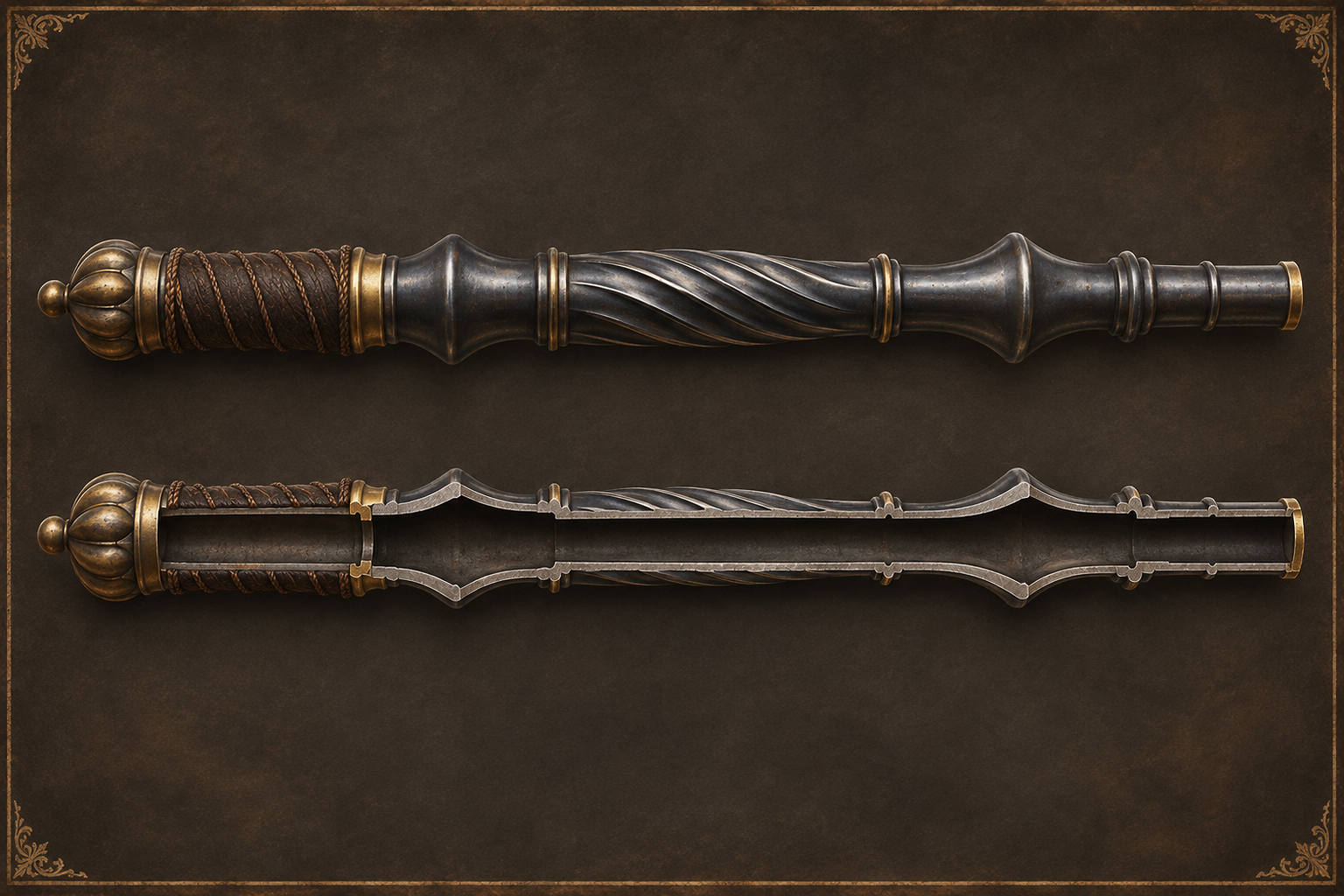
Wielding a solid steel bar delivers severe percussive vibration directly back into the user's hand and wrist, a physical phenomenon known as impact shock. To manage this without sacrificing structural integrity, Italian craftsmen introduced hollow tubular hafts. A tubular section provides equal or superior resistance to bending compared to a solid bar of identical weight, while substantially reducing the overall mass of the weapon.
Along the shaft, makers incorporated turned decorative rings, moldings, and baluster swellings. Beyond their aesthetic appeal, these varied diameters altered the natural resonant frequency of the haft, dampening the shock waves traveling downward from the head. This dampening protected the rider's grip and reduced the risk of dropped weapons during continuous mounted melees.
The Grip and Lanyard System
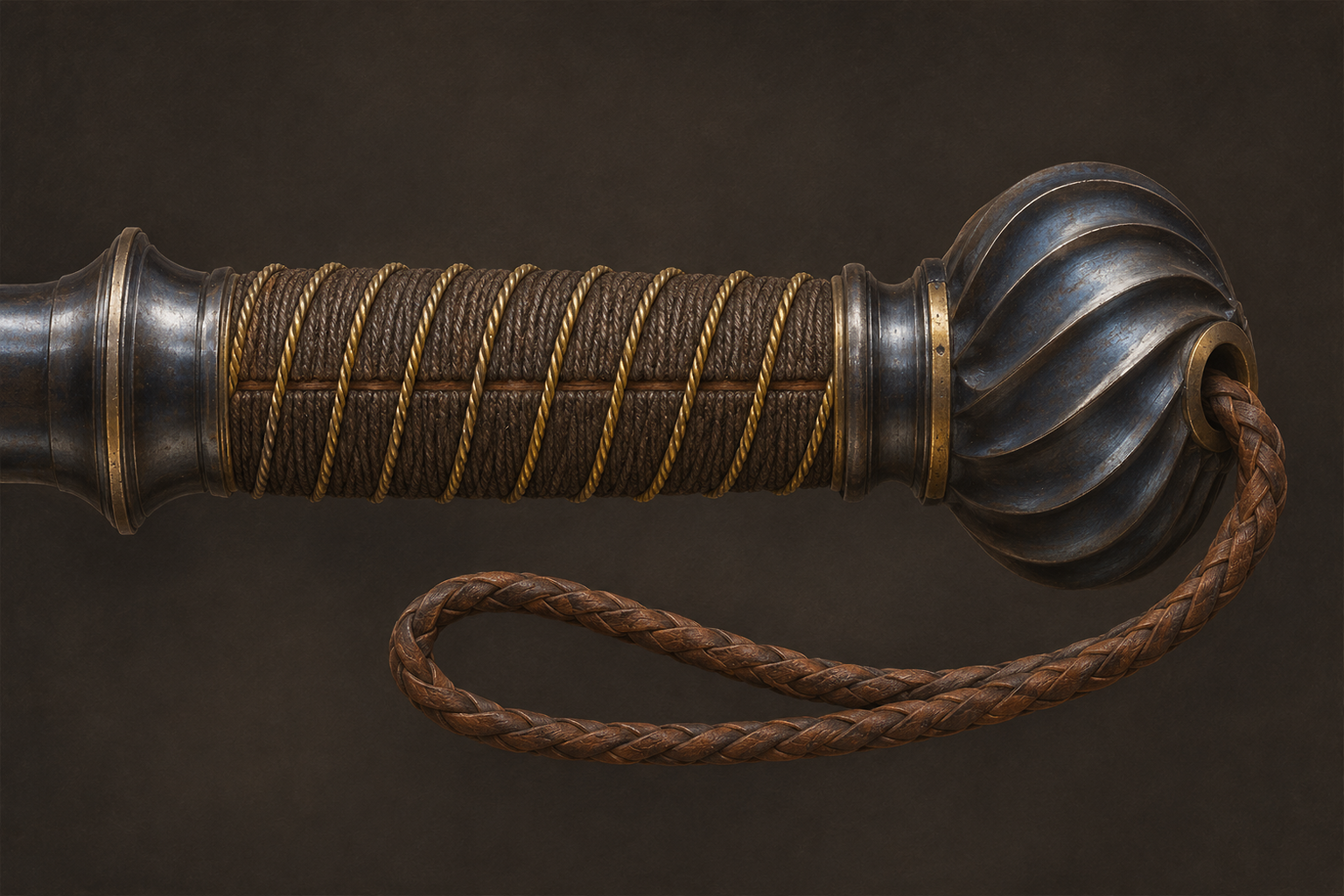
The lower section of an Italian cavalry mace was carefully configured to ensure security during high-speed engagements. Surviving hafts typically end in a swollen, spirally fluted pommel or a bulbous steel cap that prevented the weapon from flying forward from a gloved hand. Between the lower pommel and the upper retaining guard, the haft was wrapped in cord, leather, or twisted brass wire over wood scales.
A critical feature found on field maces is the piercing near the pommel designed for a wrist strap or lanyard, termed a cordone. In equestrian combat, dropping one's primary close-quarters weapon left a horseman acutely vulnerable. The lanyard allowed the rider to let the mace dangle from the wrist while drawing an estoc or handling reins, then instantly recover the haft when the melee tightened.
Combat Against Enclosed Cavalry Helmets
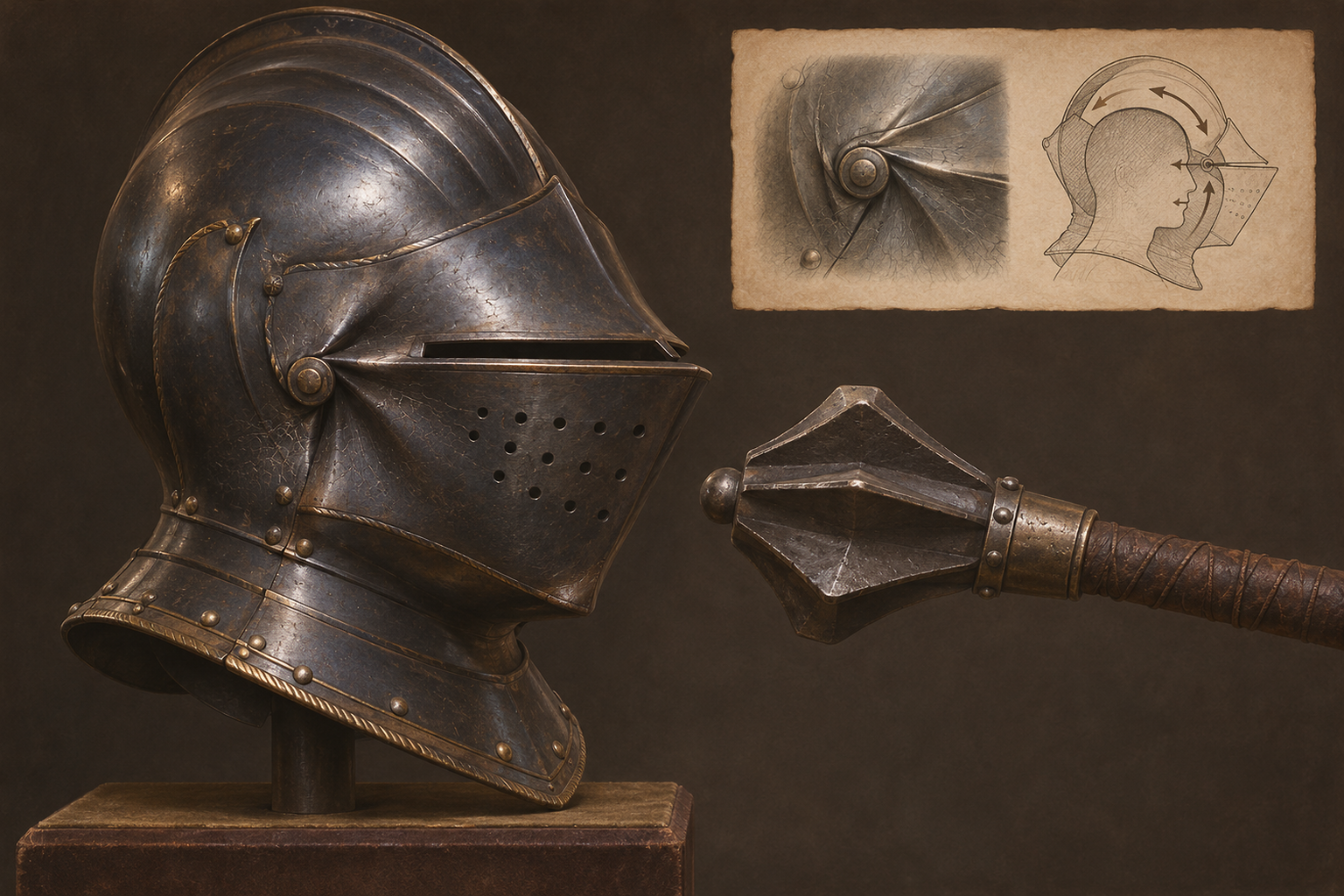
The primary tactical target for the flanged mace was the opponent's head and neck assembly. By the early 1500s, cavalry routinely wore heavy armets or close helmets featuring thick, rounded skulls and pivoted visors, mounted atop rigid gorgets. These defenses could deflect lance tips, but they remained vulnerable to blunt deformation that pressed the internal bowl against the wearer's cranium.
A solid blow from a flanged mace against a visor or cheek piece could bend the metal inward, jamming the pivot pins or locking the breathing vents shut. Even without puncturing the plate, the kinetic energy caused immediate cerebral concussion, neck trauma, and disorientation, rendering an enemy knight incapable of controlling his horse or defending his saddle.
Documented Roles in Italian Armories and Inventories

Archival records from the Gonzaga of Mantua, the d'Este of Ferrara, and the Venetian Arsenal consistently list the mace among standard cavalry provisions. Sixteenth-century inventories categorize these weapons alongside broadswords and lances, showing that commanders regarded them as mandatory equipment rather than exotic sidearms.
Inventories distinguished plain service munitions issued for campaign from enriched pieces preserved in armorial collections.
The presence of undecorated iron maces in fortress inventories confirms that city-states stockpiled these weapons in bulk to equip mounted condottieri and garrison light horse during the prolonged Italian Wars.
Archival descriptions commonly employ specific terminology to denote function and finish:
- Mazza d'arme fornita d'acciaio: a fully fitted combat mace with all-steel haft and flanges.
- Mazza da cavallo rozza: a rough, black-finished service mace issued to ordinary mounted lances.
- Mazza damaschina et dorata: an enriched officer's piece decorated with gold damascening, carried as an insignia of rank.
Distinguishing Combat Arms from Commander's Batons
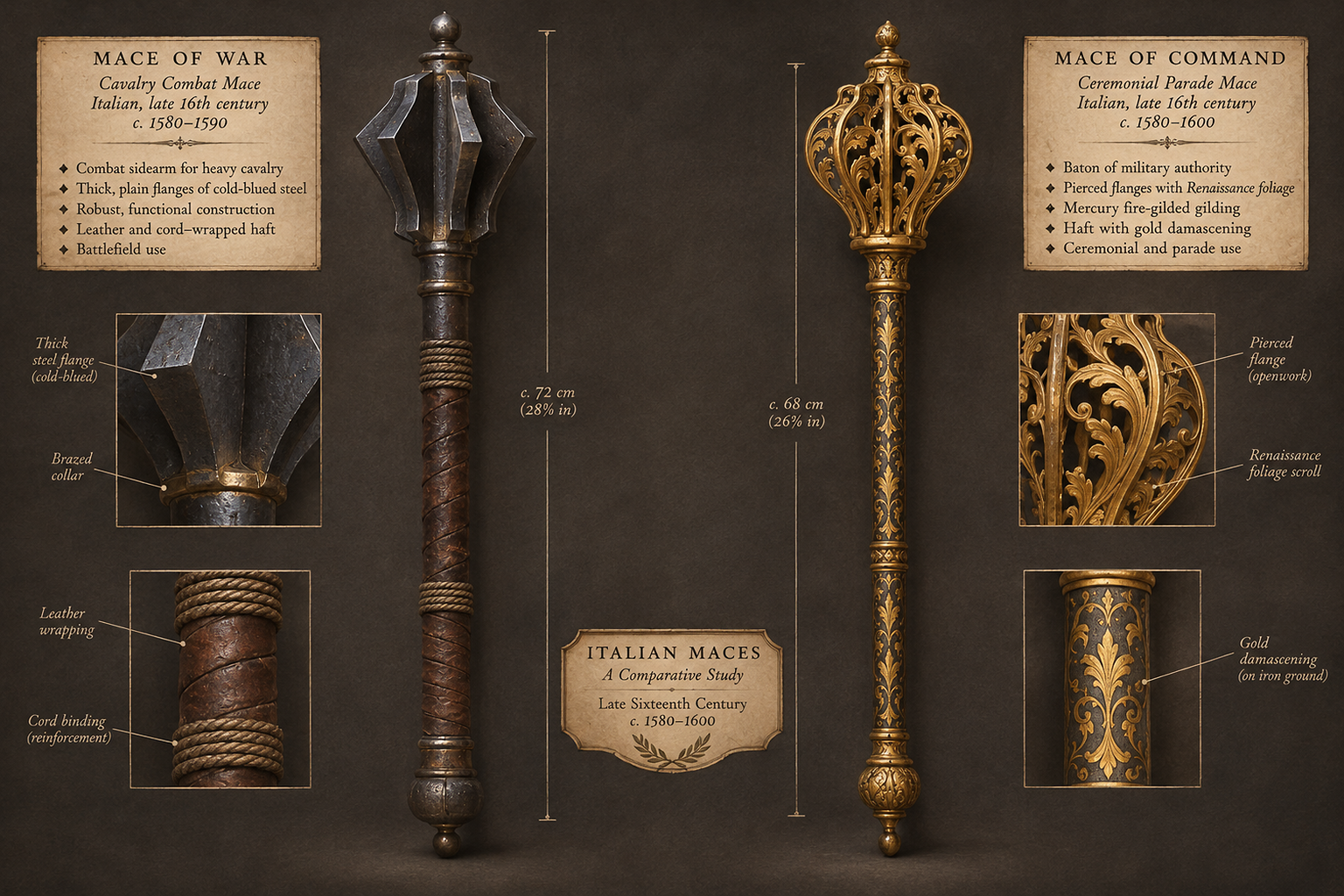
During the mid-to-late sixteenth century, the flanged mace took on an increasingly symbolic role as an emblem of military authority. Senior commanders, including Venetian captains-general and Spanish viceroys in Italy, were frequently painted holding slender steel maces instead of traditional wooden truncheons. These parade pieces mirrored the outline of combat weapons but diverged sharply in weight and balance.
Parade and presentation maces feature intricate chiseling, fire-gilt grounds, and delicate damascening that would degrade instantly under real concussive impact. Furthermore, their flanges are often thinned and pierced to a degree that would cause structural failure upon striking armor. Discerning a functional combat arm from an armorial baton requires checking structural wall thickness, brazing integrity, and the total weight of the piece, which for true cavalry sidearms typically ranged between 800 and 1,200 grams.
Iconography and Contemporary Art Evidence
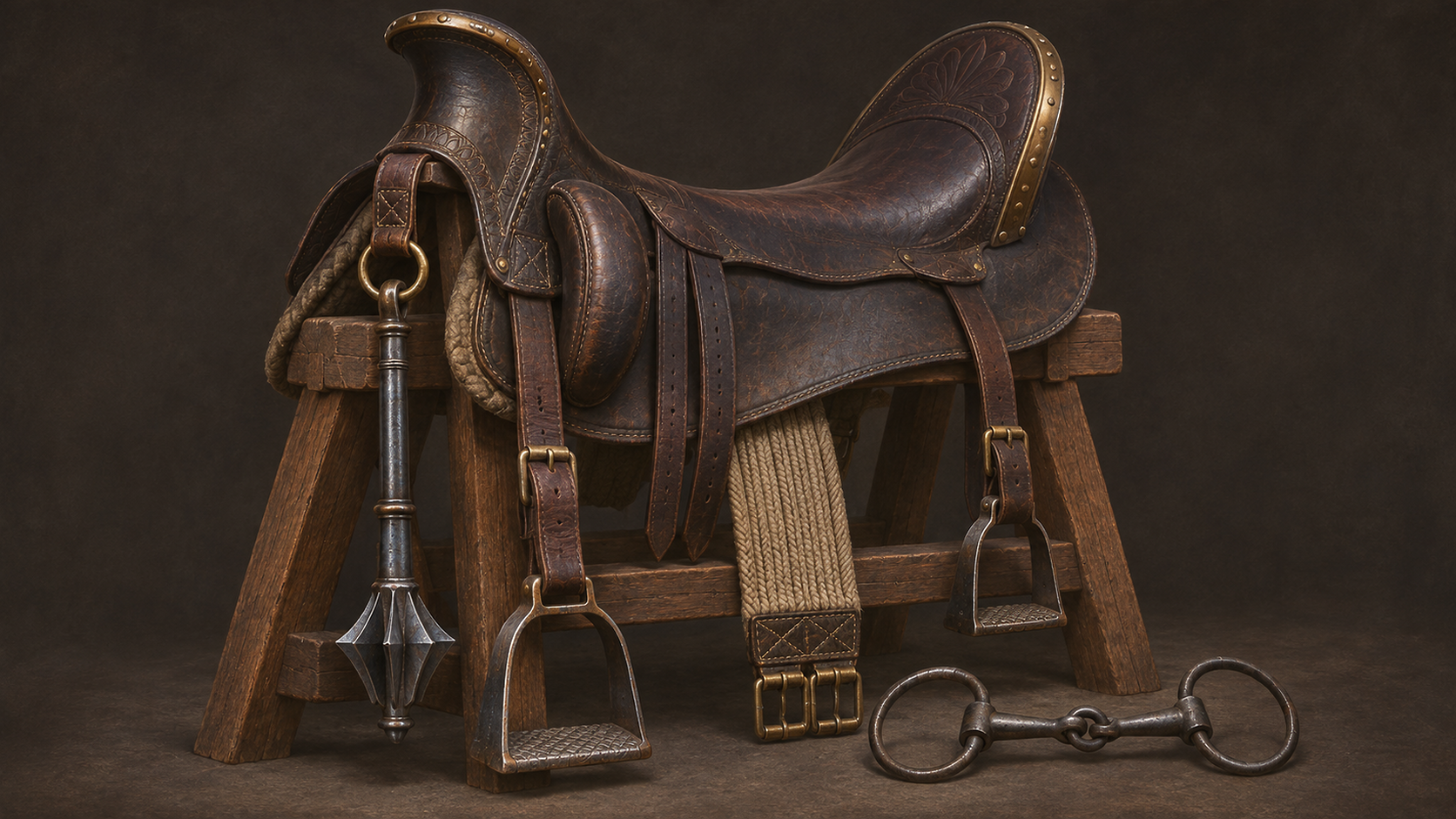
Italian visual culture from the late Quattrocento through the Cinquecento provides essential evidence for how flanged maces were carried and deployed. Paolo Uccello's panels depicting the Battle of San Romano and later battle frescoes by Giorgio Vasari illustrate cavalrymen carrying maces suspended directly from the saddle bow or resting across the saddle pommel within arm's reach.
These depictions confirm that the mace was rarely slung across the back or worn from a belt like an infantry club. Instead, mounted combatants kept it immediately adjacent to the right hand, ready to be seized the moment a lance shattered in the initial charge. Visual records also demonstrate the use of two hands on the haft for close-range infighting, where extra leverage was needed to lever an opponent from his stirrups.
Modern Interpretations and Experimental Testing

Modern understanding of sixteenth-century maces has been deepened by experimental archaeology and controlled impact testing. Researchers striking replica breastplates and armets with reconstructed steel maces have demonstrated that the localized footprint of a flange reduces the defensive benefit of high-hardness armor. Where a flat mallet head rebounds, a narrow flange concentrates pressure past the yield point of the plate.
These tests also illuminate the limitations of the weapon. A flanged mace does not produce catastrophic sheet ruptures on every blow; rather, it introduces acute localized dents that pin articulated joints and disrupt anatomical clearance. Modern practitioners of Historical European Martial Arts (HEMA) studying treatises such as Pietro Monte's Collectanea observe that mace tactics emphasized rapid recovery and close hook strikes rather than wide, easily evaded wind-ups.
Conservation Challenges and Metal Degradation
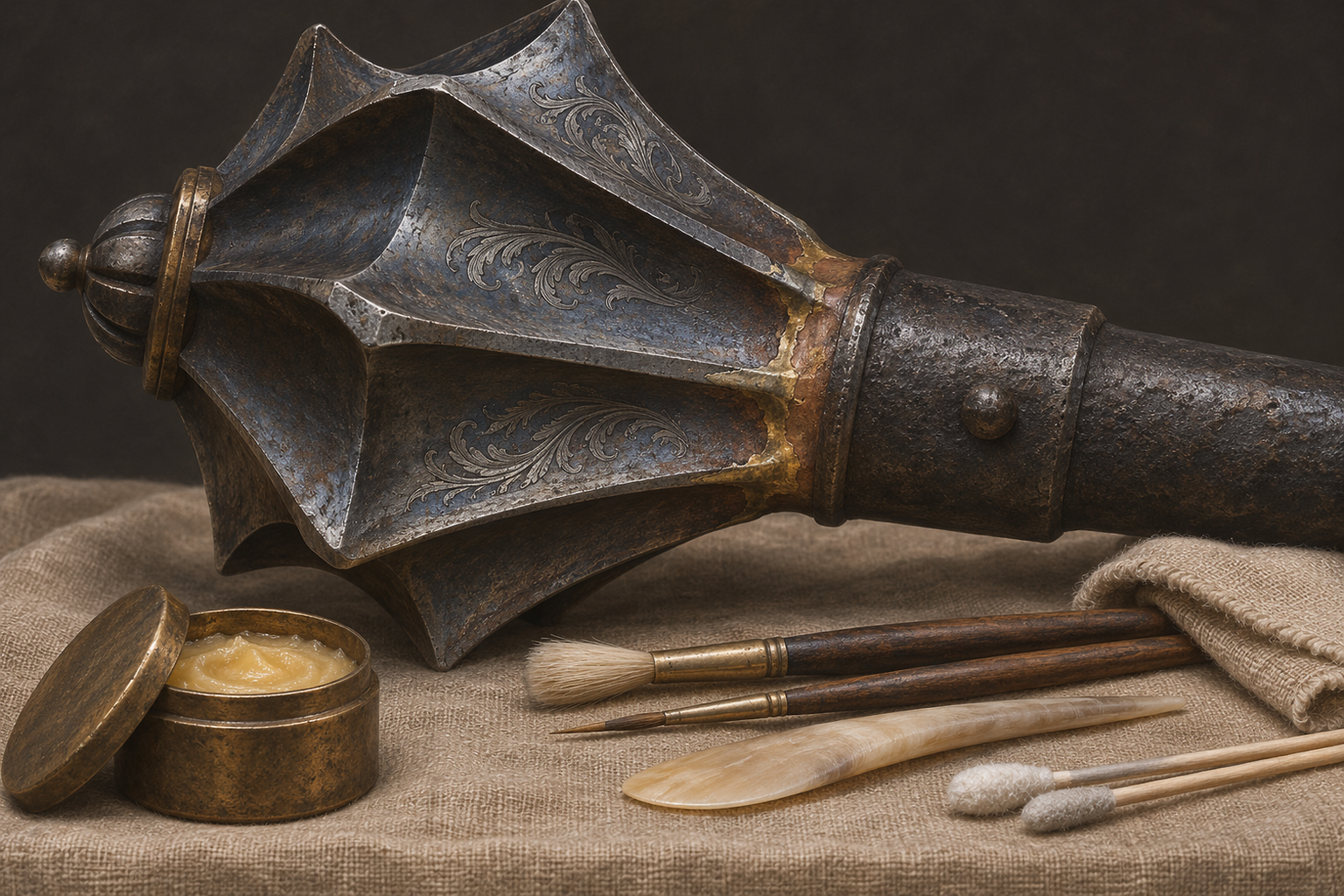
Surviving sixteenth-century steel maces present distinctive conservation issues in institutional collections. Because they are composite metal objects—frequently combining low-carbon steel hafts with medium-carbon flanges, copper-alloy brazing, and lead-weighted heads—they are vulnerable to galvanic corrosion if stored in uncontrolled relative humidity.
The boundary where the brass brazing meets the iron socket often harbors hidden corrosion pockets. Conservators must use ultrasonic cleaning, micro-abrasion, and specialized wax sealants to halt the degradation of internal joints without abrading faint traces of original bluing, browning, or gilded inlay. Preserving these surface layers provides vital clues about workshop finishes that standard archival records left unrecorded.
Further reading
Follow the sources to examine the object and its historical context.
The Wallace Collection, London: European Arms and Armour CatalogueExternal reference · Opens in a new tab The Metropolitan Museum of Art: Italian Renaissance Arms and ArmorExternal reference · Opens in a new tab Royal Armouries Collections, Leeds: Flanged Maces of the Sixteenth CenturyExternal reference · Opens in a new tab