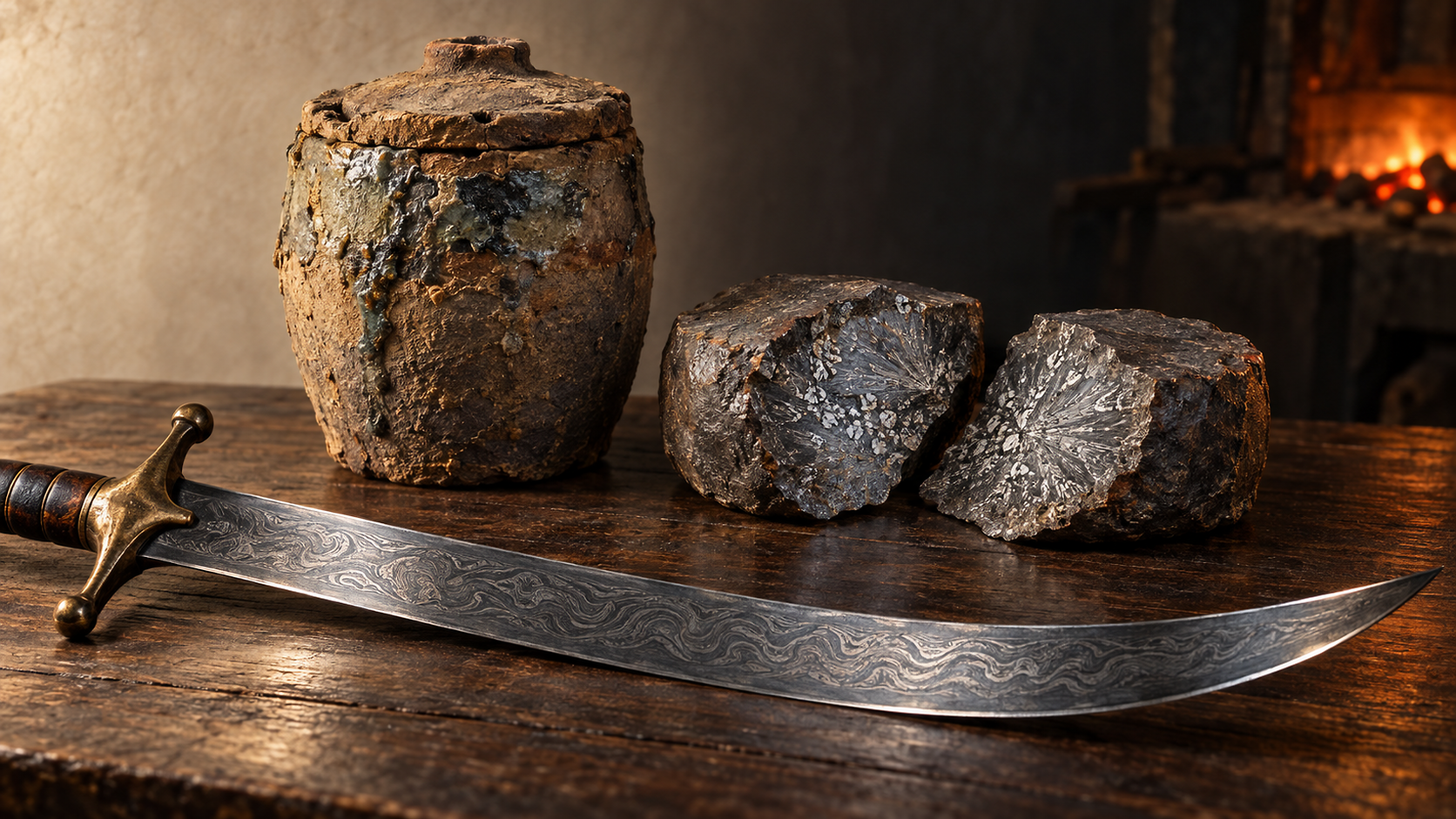
Under the raking light of an armory gallery, the surface of a Persian shamshir reveals a dense, swirling landscape of silvery ripples suspended in charcoal-gray iron. This optical signature belongs to fulad jowhardar, the crucible steel commonly referred to in Western collections as wootz. Unlike mechanical pattern-welding produced by folding contrasting plates under a hammer, this pattern formed within sealed clay vessels through chemical crystallization during extremely slow cooling. Paired with a radically swept, slender blade profile, crucible steel enabled an elite mounted fencing system founded entirely upon velocity, draw-cuts, and the physical realities of cavalry warfare across the Iranian plateau.
The Crucible Hearth and Cake Solidification
The raw material of the classic Persian shamshir began far to the south and east, in smelting centers across southern India and Central Asia. In refractory clay vessels sealed with husks and dung, porous bloomery iron was heated alongside dried wood chips, green leaves, and charcoal over days of continuous furnace firing. At temperatures exceeding 1,200 degrees Celsius, the iron absorbed carbon from the plant matter until it liquefied into small ingots known as uzba or wootz cakes. As the furnace coals gradually burned out, the cooling phase lasted dozens of hours, an essential delay that governed the chemical fate of the metal.
During this deliberate, undisturbed cooling, tree-like iron dendrites sprouted from the interior walls of the crucible into the molten core. Because carbon and trace minerals such as vanadium, molybdenum, and phosphorus do not dissolve equally in solidifying austenite, these elements segregated into the microscopic spaces between the dendrites. When the cake finally hardened into a rough puck weighing roughly one to two kilograms, it carried an internal skeleton of high-carbon carbide clusters fixed in a softer, lower-carbon ferrite matrix. This dual-phase segregation was not an ornamental accident, but the foundational metallurgical property of crucible fulad.
Thermomechanical Limits of the Anvil
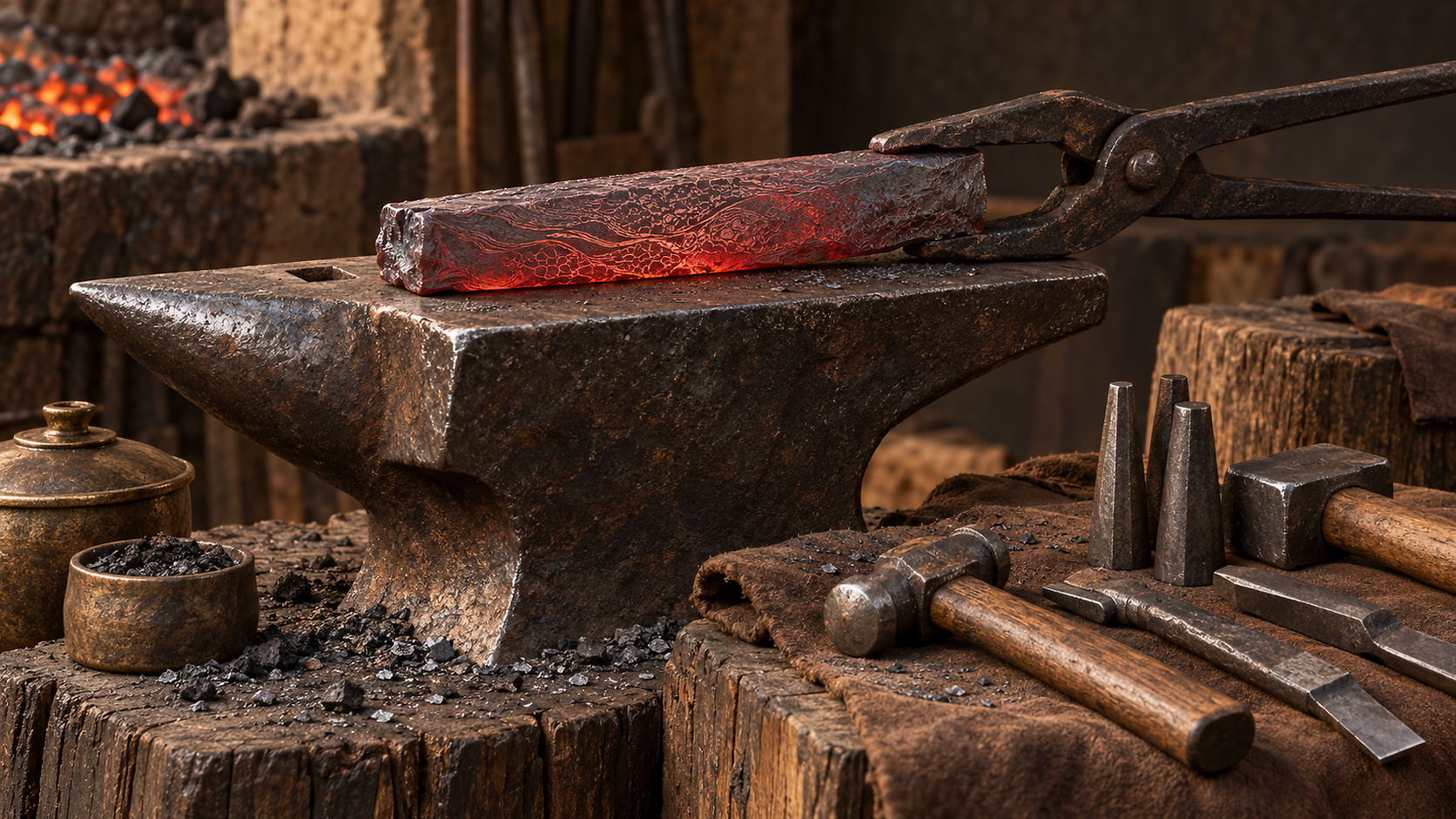
Forging a cake of crucible steel required a level of thermal discipline that completely separated the master smith from ordinary blade makers. Because crucible fulad contains between 1.2 and 1.8 percent carbon, heating it to the bright yellow heat conventional for mild steels or mechanical pattern-welding would instantly destroy the ingot. At high temperatures, the cementite networks dissolve entirely into austenite, wiping clean the segregated pattern; worse, the metal becomes hot-short and crumbles into useless fragments under the blow of a heavy hammer.
The bladesmith had to operate within a narrow thermal window, working between dull red and cherry red heat, roughly 650 to 850 degrees Celsius. In this sub-critical range, repeated cycles of gentle, methodical hammering cracked and flattened the dendritic iron skeleton without redissolving the carbide bands. If the smith struck the billet too forcefully, internal shear tears opened along the brittle cementite boundaries. If the work was done too cold, the blade fractured cleanly in two. A single shamshir blade demanded tens of thousands of light, calculated strikes, slowly transforming a hockey-puck shaped ingot into a meter-long bar while compressing the internal carbide colonies into parallel sheets.
The Jowhar Topography
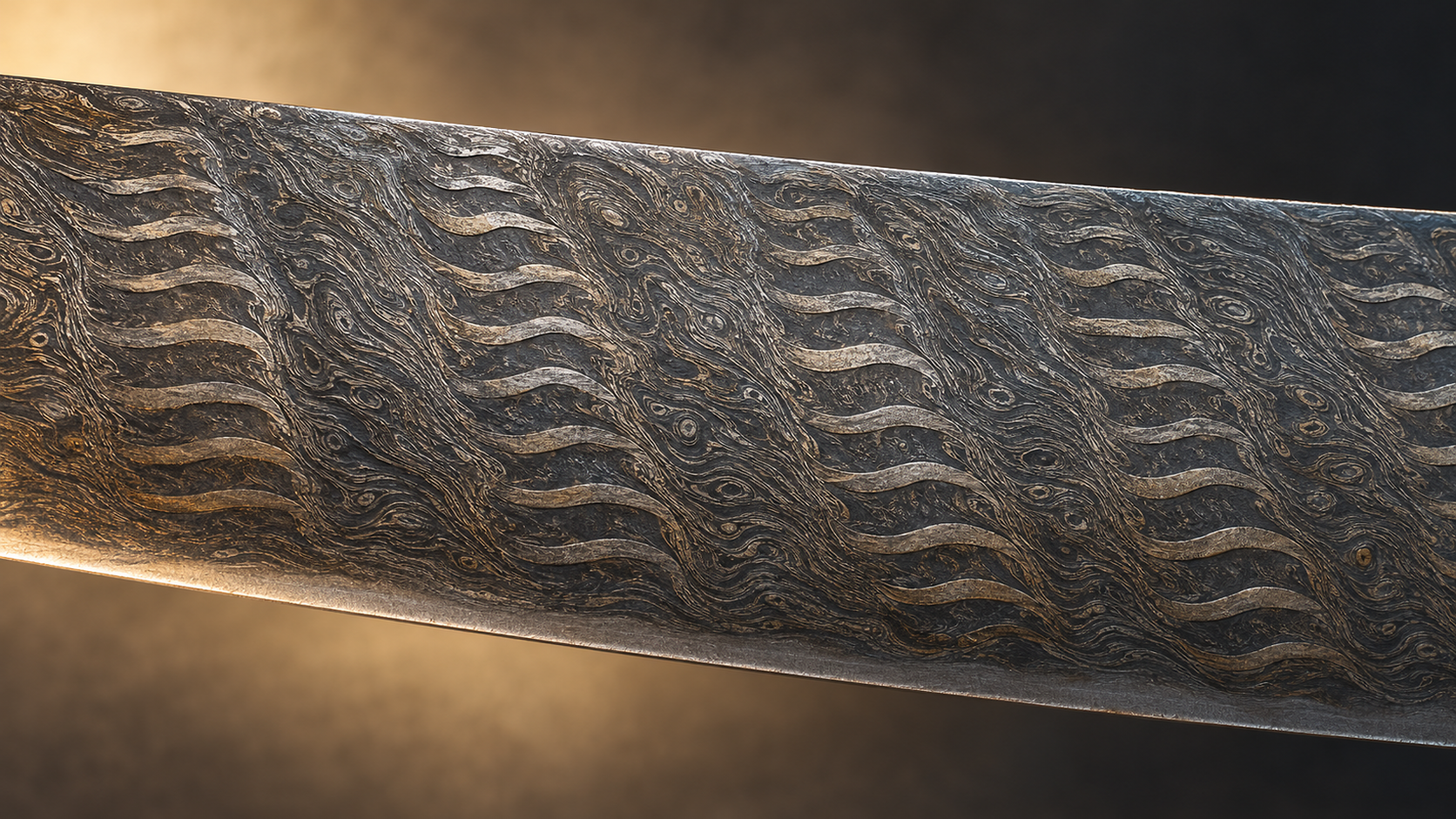
The decorative pattern of a finished fulad blade, known in Persian as jowhar or 'essence', represents the visual cross-section of these compressed carbide sheets. When the forged and ground blade is immersed in a mild acid solution—historically a bath of iron sulfate or pomegranate rinds and mineral salts—the acid attacks the iron matrix far faster than the resistant cementite. The low-carbon background etches into a deep, velvety gray or smoky charcoal tone, leaving the microscopic particles of iron carbide standing proud as gleaming white filaments.
Persian connoisseurship classified jowhar into rigorous aesthetic and functional hierarchies based on the size, density, and flow of these ripples. The most prized patterns, often referred to as Kirk Narduban ('Forty Steps of the Ladder'), exhibited rhythmic transverse rungs crossing the longitudinal grain. Master smiths produced this ladder effect intentionally: after forging the blade close to its finished shape, they pressed narrow transverse grooves or dimples across the metal using specialized chisels or swages, then ground the surface flush. When subsequently flattened and polished, the compressed carbide layers blossomed into undulating steps across the spine.
The Radical Curve and the Mechanics of the Draw-Cut
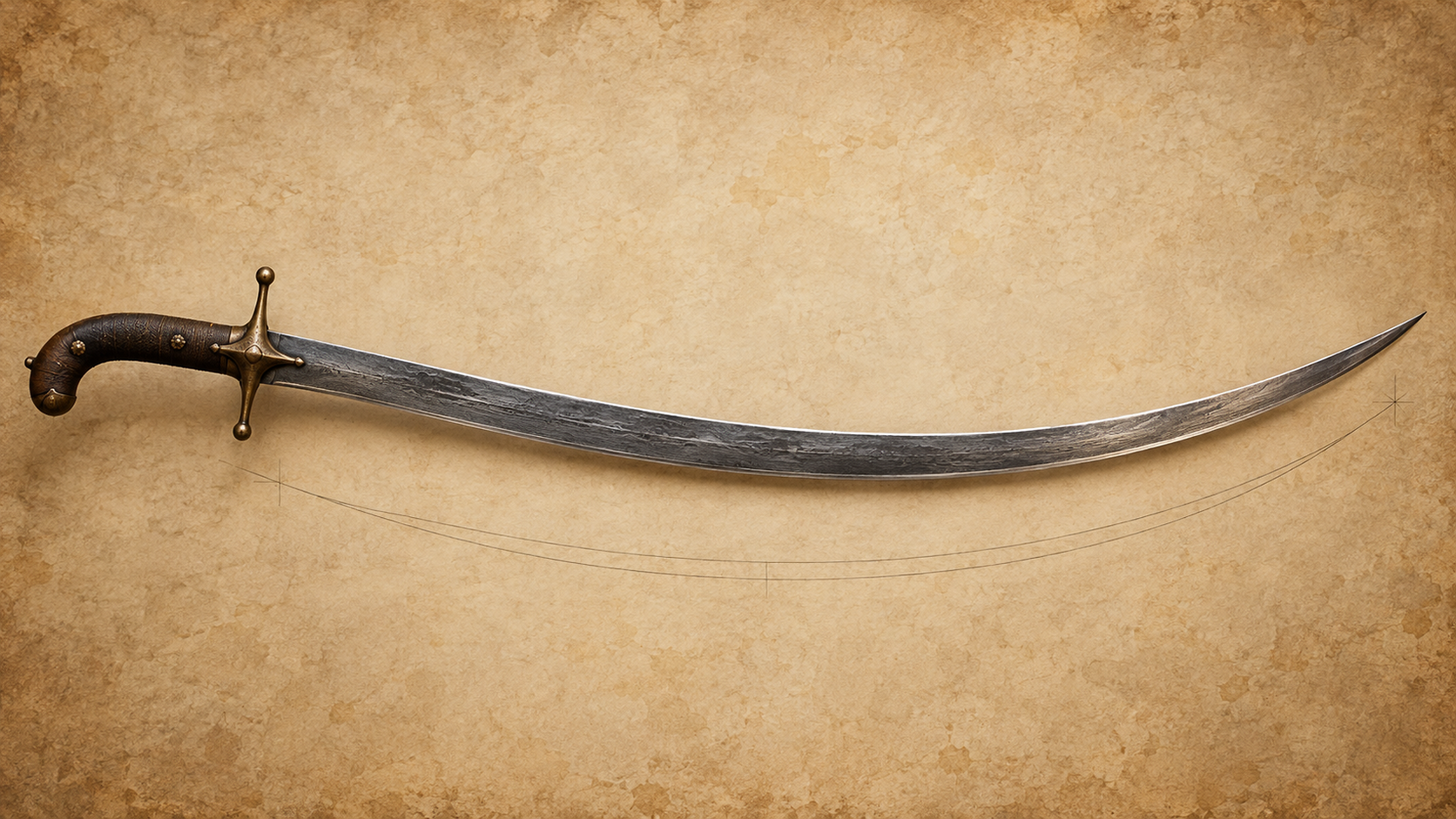
The profile of the classical Safavid shamshir marks a sharp departure from earlier, moderately curved Turco-Mongol sabers. While earlier horsemen favored a shallow curve supplemented by a widened, double-edged false edge called a yelman, the Persian shamshir adopted a continuous, deep radial sweep that lacked any tip enlargement. The radius of this curvature is remarkably uniform, matching the natural anatomical sweep of an outstretched human arm rotating from the shoulder joint.
This severe curve alters the fundamental physics of an edge strike. When a straight blade strikes a target perpendicular to its forward velocity, all kinetic energy is expended in percussive compression, crushing bone and fiber directly beneath the impact footprint. In contrast, when the curved shamshir contacts flesh or fabric, the point of impact immediately glides backward along the edge as the sword moves forward. The weapon converts the forward momentum of a galloping horse into an extended, slicing draw-cut without requiring the rider to adjust their wrist. By stretching the contact duration across an elongated line of razor-sharp edge, the shamshir slices deep into soft tissue with minimal percussive resistance.
Cross-Section, Taper, and Aerodynamics
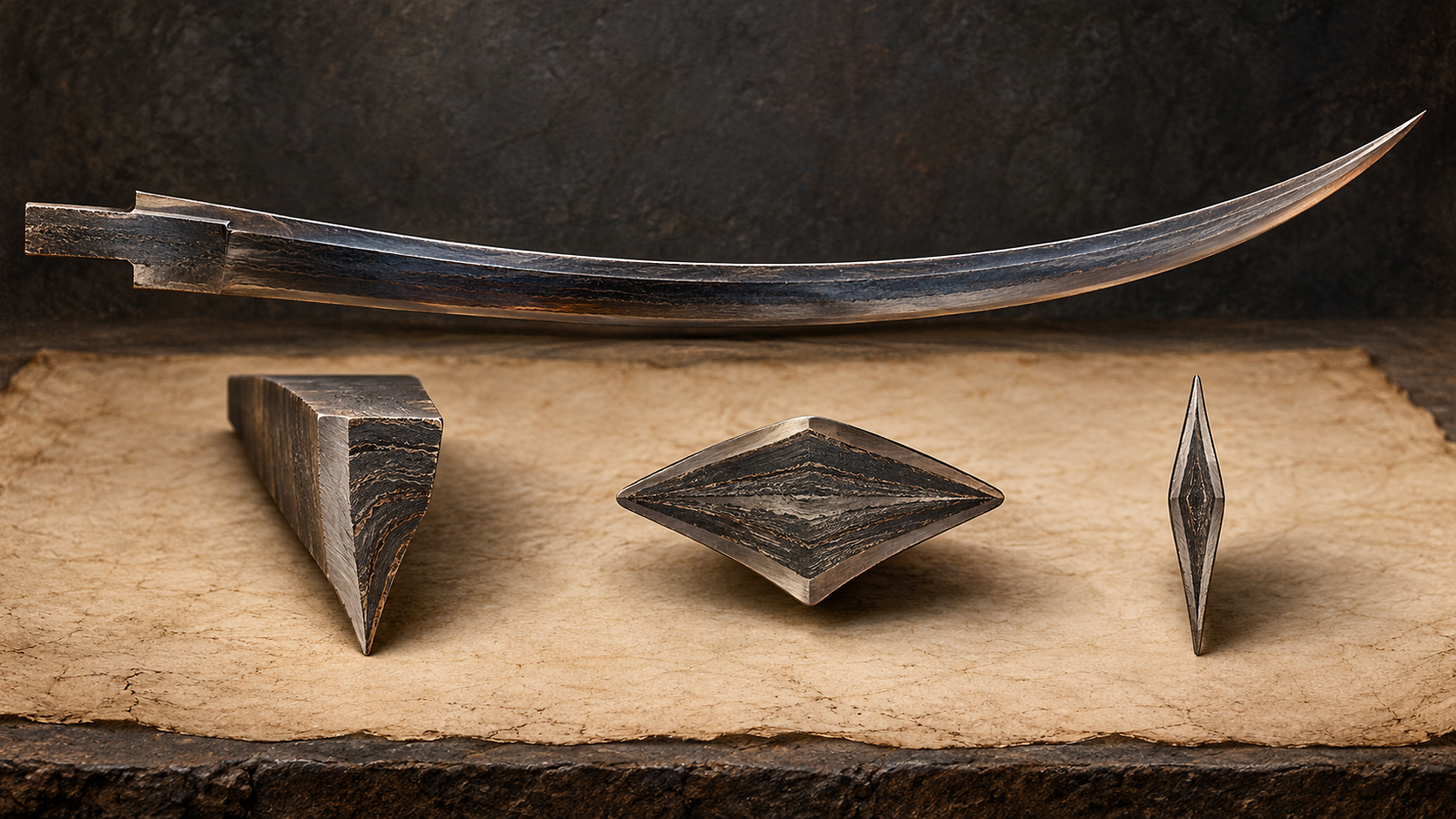
Crucible fulad is dense, stiff, and exceptionally brittle compared to spring-tempered steels. To balance these qualities with maneuverability, the shamshir employed a highly refined cross-sectional geometry. Near the forte, the blade measures between six and eight millimeters in thickness, presenting a sturdy wedge or slightly convex lenticular cross-section capable of resisting the bending moments generated at the hilt.
Moving toward the tip, the blade exhibits an aggressive, smooth distal taper, thinning down to less than two millimeters near the point while narrowing significantly in width. This severe reduction in mass shifts the center of gravity rearward, typically resting between twelve and sixteen centimeters forward of the crossguard. Despite possessing a deep curve, the blade feels featherlight in the hand, recovering instantly from rapid cuts. By eliminating dead weight from the final third of the length, Persian armorers minimized aerodynamic drag and reduced mechanical strain at the blade's thinnest point during an oblique slash.
The Pistol Grip and Hilt Architecture
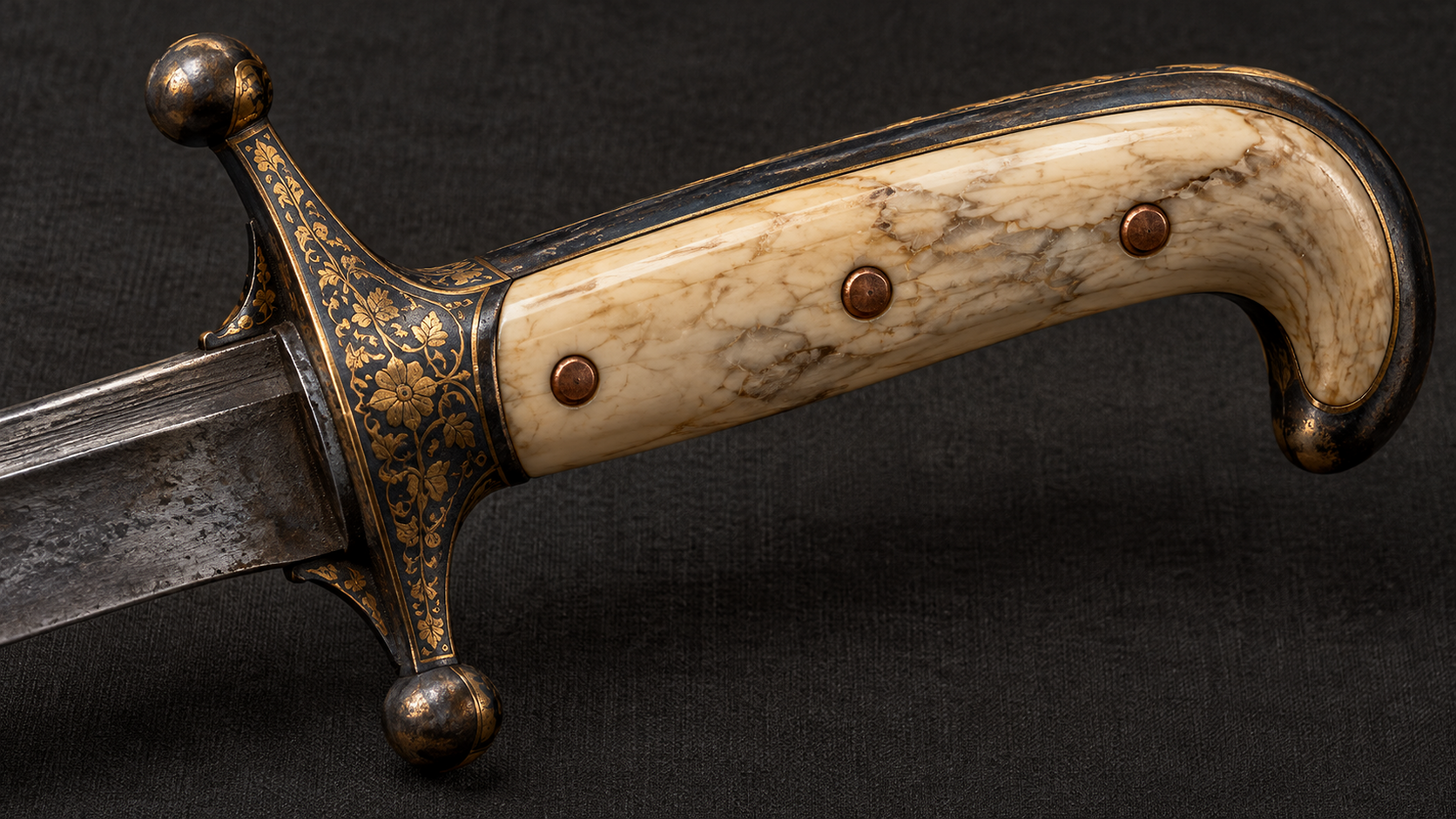
The traditional shamshir hilt was designed specifically to lock the rider's hand into a stable, non-slip position optimized for draw-cutting. The tang is narrow, uncurved, and completely flat, sandwiched between two slabs of polished material such as walrus ivory, sheep horn, or fossilized mastodon tooth. These scales are fixed to the tang with small iron or copper rivets, framed by an iron or damascened steel strap running along the back of the grip.
At the pommel, the hilt terminates in a sharply angled, rounded beak that curves down over the base of the swordsman's palm. When a mounted warrior delivered a sweeping horizontal cut at a dead gallop, centrifugal force and the drag of the target threatened to pull the hilt out of the fingers. The downturned pommel physically locked the heel of the hand into the hilt, allowing the cavalryman to relax his grip and retain control of the weapon solely through frictional geometry rather than fatiguing muscular tension. The minimal, straight crossguard with button terminals provided just enough clearance to prevent the hand from sliding forward onto the edge without encumbering wrist rotation.
Tactical Role Against Soft and Textile Armor
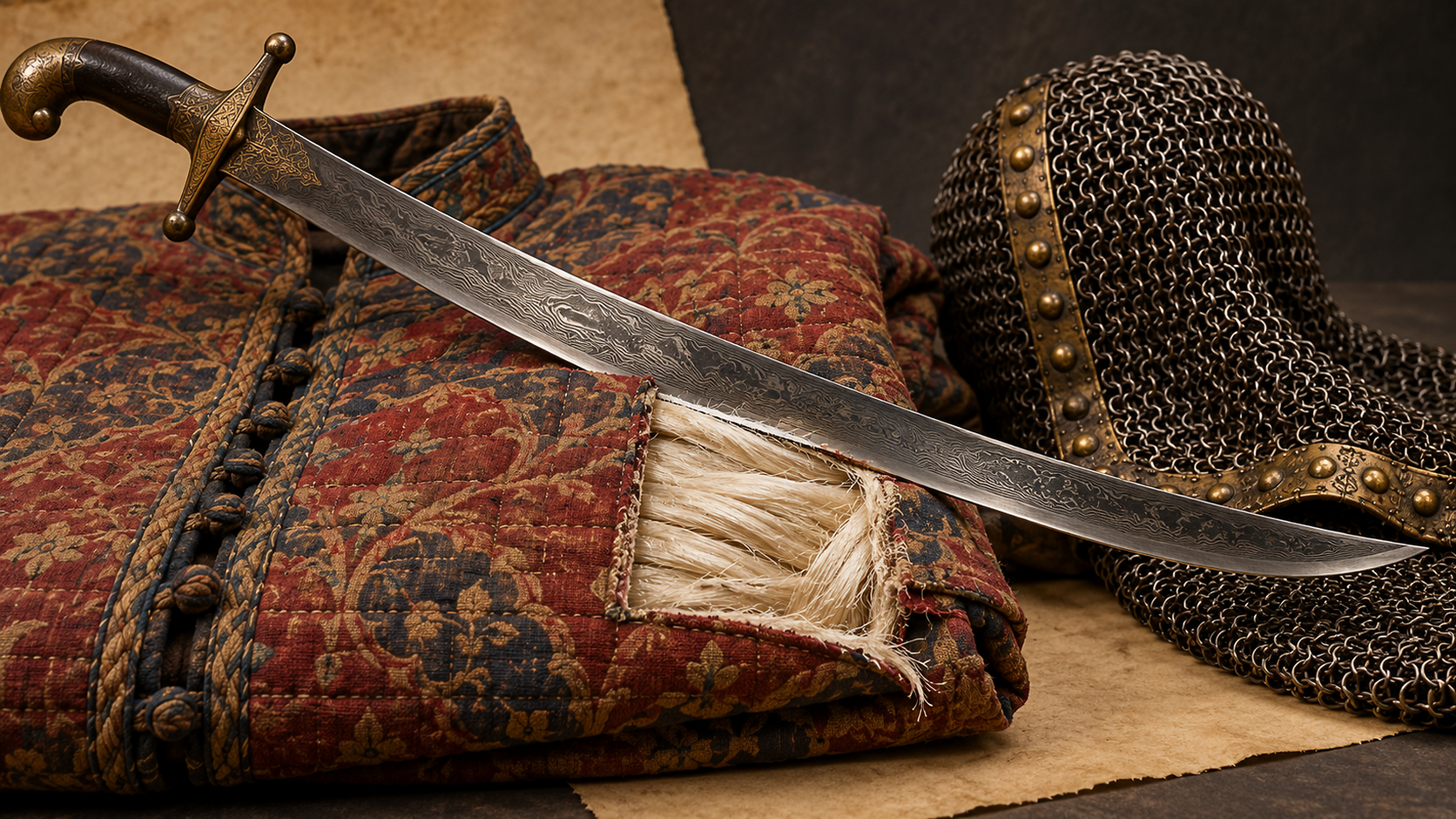
A widespread misconception portrays the shamshir as an all-purpose battlefield sidearm capable of cleaving heavy iron plate. In reality, the weapon evolved to address a specific tactical environment dominated by composite bows, horse-archers, and multi-layered textile protection. In Safavid and post-Safavid Iranian warfare, combatants routinely wore dense silk tunics, quilted cotton jacks (qaba), and flexible mail shirts interwoven with small iron rings.
Against tightly woven, slippery fibers of raw silk and padded cotton, a percussive blow from a blunt or moderately sharp straight sword frequently bounces off or crushes superficial flesh without cutting through the thread bundles. The draw-cut of a razor-sharp crucible steel shamshir operates differently: the concentrated, slicing friction severs the tensile fibers one by one under shear strain. The curved blade slides effortlessly through thick layers of padded armor, opening catastrophic arterial wounds in horse and rider alike before glancing cleanly off metallic breastplates or mail coifs without binding.
Fragility, Shock, and Failure Modes
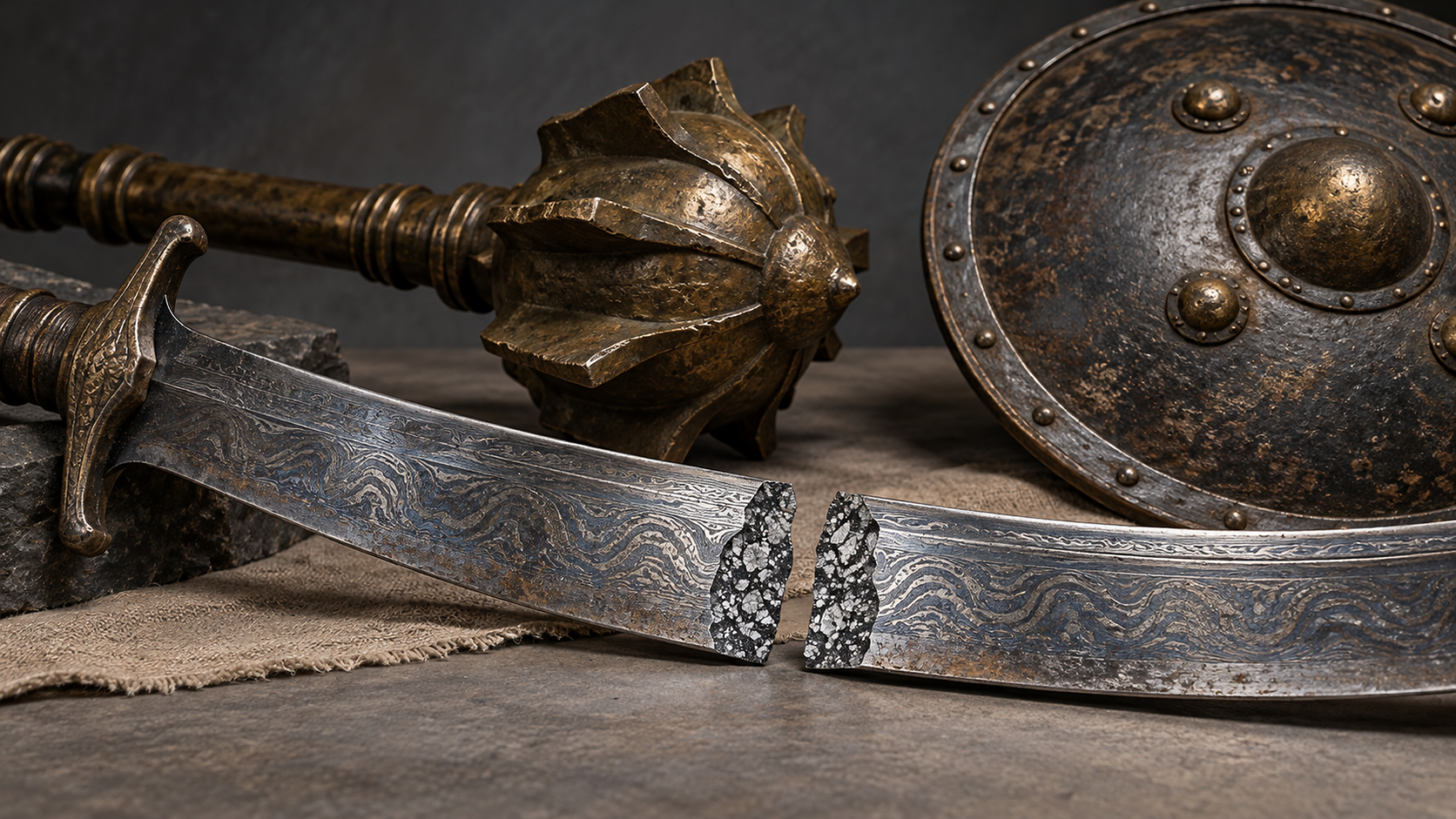
The remarkable hardness of crucible fulad carried a dangerous structural liability: zero tolerance for perpendicular shock loads. While modern spring-tempered steels bend elastic-plastically under severe stress and return to true, a hypereutectoid crucible steel blade tempered to high hardness exhibits microscopic grain boundaries choked with brittle cementite. When struck edge-on against a heavy, rigid obstacle, such as a thick iron mace head, an iron shield rim, or a heavy cuirass, the shock wave cannot disperse elastically throughout the blade.
Instead, these high-energy collisions cause localized stress risers around the carbide boundaries. Rather than taking a dent or bending slightly, a fulad blade subjected to violent percussive abuse will catastrophically fracture, snapping into two or more pieces with a flat, crystalline break. Safavid riding manuals and contemporary military treatises emphasized continuous fluid motion, deflection, and slicing lines over static parrying. A cavalryman who attempted to block an overhead poleaxe strike edge-on with his shamshir risked destroying his primary sidearm instantly.
The Asadullah Inscription Tradition
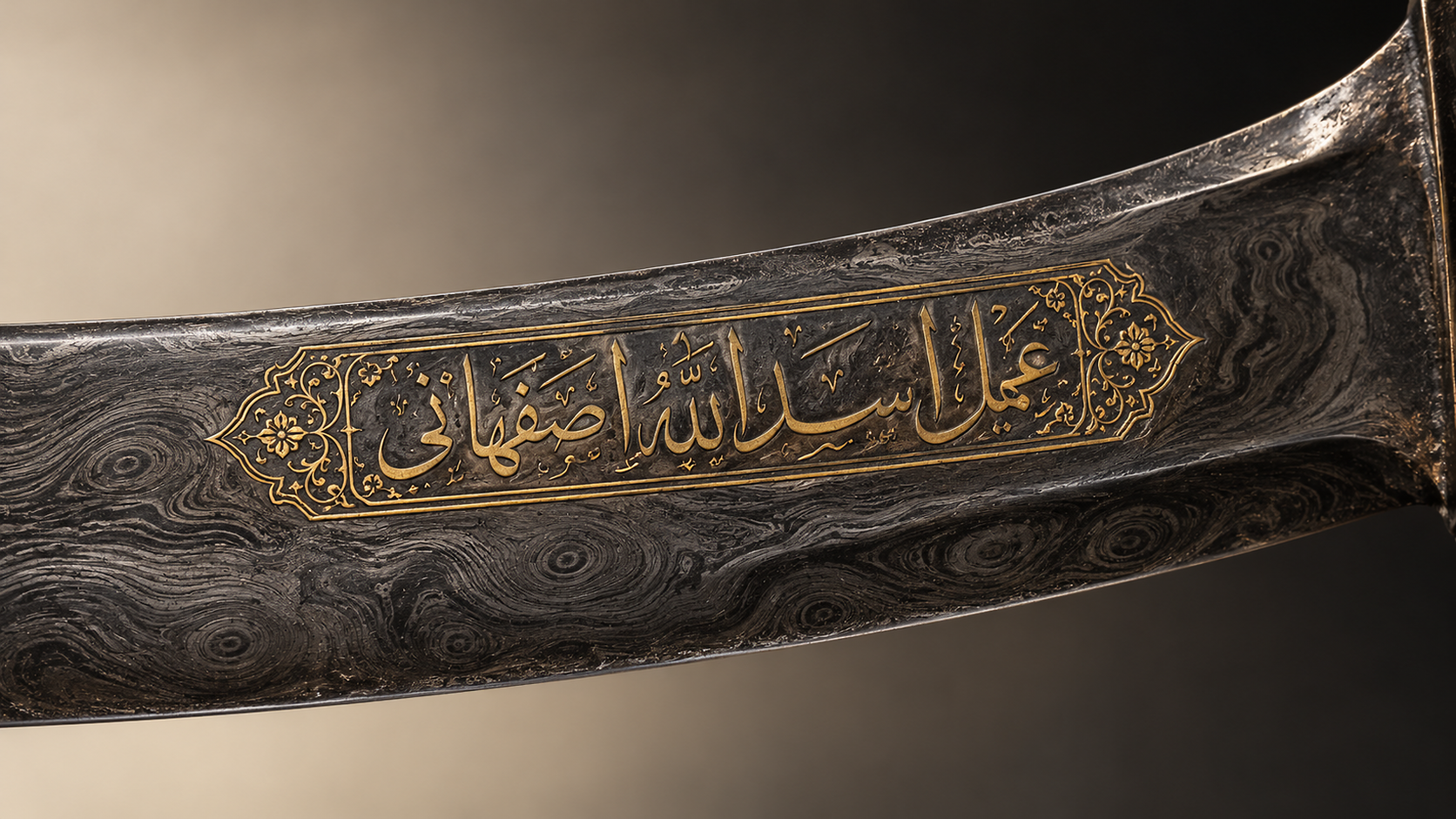
Few artifacts in Islamic armories present greater attribution puzzles than shamshir blades inlaid with the name of Asadullah of Isfahan. In museum collections worldwide, hundreds of 17th, 18th, and even 19th-century blades feature a small gold-inlaid rectangular cartouche (khatam) reading 'Amal-e Asadullah Isfahani' ('Work of Asadullah of Isfahan'), often accompanied by the pious invocation 'Ya Ali' or the heraldic lion of the Safavid state. Early European travelers and antiquarians assumed Asadullah was a singular royal court smith employed during the reign of Shah Abbas I (1587–1629).
Modern material analysis and epigraphic studies reveal a far more nuanced workshop reality. The sheer chronological spread of blades bearing this signature—ranging across two centuries of radically different metallurgical qualities and calligraphic styles—proves that 'Asadullah' evolved into a guild-level trademark, a proof-mark of premium crucible steel quality, or an aspirational honorific used by subsequent generations of masters across Iran and northern India. A blade bearing this cartouche may indeed date to the classical Safavid period, but the mark alone is no guarantee of individual authorship.
Equitation and the Kinematics of the Saddle Cut
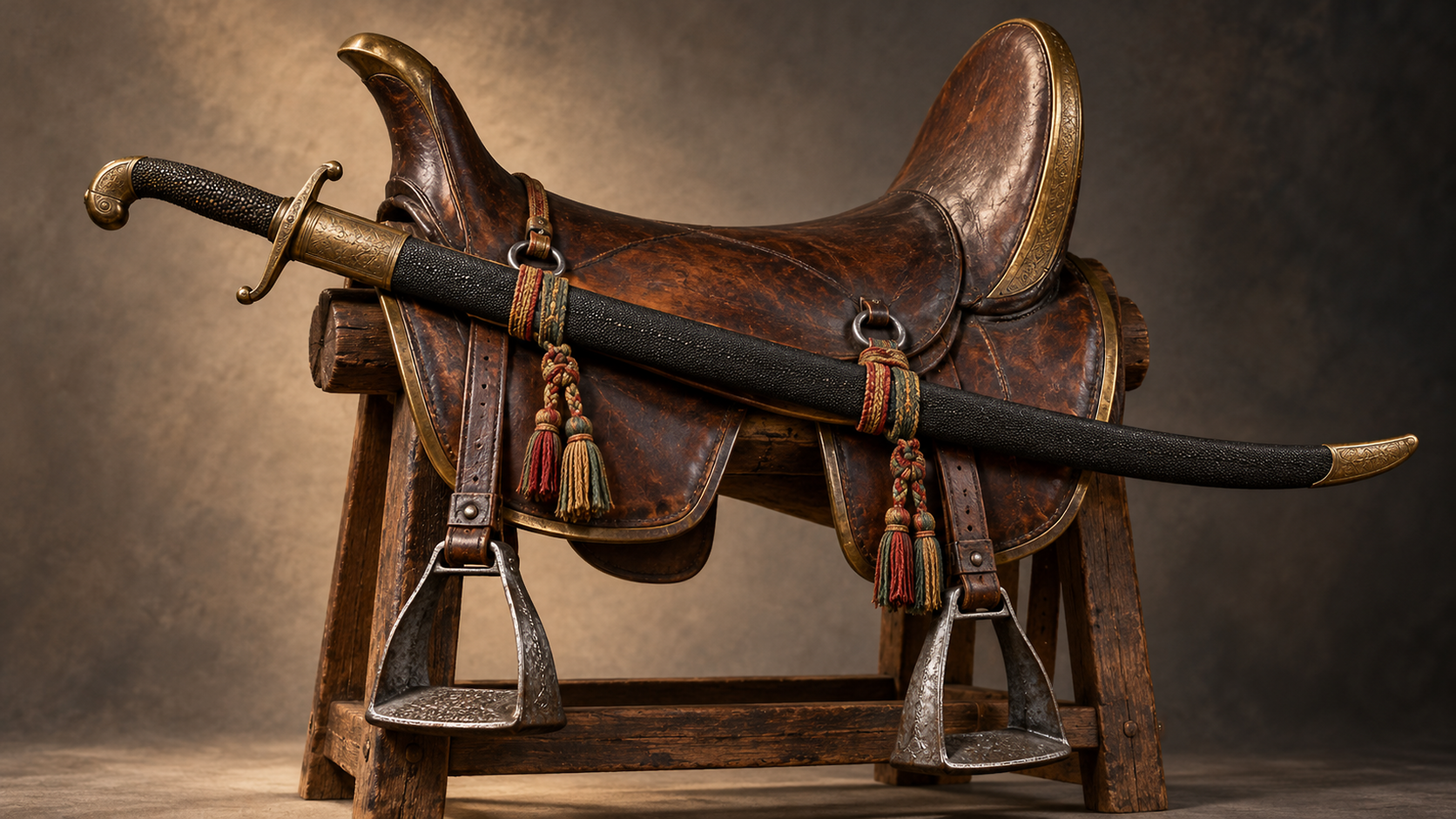
To understand the shamshir in its historical reality, one must view it not through the lens of foot fencing, but from the wooden saddle tree of an Iranian warhorse. The Iranian cavalry saddle featured high cantles and forward-slanted pommels designed to anchor the rider securely while leaving the torso and shoulders entirely free to rotate through a wide arc. The stirrups were hung relatively short, allowing the horseman to rise off the horse's spine and absorb the gallop's vertical concussion in his knees.
When executing a cut from horseback, the swordsman did not chop down toward the target like a lumberjack. Instead, he dropped the shamshir's point downward and outward, using the horse's forward velocity to establish the cut line. As the target drifted through the sword's path, the rider whipped his forearm rearward, drawing the curved belly of the blade across the opponent's exposed neck, arm, or thigh. The cut required negligible downward muscle pressure; the combined speed of the two charging mounts provided several thousand joules of dynamic shear force, transforming a light sweep into a devastating slicing passage.
The Talwar, Kilij, and Comparative Curvature
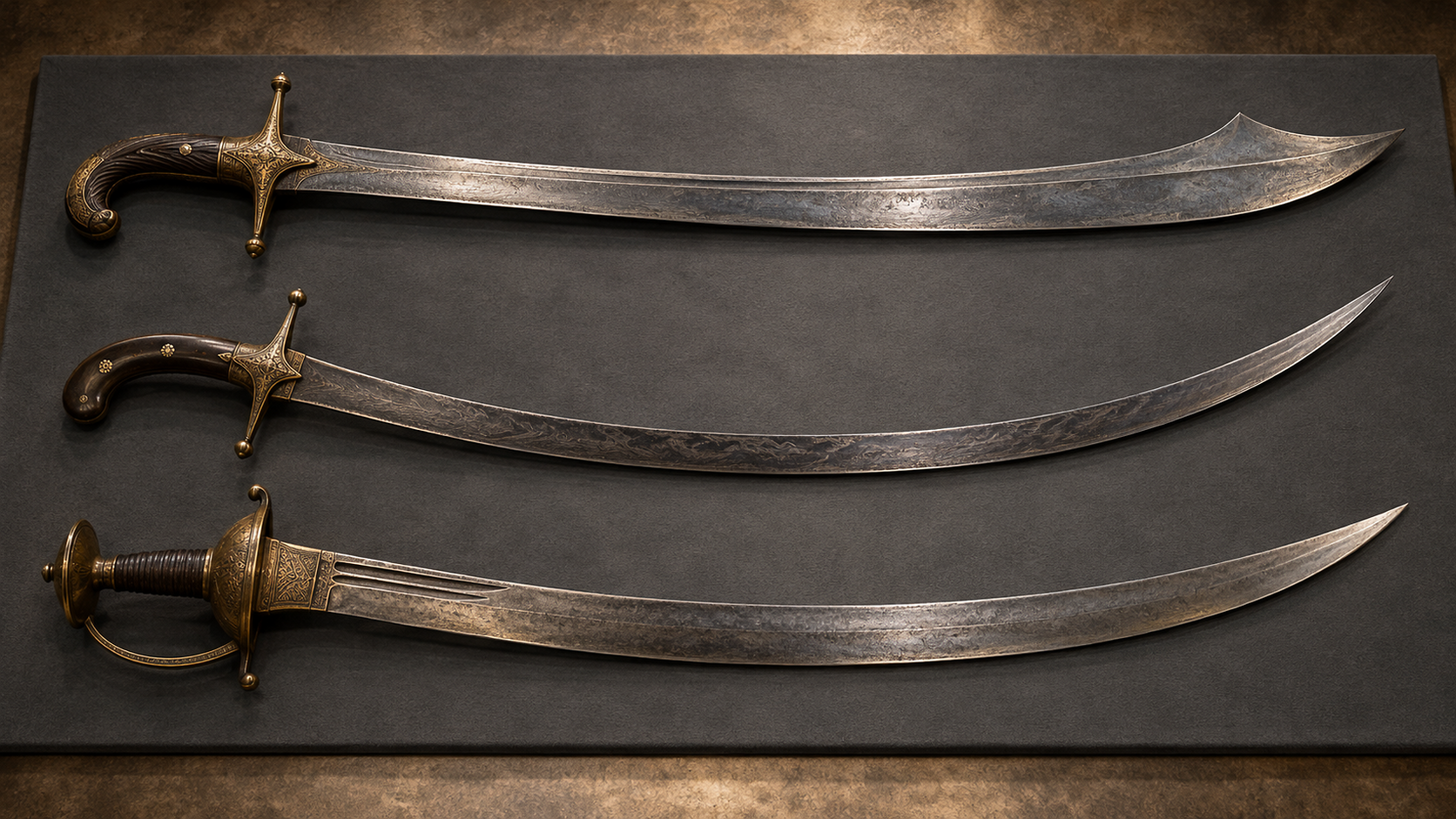
The shamshir was not an isolated weapon, but part of a broad family of curved blades spanning the Near East and Indian subcontinent. Its contemporaries, the Ottoman kilij and the Indo-Pakistani talwar, shared similar cultural lineages but embodied markedly different mechanical philosophies to address distinct armor environments.
The classical Ottoman kilij retained the broad Turco-Mongol blade profile, featuring a raised, double-edged yelman at the distal third. This terminal flare concentrated forward balance into a heavy striking node, allowing the Ottoman janissary or sipahi to crush plate-and-mail armor with percussive authority while preserving an angled slicing transition. The Indian talwar, meanwhile, frequently employed a wider, moderately curved blade mounted into a restrictive disc-pommel hilt that clamped the wrist tight, turning the entire arm into a stiff, rigid lever. The Persian shamshir abandoned both the forward weighting of the kilij and the locked wrist of the talwar, choosing total commitment to slender balance and pure shear velocity.
Metallographic Analysis in the Modern Laboratory
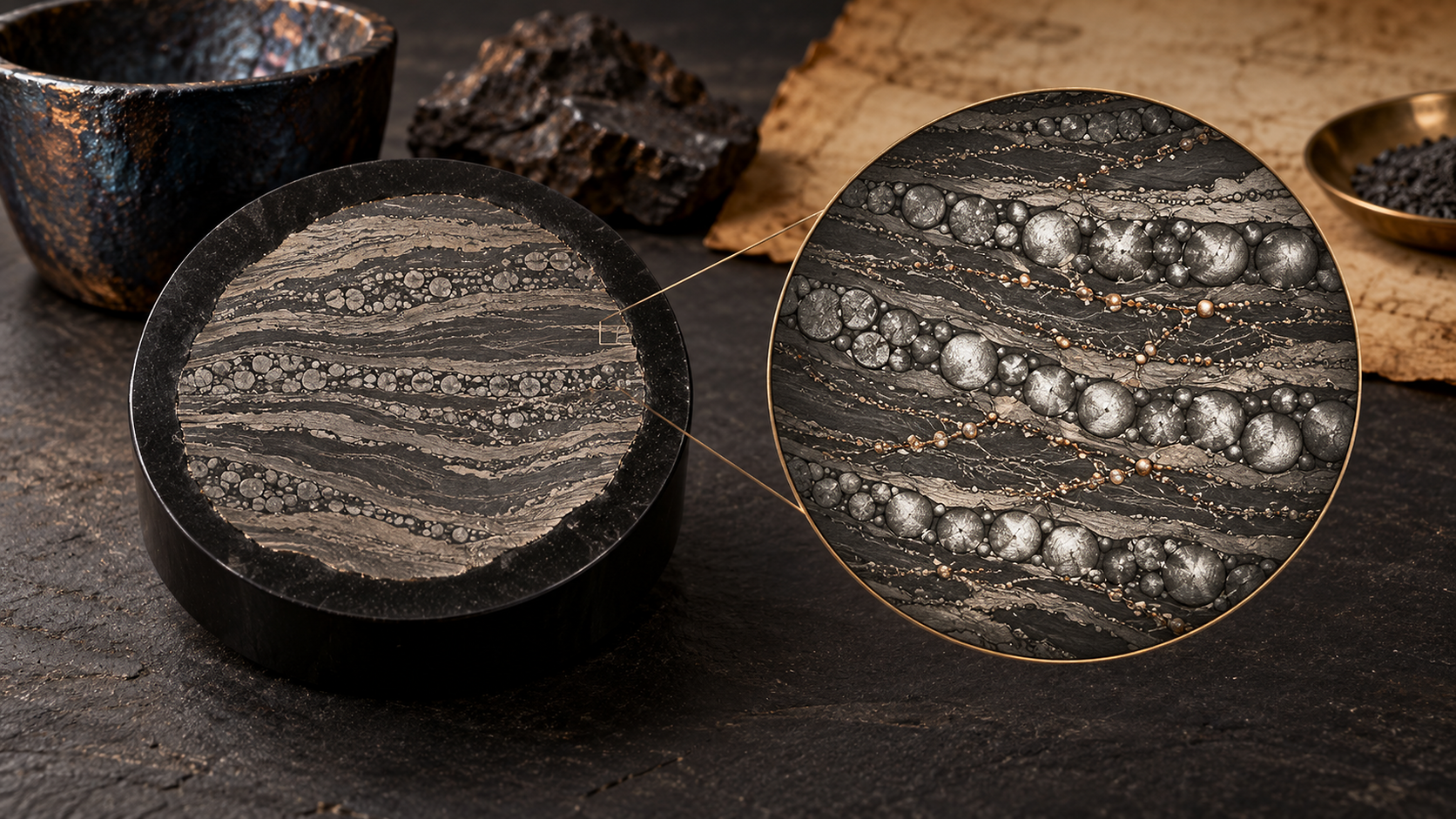
Modern understanding of Persian fulad was fundamentally transformed in the late 20th century through non-destructive and destructive metallographic studies led by materials scientists. Prior to these examinations, persistent folklore held that the Damascus pattern resulted from folding thousands of layers of alternating metals, or that quenching the blade in the blood of captives imparted magical toughness. Laboratory examination of authentic historical blade sections via scanning electron microscopy revealed the true physical nature of the material: ultra-high carbon hypereutectoid steel containing coarse spheroidal cementite particles organized in wavy planar arrays.
Crucially, researchers discovered that minute trace impurities—measured in tenths or hundredths of a percent—were the linchpin of the whole process. Elements such as vanadium, chromium, titanium, and niobium do not migrate readily through the solidifying crystal lattice. As the smith forged the blade at moderate temperatures, these stubborn micro-alloying impurities remained pinned in their original dendritic bands, repeatedly nucleating the formation of cementite particles along predictable linear rows during thermal cycles. When modern experimenters attempted to replicate fulad using high-purity laboratory iron and pure carbon, the pattern vanished after a few hammer cycles; only when trace vanadium was added did the true wootz crystallization re-emerge.
Preservation, Acid Etching, and Armory Care
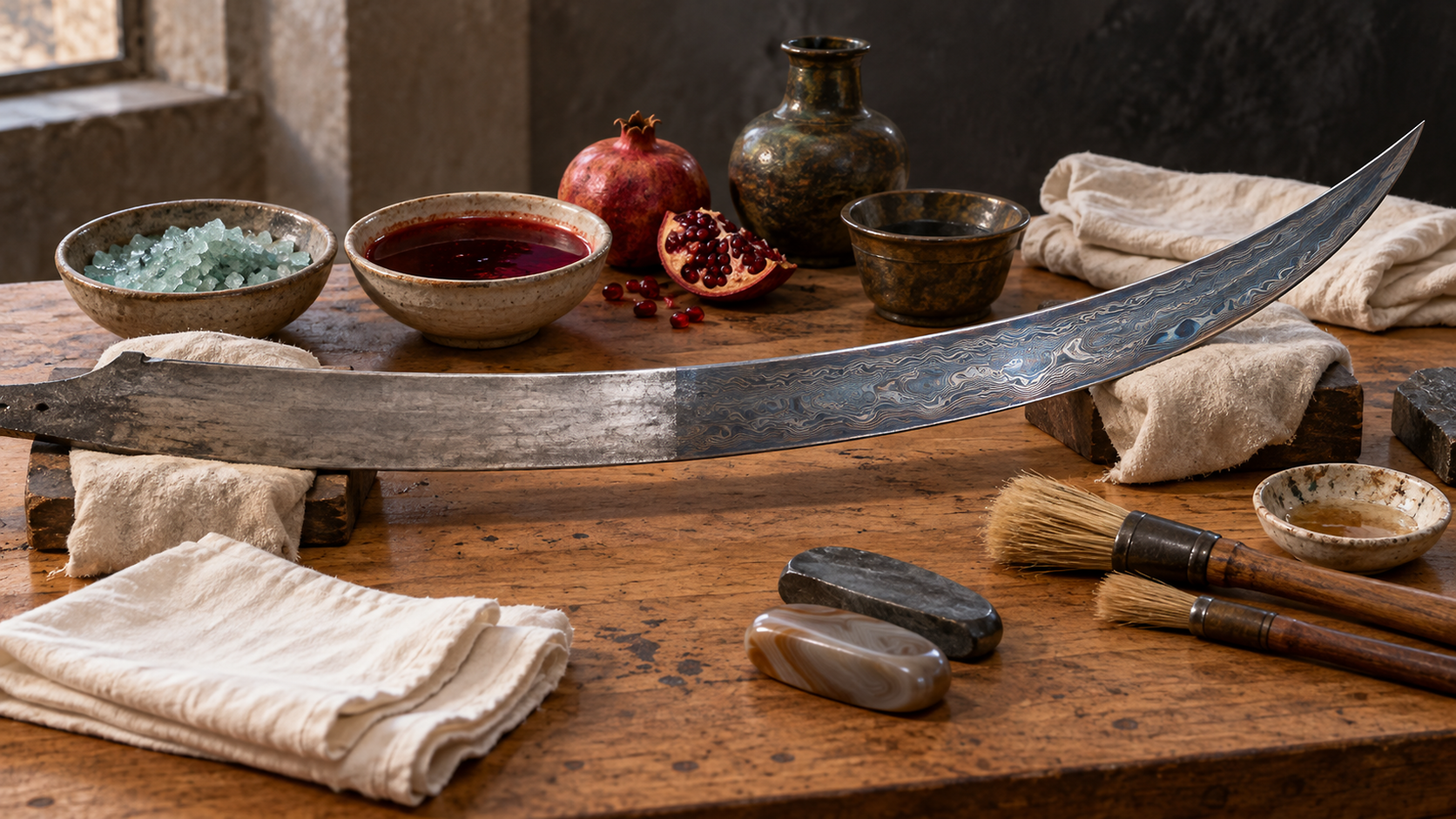
Maintaining a historical crucible steel shamshir in museum collections presents unique conservation challenges that differ substantially from ordinary steel blades. Crucible fulad is vulnerable to pitting corrosion, which can permanently obliterate the intricate surface topography of the carbide bands. If a blade is improperly stored in high humidity or touched with bare hands, organic acids from skin oils etch deep dark spots that bite into the delicate ferrite background.
Worse, unscholarly cleaning practices over the past two centuries have stripped many genuine historical blades of their identity. Victorian collectors often polished historical Islamic weapons using harsh modern abrasives, grinding away the shallow etched relief until the surface resembled mirror-bright industrial steel, mistakenly assuming the dark jowhar was rust or discoloration. Restoring such blades requires painstaking conservation: the metal must be polished with ultra-fine diamond pastes to an unblemished optical flat, and then carefully re-etched in mild, controlled acid solutions to coax the latent carbide ladder back into visibility without eroding the underlying iron.
The Afterlife of the Persian Saber in Western Lore
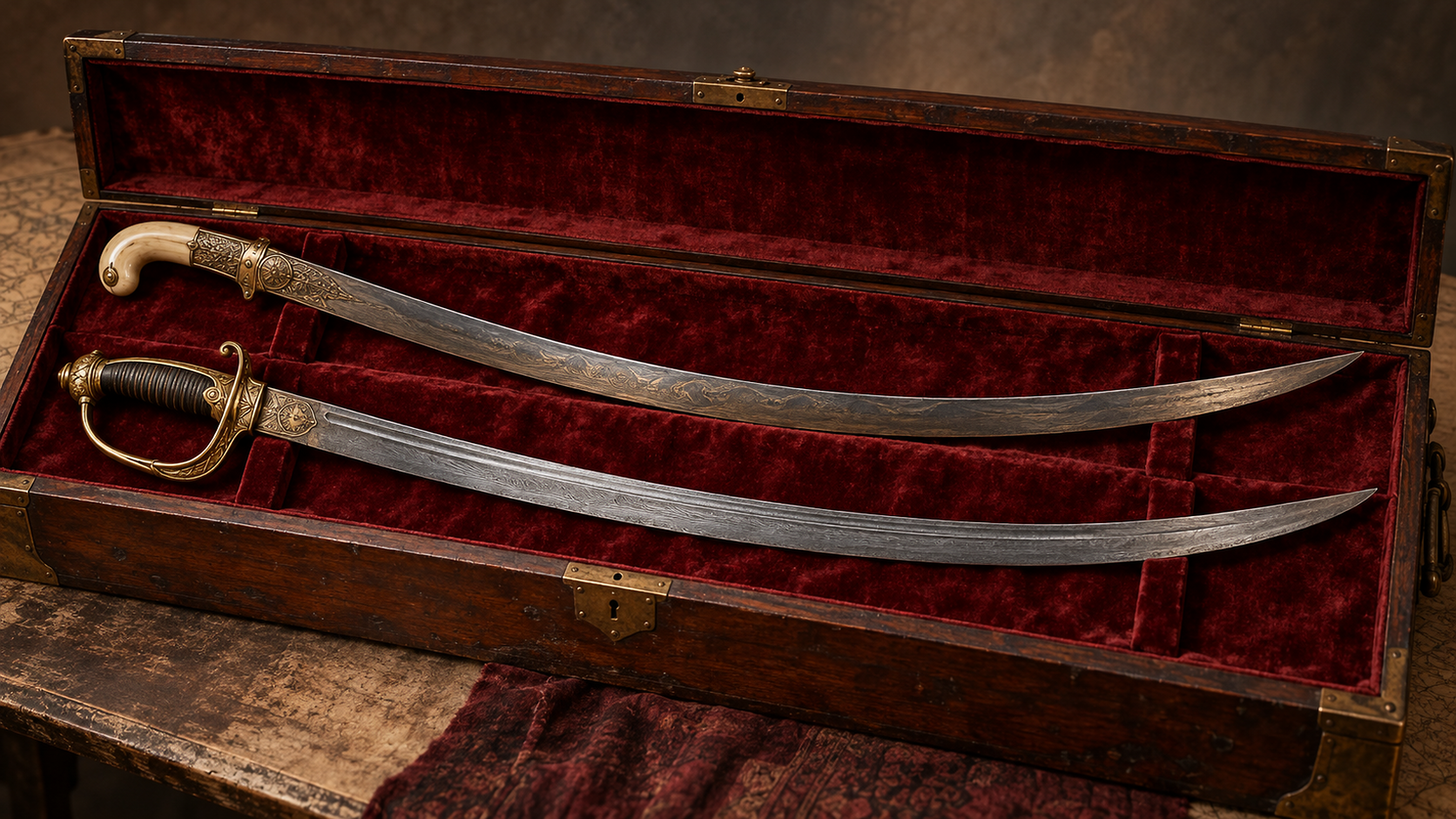
As European colonial empires expanded across the Levant, Egypt, and India throughout the 18th and 19th centuries, the curved crucible saber entered Western military consciousness wrapped in dramatic myth. Romantic memoirs from the Napoleonic expedition to Egypt and the Crimean War celebrated the 'Damascus scimitar' as a legendary blade that could cleave silk scarves floating in the air or shear cleanly through European musket barrels. Western officers eagerly adopted captured shamshirs and kilij blades, mounting them with European mameluke hilts as fashionable badges of cavalry prestige.
These sensationalist accounts obscured how the weapon actually functioned. The shamshir could not cut through solid iron plate or sever gun barrels. Instead, Persian swordsmiths matched a hard, brittle crystalline matrix to an extreme geometric curve, balancing the blade to convert a horse's forward momentum into an extended draw-cut against soft and textile armor.
Further reading
Follow the sources to examine the object and its historical context.
The Wallace Collection, London: Oriental Arms and Armour CatalogueExternal reference · Opens in a new tab Metropolitan Museum of Art: Arms and Armor of the Islamic WorldExternal reference · Opens in a new tab Verhoeven, J.D., Pendray, A.H., and Dauksch, W.E. (1998) 'The Key Role of Impurities in Ancient Damascus Steel Blades' Journal of MetalsExternal reference · Opens in a new tab