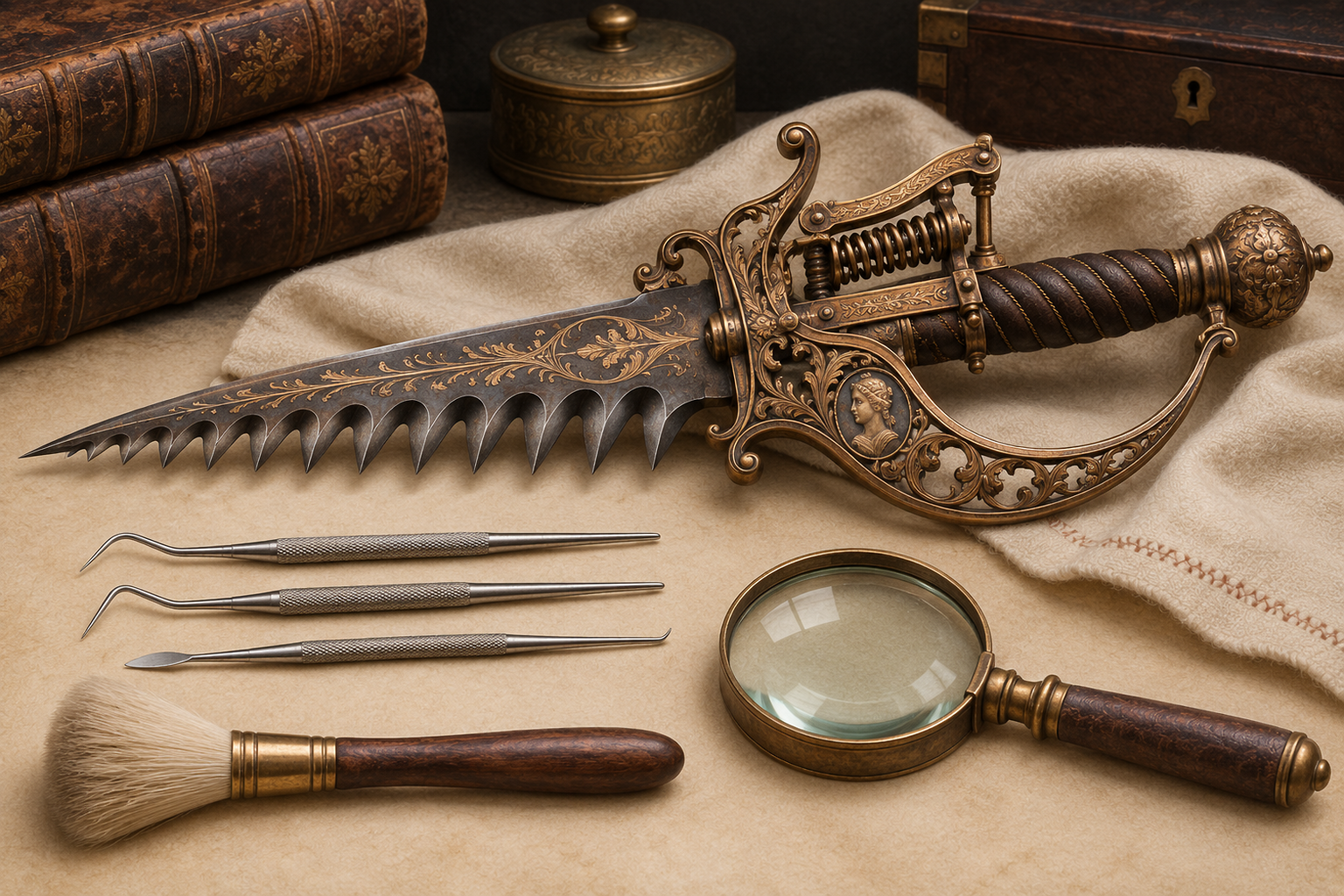
Surviving sixteenth- and seventeenth-century parrying daggers featuring serrated combs or spring-activated blade-catching slots present a persistent interpretive puzzle for historians and historical European martial arts practitioners. Often romanticized in nineteenth-century collections as specialized weapon-shredders, these short weapons invite a careful reassessment of their physical construction, the limitations of contemporary metallurgy, and the actual instructions recorded in early modern fencing manuals. By examining surviving museum artifacts alongside the illustrated treatises of masters such as Salvator Fabris and Camillo Agrippa, we can trace the gap between popular legend and the functional realities of civil defense and dueling culture.
Typology and Physical Characteristics of Comb Blades
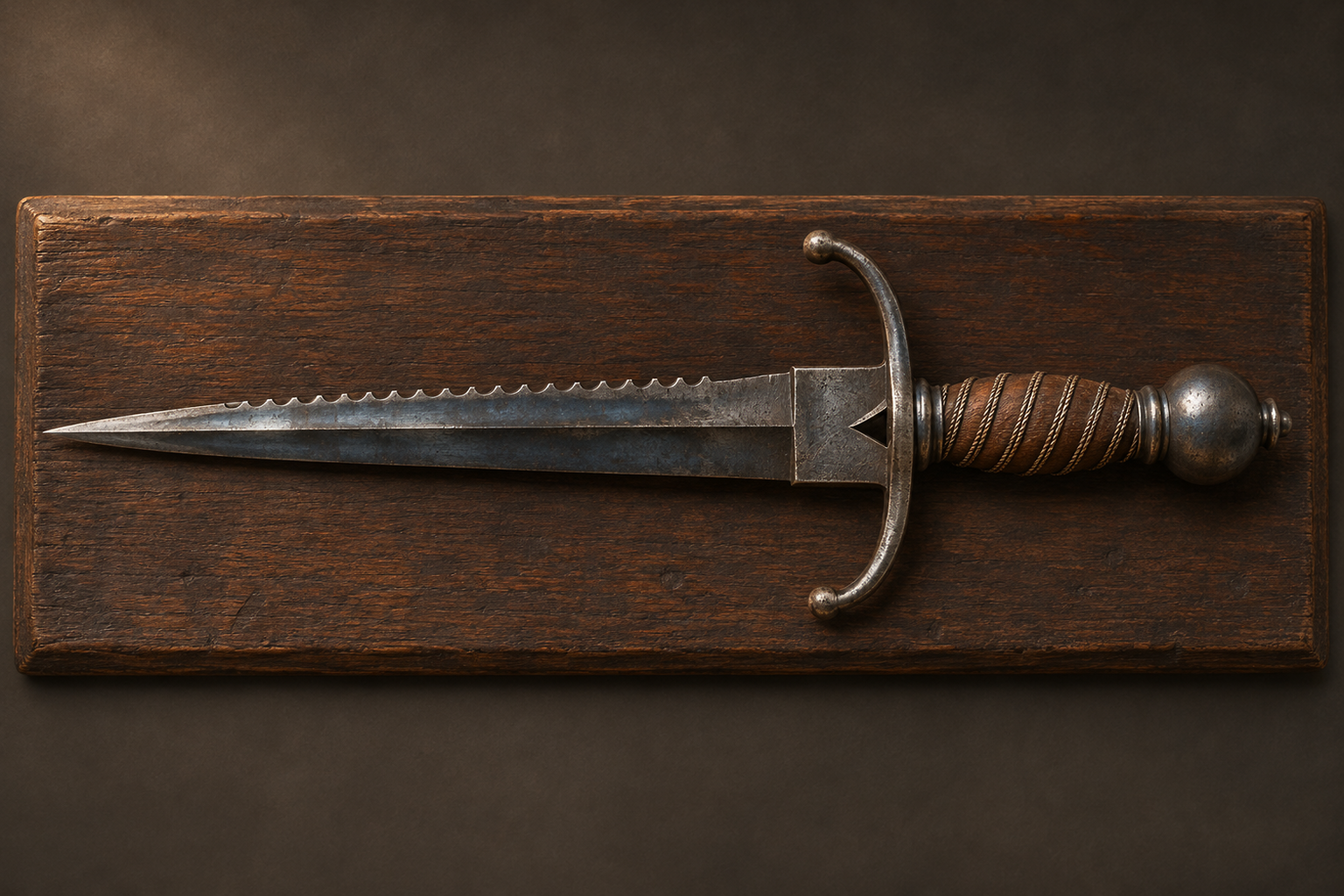
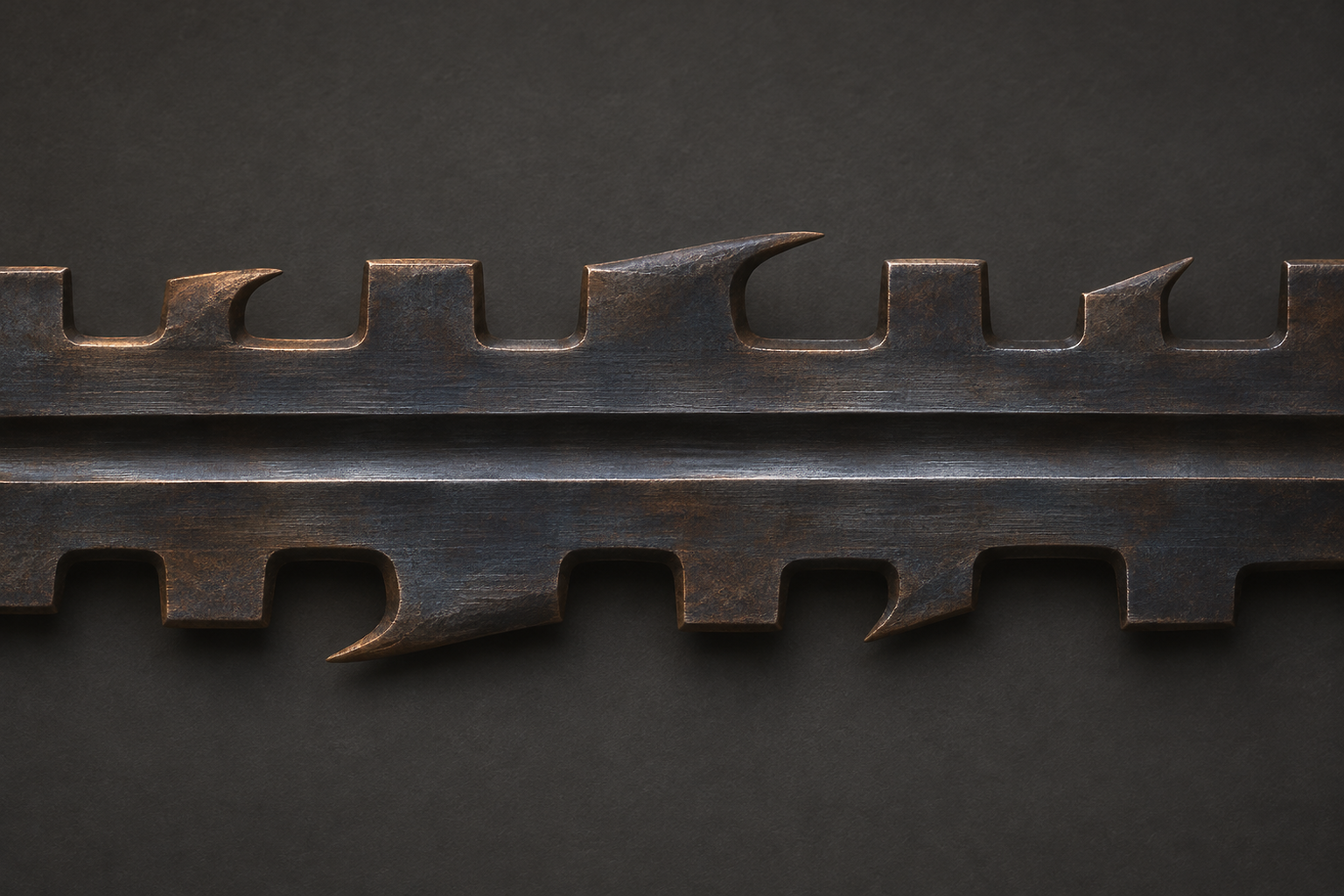
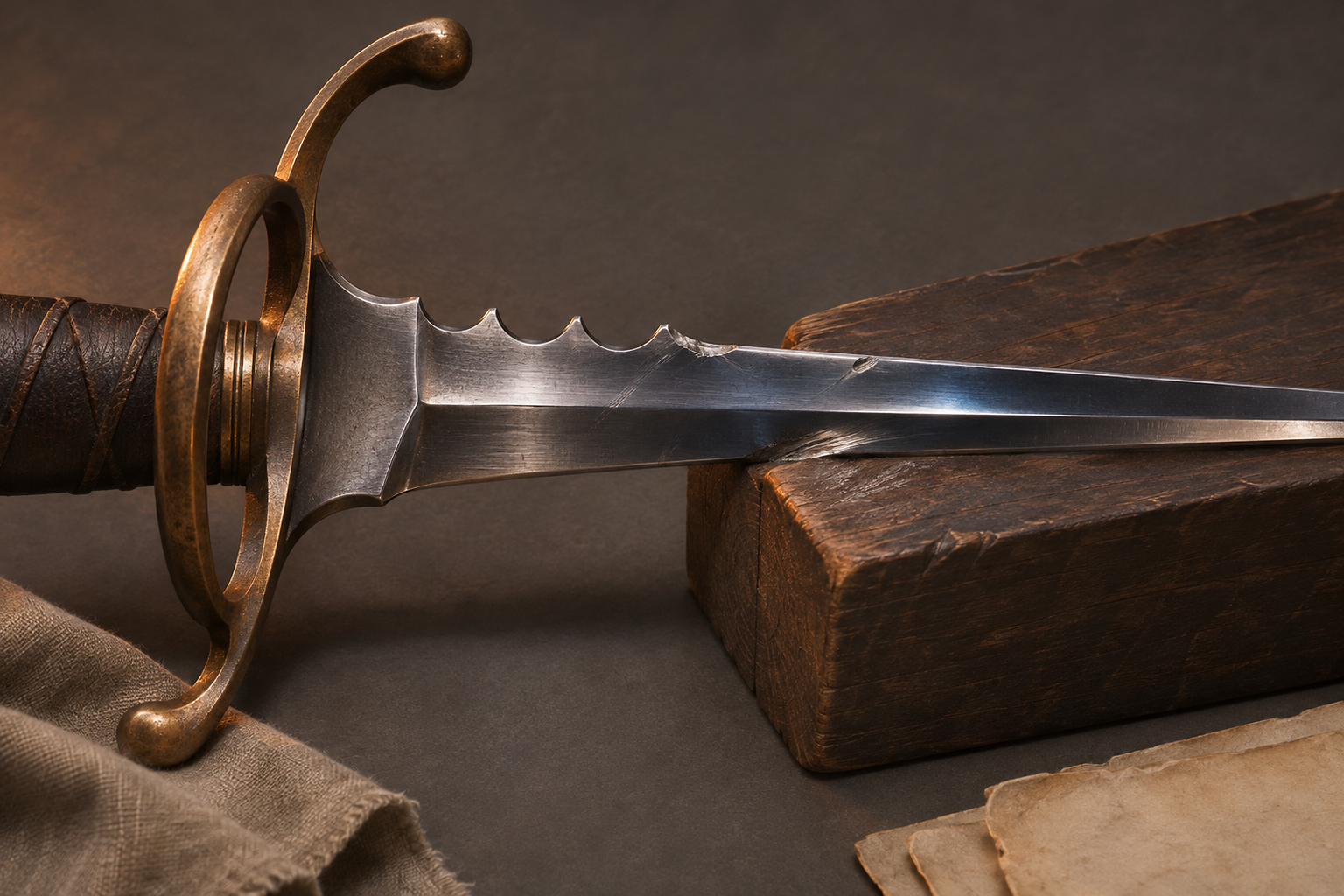
The term comb blade describes a short, stiff thrusting dagger whose primary cutting edge is replaced or supplemented by a series of deep notches, teeth, or cutouts resembling a coarse comb. These serrations vary in depth and angle from simple square-cut grooves to complex asymmetrical barbs designed to impede a sliding blade. The spine of the dagger is generally reinforced with a thick rectangular or triangular cross-section to maintain structural rigidity despite the material removed to form the teeth.
Unlike standard daggers intended for cutting or slashing, the comb blade prioritizes a rigid thrusting point backed by a heavy ricasso and a robust guard system designed to withstand heavy impact forces. The geometry of each notch reflects an attempt to balance structural integrity with functional utility during sudden close-quarter blade contact.
Key structural features common to surviving comb-bladed daggers include:
- A heavily reinforced central spine that preserves blade integrity despite notched edges
- Serrated cutouts engineered with smooth internal radii to minimize stress concentration points
- A pronounced ricasso allowing the index finger to cross the crossguard for improved directional control
- A rigid triangular or diamond cross-section tapering to a needle-sharp point
Spring-Catch Mechanisms and Internal Engineering
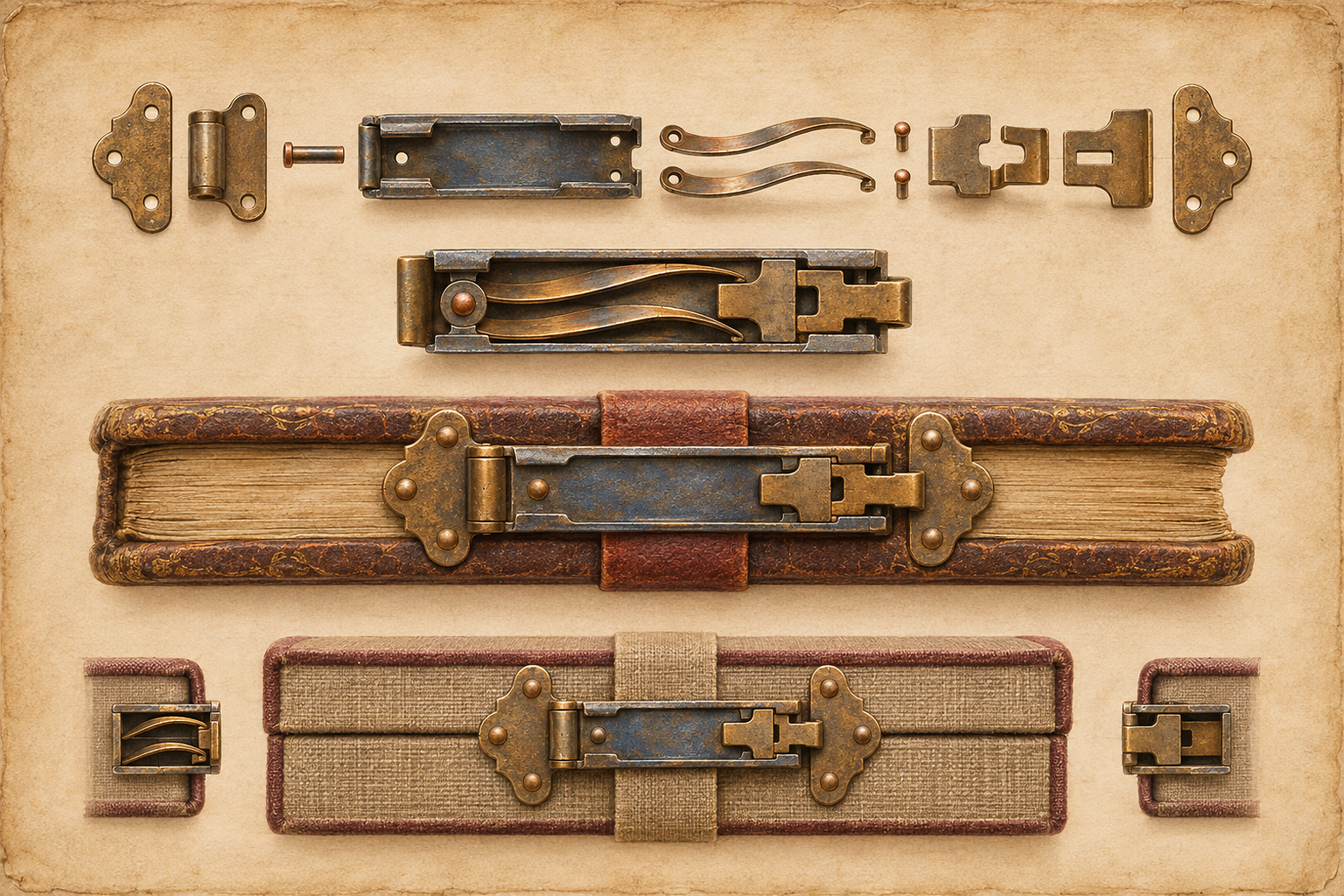
More complex than fixed-comb daggers, spring-catch variants incorporate internal mechanisms designed to trap an opponent's blade dynamically. In these designs, the central blade is split or flanked by hinged prongs held closed by internal leaf springs. When an opposing sword blade enters the slot formed by the prongs, the springs depress and snap shut behind the ricasso or forte of the incoming weapon, momentarily locking it in place.
The engineering required to house these delicate springs within a narrow dagger blade without compromising its overall structural strength demanded advanced skill from sixteenth-century blacksmiths and cutlers. Surviving examples reveal diverse internal configurations, ranging from simple pivoting jaws to intricate multi-lever assemblies.
Materials, Forging, and Heat Treatment
The construction of a functional spring catch or deep comb blade required careful selection of carbon steel and precise thermal management during forging and quenching. If the steel was tempered too hard, the spring leaves would snap under the sudden impact of a heavy rapier; if tempered too soft, the trap would deform permanently upon first use.
Surviving metallurgical analyses indicate that makers often utilized differential hardening techniques, leaving the core and springs resilient while hardening the striking point and outer edges. This balance allowed the weapon to absorb shock without failing catastrophically during a high-speed engagement.
Hilt Dynamics and Hand Protection

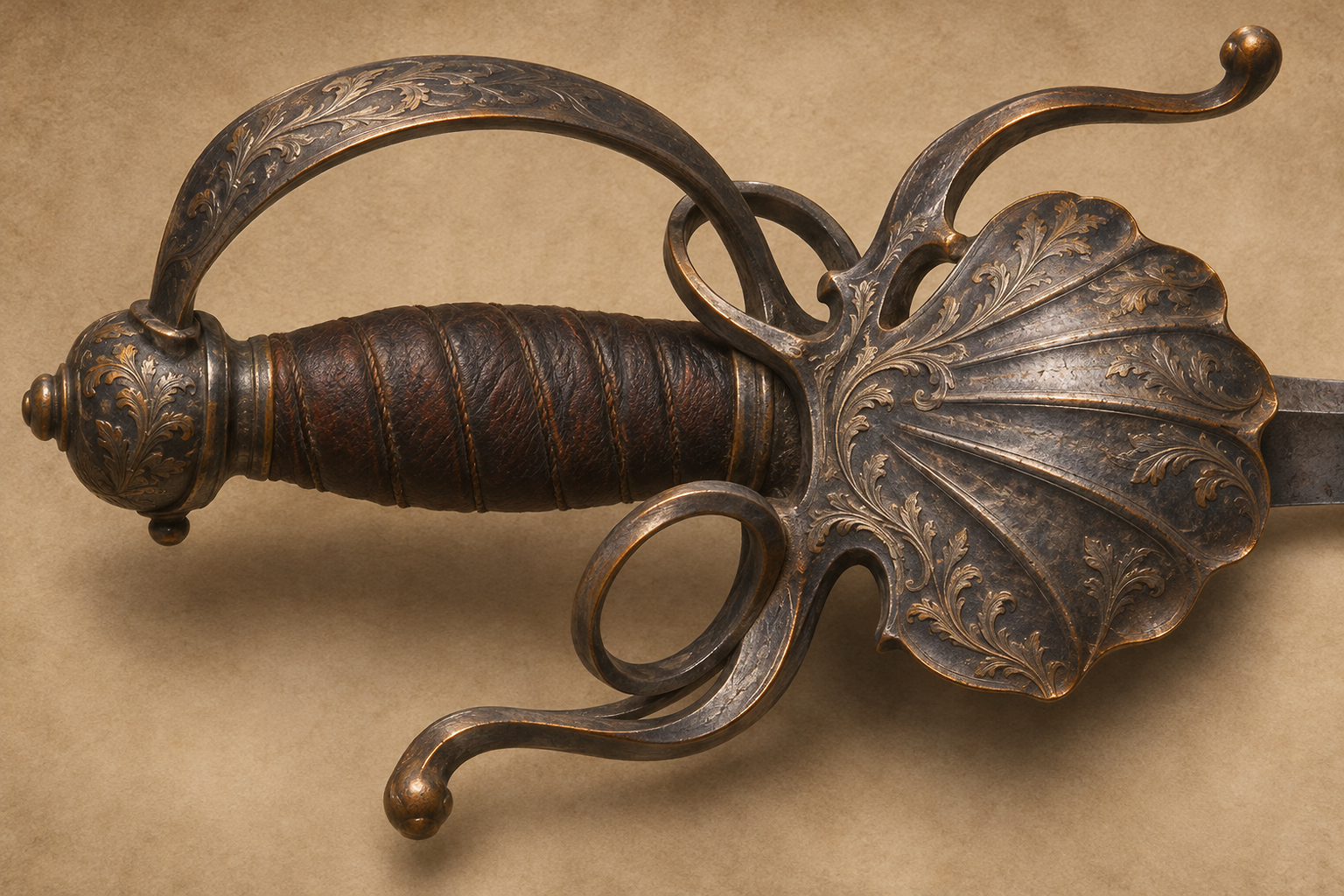
The hilt assembly of a parrying dagger played a crucial role in safeguarding the user's hand during close-quarters engagement. Typically featuring a heavy steel crossguard, a knuckle-bow, and a sweeping shell guard or side-rings, the hilt was engineered to deflect incoming thrusts away from the knuckles and forearm.
The grip was often wrapped in wire or bound in leather to ensure a secure hold even when the user's hands were slick with sweat or moisture. This complex metalwork matched the prevailing style of contemporary rapiers, providing a visually unified defensive pairing for the civilian duelist.
Typical defensive elements integrated into sixteenth-century parrying dagger hilts include:
- Asymmetrical shell guards designed to protect the fingers from sliding thrusts
- Curved quillons capable of catching or deflecting an opposing blade
- Robust knuckle-bows providing structural rigidity and impact resistance
- Generous pommels acting as counterweights to improve recovery speed
The Fencing Treatise Context and Contemporary Silence
While modern popular culture frequently associates notched daggers with specialized blade-breaking techniques, early modern fencing treatises offer a more restrained picture. Masters such as Salvator Fabris, Ridolfo Capo Ferro, and Vincentio Saviolo illustrate comprehensive systems of off-hand dagger play, emphasizing beating, parrying, and counter-thrusting.
However, explicit instructions detailing how to catch an opponent's blade within a comb or spring mechanism are remarkably rare in canonical texts. When treatises mention trapping actions, they generally rely on the crossguard, the V-notch at the base of the blade, or simple opposition rather than complex mechanical tooth engagement.
Surviving Artifacts Versus Nineteenth-Century Reproductions

Evaluating the authenticity of comb blades and spring catches requires distinguishing genuine sixteenth-century artifacts from nineteenth-century historicist reproductions. During the Victorian era, antiquarian enthusiasm and a market for romanticized chivalric gear prompted workshops in Europe to fabricate or heavily over-restore edged weapons.
Many daggers in current private and public collections display exaggerated serrations and non-functional spring mechanisms added to appeal to collectors rather than martial practitioners. Rigorous provenance research, tool-mark analysis, and X-ray radiography help conservation scientists separate authentic period engineering from later fabrication.
Experimental Archaeology and Practical Testing
Modern historical European martial arts practitioners and weapons researchers have conducted controlled tests with replicas of comb-bladed and spring-catch daggers to evaluate their combat utility. These experiments reveal significant operational limitations: while fixed combs can occasionally snag loose wire wrap, decorative ricassos, or unrefined blade edges, they rarely snap or break a well-forged spring-steel rapier.
Furthermore, spring mechanisms are prone to jamming when exposed to dust, blood, or minor impact deformation, making them unreliable in chaotic physical altercations. Such findings suggest that the psychological deterrence of an unusual silhouette may have outweighed its practical mechanical utility.
Observed performance metrics during controlled replica testing include:
- High susceptibility of internal spring mechanisms to jamming from debris and impact shock
- Limited ability of serrated combs to structurally damage high-quality carbon steel rapier blades
- Effective secondary function as standard rigid parrying daggers regardless of specialized notch features
- Significant user training required to manipulate trap catches under simulated combat stress
Regional Variations Across European Workshops
The distribution of comb blades and spring catches reflects distinct regional preferences among European armories and fencing communities. German and Central European guild workshops produced the majority of complex spring-catch daggers, often exhibiting ornate chiselling and etched decoration on the ricasso.
Conversely, Italian and Spanish masters favored cleaner, lighter main-gauche designs with broad solid blades, minimal serration, and extensive ring-guards tailored for agile point control. These stylistic divergences highlight how local dueling cultures and weapon laws influenced the evolution of civilian sidearms.
Legal Contexts and Civilian Carry in the Early Modern Period
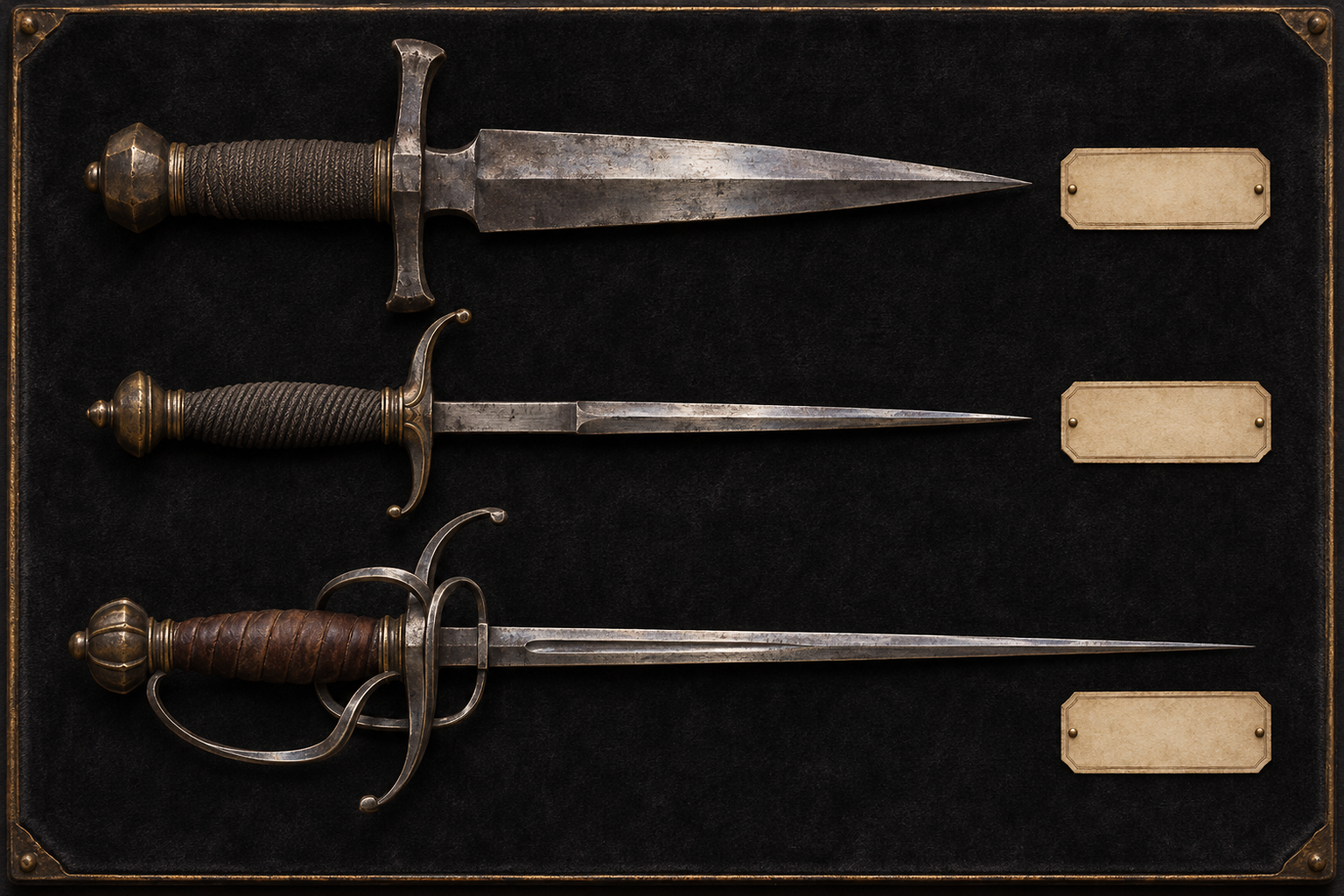
The carrying and use of parrying daggers were closely regulated by municipal laws and sumptuary edicts throughout sixteenth- and seventeenth-century Europe. Governments frequently limited blade lengths, banned hidden or spring-loaded mechanisms, or prohibited carrying daggers entirely in urban centers during times of unrest.
Despite these restrictions, noblemen, merchants, and duelists continued to wear companion daggers as status symbols and vital self-defense tools. The presence of specialized comb blades in this legal environment suggests they served both as functional defensive equipment and as visible assertions of martial preparedness.
Conservation, Curation, and Museum Interpretation
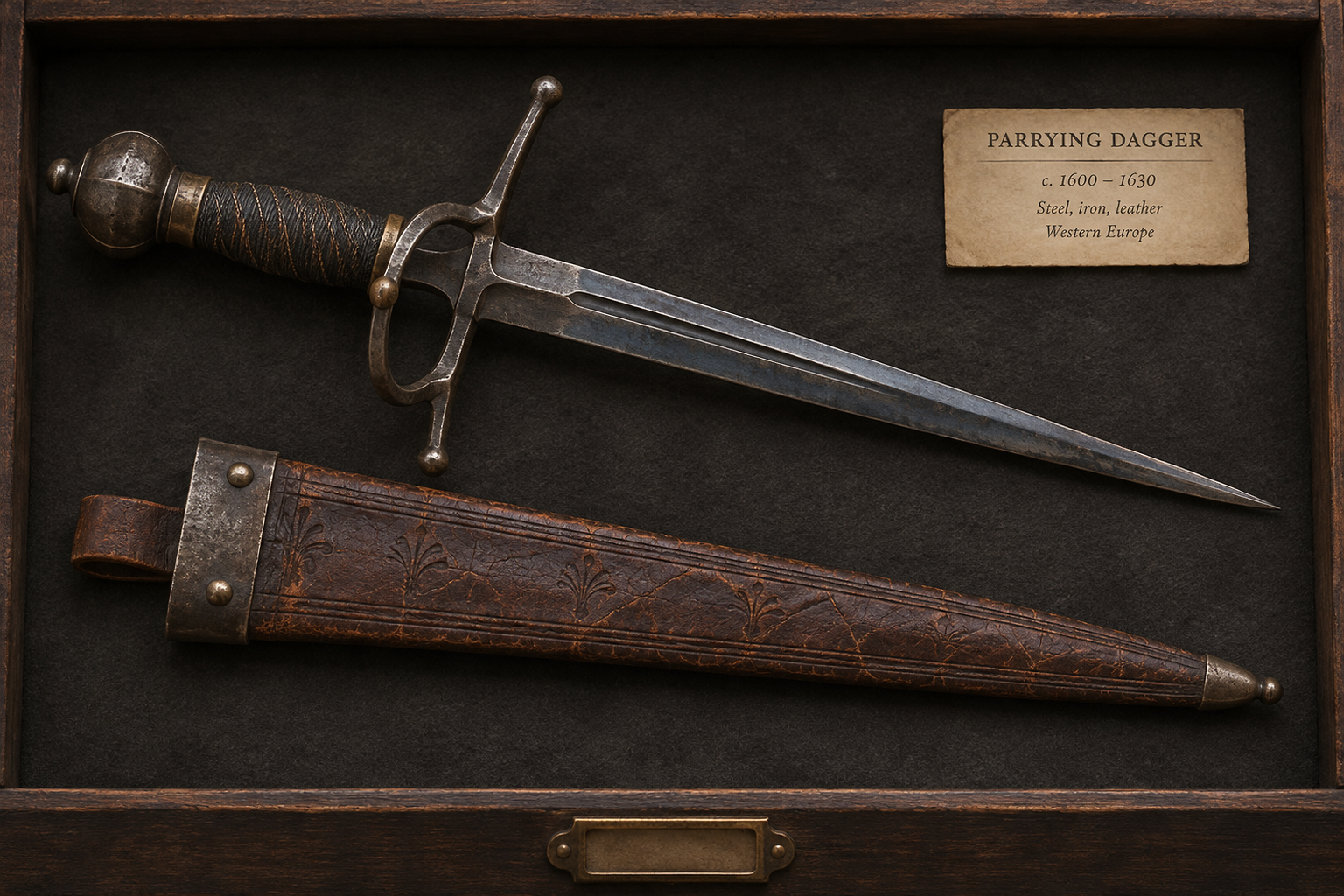
Preserving surviving parrying daggers presents unique conservation challenges due to the combination of fine steel springs, organic grip materials, and complex hilt geometry. Conservators must stabilize active red rot and corrosion without destroying original tool marks, bluing, or fire-gilding traces on the metal surfaces.
Museum displays increasingly contextualize these objects by separating period reality from nineteenth-century legend, helping visitors understand the complex relationship between surviving material culture, technical literature, and historical combat practice.

Further reading
Follow the sources to examine the object and its historical context.
Royal Armouries Collections, LeedsExternal reference · Opens in a new tab The Wallace Collection Catalogues, European Armour and WeaponsExternal reference · Opens in a new tab